Civil Aviation Minister K Rammohan Naidu announced significant opportunities for Micro, Small, and Medium Enterprises (MSMEs) within India's rapidly expanding aviation sector. With Indian airlines ordering over 1,600 aircraft and the aerospace market projected to double by 2035, there's a massive scope for Indian suppliers to integrate into global aerospace supply chains, moving beyond assembly to design and manufacturing.

Keralam Industries Minister P K Kunhalikutty unveiled the logo and website for COKPIT 2027, a Global Aviation GCC Leadership Summit scheduled for January 2027 in Kochi. The summit aims to position Kochi as a prime destination for aviation Global Capability Centres, attracting industry leaders and showcasing the city's potential as an aviation hub with strong connectivity and existing infrastructure.

Civil Aviation Minister K Rammohan Naidu announced India's ambition to produce its first indigenous civilian aircraft within two years through a joint venture. He highlighted the rapid growth of the country's aviation sector, with significant aircraft orders, planned new airports, and potential for manufacturing jet engines and Sustainable Aviation Fuel, underscoring India's increasing role in global aviation.
Embraer, the Brazilian aerospace company, views India as a "blue ocean opportunity" for regional aircraft manufacturing, projecting a need for at least 500 aircraft in the 80-146 seat range over the next two decades. The company is collaborating with Adani Group to establish a manufacturing facility and sees significant untapped potential in connecting non-served markets, including those under the UDAN scheme.

French aerospace and defence major Thales views India as a highly dynamic market for avionics, with significant growth potential as Indian airlines expand their fleets. The company, which has a substantial presence and MRO facilities in India, is also exploring opportunities to replicate India-developed solutions globally and sees increased use of AI in development.
Union Minister Piyush Goyal announced that India is facing an acute shortage of civilian aircraft and plans to order an additional 1,000 planes, on top of 1,200 already ordered, to meet the rapidly growing air traffic demand. He also mentioned pursuing manufacturers for faster supplies and increasing flights to Egypt.
Civil Aviation Minister K Rammohan Naidu announced India's ambitious plans to become a global hub for civil aviation manufacturing, aiming to produce made-in-India civilian aircraft within two years. He highlighted the expansion of airport capacity to 800 million by 2029, the construction of 100 new airports and 200 heliports, and the success of the UDAN scheme in boosting regional air connectivity and first-time flyers. The minister also noted the growing ecosystem for aviation component manufacturing and partnerships with international players like Embraer and Adani Group.

PROMQT MRO has successfully relocated and restored a retired Boeing 737-200 from Kolkata to Bengaluru for Bangalore International Airport Limited (BIAL). Dubbed "Phoenix," the aircraft will serve as a full-scale training platform for disabled aircraft recovery, showcasing indigenous aviation engineering and sustainable infrastructure development in India.
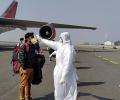
Kempegowda International Airport Bengaluru (BIAL) has unveiled 'Phoenix', a repurposed Boeing 737-200, to enhance its Aircraft Recovery Training School. This initiative expands practical training for disabled aircraft recovery and opens the school's programmes to the global aviation industry, aiming to strengthen operational resilience and readiness in the aviation ecosystem.
Indian airlines are increasingly focusing on developing in-house maintenance, repair, and overhaul (MRO) capabilities to support their rapidly expanding fleets and reduce reliance on overseas facilities. This strategic shift is driven by market growth projections, with India's MRO market expected to triple to USD 9.5 billion by 2035, and recent geopolitical challenges highlighting the need for domestic capacity.
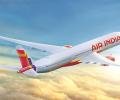
Two-thirds of India's 160 airports, approximately 120, have very low utilisation rates, with only 40 operating at 70-80 per cent capacity.
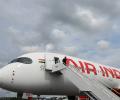
Air India group CEO Tewolde Gebremariam announced plans to order more wide-body aircraft to boost international operations, while simultaneously addressing the 'major concern' of high operating costs. The airline aims for profitability 'very soon' despite significant financial losses in recent fiscal years.
Collins Aerospace, a subsidiary of RTX Corporation, has commenced work on a new propeller maintenance, repair, and overhaul (MRO) facility in Bengaluru. This facility, set to be operational by early 2029, will be the first of its kind in India authorised by a foreign aerospace OEM. It aims to support regional turboprop aircraft and military transport platforms across the Asia-Pacific region, strengthening India's aviation ecosystem.

Tata Elxsi has partnered with Sarla Aviation to develop the Shunya air taxi platform. Tata Elxsi will provide engineering support for avionics, software integration, and certification, while Sarla Aviation will lead the design and type certification of the electric vertical take-off and landing (VTOL) aircraft.

IndiGo and Air India Group will progressively shift flights from Mumbai's Chhatrapati Shivaji Maharaj International Airport (CSMIA) to the newly built Navi Mumbai International Airport (NMIA) starting from December. This phased transition, expected to complete by the 2027 summer aviation season, aims to ease capacity constraints at CSMIA, facilitate its Terminal 1 redevelopment, and establish a dual-airport system for Mumbai, enhancing connectivity and future growth.

Indian benchmark equity indices, Sensex and Nifty, opened higher, driven by sustained foreign fund inflows and a significant drop in crude oil prices, even as global markets faced a downturn. Track Sensex, Nifty on November 17.
GE Aerospace is set to significantly increase its supply chain spending in India, targeting USD 400 million by 2030, up from USD 200 million in 2025. This expansion reflects the company's commitment to India's burgeoning aviation market, driven by substantial aircraft orders and the strategic importance of its manufacturing and technology centres in Pune and Bengaluru.

The Supreme Court refused urgent listing for a plea alleging a 700 per cent increase in airfares, advising the petitioner "Don't travel by air." The court is already hearing a separate petition seeking regulation of airfares, with the Centre informing it about new aviation rules under the Bharatiya Vayuyan Adhiniyam, 2024, expected to be published soon.

Indian benchmark equity indices snapped a two-day rally, with the Sensex falling over 500 points and the Nifty settling below 25,230, driven by profit-taking and global market bearishness fueled by US Federal Reserve rate hike speculations.

The government has introduced new aviation rules, the Bharatiya Vayuyan Niyam, 2026, granting it the power to intervene in airline ticket pricing during extraordinary situations.

Bengaluru-based electric air taxi startup Sarla Aviation has received Design Organisation Approval (DOA) from the Directorate General of Civil Aviation (DGCA), a crucial step towards commercial production of its indigenous electric vertical take-off and landing (eVTOL) aircraft. The company also inaugurated its new headquarters and announced partnerships, highlighting India's growing capabilities in advanced aerospace technology.

GMR Aero Technic is investing Rs 600 crore to expand its Maintenance, Repair and Overhaul (MRO) facility in Hyderabad. The expansion aims to nearly double its capacity to around 18 lines by 2029, including for wide-body aircraft, and will introduce India's first wide-body aircraft painting service, addressing the growing demand from Indian airlines.
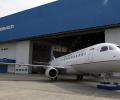
Embraer, the Brazilian aerospace firm, forecasts a demand for 2,520 aircraft with up to 150 seats in the Asia Pacific region over the next two decades. Excluding China, this figure stands at 1,050 jets. The company highlights the region's significant upgrade opportunities due to its large turboprop fleet and growing need for regional connectivity, driven by intra-regional trade and evolving economic environments.

Meghalaya Chief Minister Conrad K Sangma has outlined an ambitious vision to transform Shillong into an Information Technology hub and the next Artificial Intelligence (AI) Valley. Speaking at an AI job fair, Sangma emphasised the need for greater industry participation, skilled manpower development, and improved infrastructure, including reliable power, connectivity, and logistics, to attract global tech companies. The state government is determined to create a robust ecosystem to provide high-value employment opportunities for local youth and prevent migration.

Indian equity benchmark indices Sensex and Nifty rallied in early trade, driven by sustained foreign fund inflows and a drop in crude oil prices. Foreign Institutional Investors (FIIs) have made a significant comeback, pumping in Rs 84,290 crore into Indian equities in the first fortnight of November.

The Indian government has increased the windfall gains tax on exports of diesel and Aviation Turbine Fuel (ATF), while keeping the levy on petrol exports at zero. This move, effective from November 16, comes amid escalating tensions in West Asia and aims to ensure domestic availability of fuel.

Air India has commenced construction of a new multi-facility Maintenance, Repair, and Overhaul (MRO) hangar at Delhi's Indira Gandhi International Airport. This nine-acre facility aims to centralise engineering and maintenance activities, enhancing fleet upkeep, improving reliability, and reducing aircraft ground time for the Tata Group-owned airline.

Indian stock markets witnessed a strong rebound, with the Sensex climbing nearly 1,000 points to 83,021.75 and the Nifty settling above 25,500 for the first time in nine months, driven by a rally in auto, bank, and FMCG stocks, sustained foreign fund inflows, and easing commodity prices.
IAF Chief Air Chief Marshal AP Singh undertook a flying sortie with NCC cadet Jakkula Tejasvi Reddy on October 20 at the Air Force Academy, Dundigal. This special flight, part of Singh's final sorties before superannuation, aimed to familiarise the cadet with aviation and encourage defence careers, aligning with the 'Viksit Bharat -2047' vision.

An Air India flight from Frankfurt to Delhi was diverted to Jaipur following a false hijack alert, which was later attributed to a technical glitch. The flight, carrying 293 passengers and 13 crew, resumed its journey to Delhi after security checks, with the Directorate General of Civil Aviation (DGCA) set to investigate the incident.

Indian equity benchmark indices Sensex and Nifty slumped in early trade, ending a three-day rally, as profit-taking combined with concerns over surging retail inflation, which breached the Reserve Bank of India's upper tolerance limit, leading to anticipation of a policy rate hike. Track Sensex, Nifty on November 13.
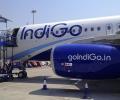
IndiGo, India's largest airline, reported a narrowed loss of Rs 1,879.1 crore in the September quarter, down from Rs 2,582.1 crore a year ago, primarily due to exceptionally high fuel costs and rupee depreciation.

State-run Hindustan Aeronautics Limited (HAL) has delivered LCA Tejas FOC twin-seater trainers and HTT-40 basic trainer aircraft to the Indian Air Force, and Dhruv Next Generation helicopters to Pawan Hans. This significant handover, attended by Defence Minister Rajnath Singh and Civil Aviation Minister K Rammohan Naidu, underscores India's progress towards self-reliance in aerospace, strengthening both military and civil aviation capabilities with indigenous platforms.

Indian benchmark indices Sensex and Nifty extended their rally in early trade, driven by strong buying in IT firms and an earnings-driven surge in Tata Group's retail arm, Trent, which reported a 25 per cent increase in net profit.

IG Defence is establishing a 200-acre missile development and manufacturing complex in Nellore, Andhra Pradesh, focusing on indigenous micro-missile systems, propulsion technologies, and precision-strike capabilities, including the JWALA surface-to-air micro-missile system.

The Indian government has increased the windfall gains tax on the export of diesel and Aviation Turbine Fuel (ATF) while simultaneously eliminating the levy on petrol exports for the fortnight starting October 31.
Indian benchmark indices, the Sensex and Nifty, witnessed a significant rally, with the Sensex jumping 2,009 points and the Nifty surging 576 points. This surge is attributed to a sharp decline in crude oil prices, hopes for a resolution to the West Asia conflict, and the Democratic Party gaining control of the US Congress in the midterm elections.

'In the past, when the Indian markets have been flat for two years, the next year's returns have ranged between 5 per cent and 55 per cent.'

Boeing projects Southeast Asian airlines will require 4,985 new commercial aircraft by 2045 due to expanding fleets and replacements. The region's air passenger traffic is expected to grow 6.7% annually, outpacing economic growth, driven by rising incomes, tourism, and connectivity. Most new aircraft will be single-aisle, with a significant portion supporting fleet growth.

Indian stock market benchmark indices Sensex and Nifty rallied significantly in early trade, driven by robust foreign fund inflows, better-than-expected Q2 results, and a sustained moderation in crude oil prices. The 30-share BSE Sensex jumped 1,097.33 points, while the 50-share NSE Nifty rallied 274.30 points. Track Sensex, Nifty on November 11.
