
India is growing fast, but to keep growing strong, the government must make more things at home, create jobs, and spend money wisely, suggests Rajiv Memani, regional managing partner, Africa-India Region, EY.
The 2026-27 Budget, seeking to harmonise the government's imperative to grant certainty while ensuring a rational tax policy, had several notable announcements to usher in halcyon days, says Mukesh Butani.
This Budget positions India's taxation ideology as not merely a revenue source but as a strategic catalyst for growth, inclusion and long-term confidence.

The Appellate Authority for Advance Rulings (AAAR) of Gujarat has held that papad fryums would not attract any goods and services tax (GST) as they are similar to traditional round papads in all respects. In this connection, the appellate authority modified the ruling of the authority for advance rulings (AAR), which had ruled that Fryums would attract 18 per cent GST. The AAAR held that Fryums is a brand and not a generic name of the product, Harpreet Singh, partner, indirect taxes at KPMG in India said while explaining the order.

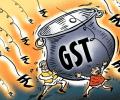
Average monthly GST collection rose from Rs 90,000 crore during the first year of its implementation -- 2017-2018 -- to Rs 1.68 trillion during 2023-2024, representing an 87 per cent rise.

The recent ruling by the Authority of Advance Rulings making back-office services provided by a company to global firms taxable under GST, has sent shockwaves through the information technology and business process outsourcing industry.
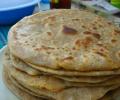
Packed frozen 'paratha' is not 'roti or chapatti' as it requires further cooking before consumption and despite wheat flour being the 'common thread' there are other ingredients used in making parathas, said an order by the Gujarat Appellate Authority for Advance Ruling. Such parathas, whether named Malabar, Mixed vegetable, Onion, Methi, Alu, Laccha, Mooli or Plain, have ingredients like margarine, salt, emulsifying agent, oil, potato, peas, cauliflower, coriander powder, bread improver and water, apart from wheat flour, which make 'quite different' from plain roti or chapatti and hence are not eligible for 5 per cent Goods and Services Tax (GST) rate, the ruling said. The percentage of wheat flour used by Vadilal Industries, which had approached the AAAR, in the eight varieties of paratha manufactured and supplied by it ranges from 36-62 per cent, whereas the ingredient for plain roti or chapatti is wheat flour apart from water.
Registering the agreement for sale remains the most reliable way for a homebuyer to secure their legal and financial interests.

The Supreme Court of India has ordered the Union government to grant a permanent commission to a woman officer in the Army Dental Corps who was denied benefits given to similarly placed officers. The court ruled that the woman officer was wrongly excluded from consideration and that the principle of "what is sauce for the goose ought to be sauce for the gander" applies in this case. The court directed the government to implement the order within four weeks and to extend all consequential benefits, including seniority, promotion, and monetary benefits, to the officer.
Deciding the goods and services tax rate on fryums papad could be a messy affair with the Appellate Authority for Advance Rulings (AAAR) of Gujarat now ruling that the ready-to-eat product would draw 18 per cent rate. In that connection, it slightly modified the ruling of the state-based Authority for Advance Rulings (AAR). The AAR had also ordered that these products would draw 18 per cent GST but under a different classification.

On the basis of her committee's report, the UCC in Uttarakhand established mandatory registration for marriages and live-in relationships, banned polygamy, and provided equal inheritance rights for women.
The controversy over the goods and services tax (GST) rate on food products refuses to die. Now, the Gujarat-based authority of advance rulings (AAR) has ruled that 'parathas' would attract 18 per cent GST. The applicant, Vadilal Industries, sought to know whether various kinds of 'parathas' supplied by them would attract five per cent GST in line with 'khakhra', plain chapati or 'roti'.

The Budget proposed abolishing the under-performing, authority of advance ruling, to replace it with a two-member board of advance ruling.
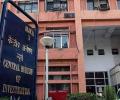
Central Board of Indirect Taxes and Customs said despite the electronic way or E-way bill mechanism there has been rampant evasion and there is a need to increase compliance.

Chief Justice of India D Y Chandrachud on Thursday advised market regulator SEBI and the Securities Appellate Tribunal (SAT) to exercise caution amid a significant surge in equity markets and pitched for more tribunal benches to ensure that the "backbone is stable". Inaugurating the new SAT premises here, CJI Chandrachud pitched for authorities to consider opening up new benches of the SAT given the higher workloads because of higher quantum of transactions and newer regulations.

Courts should not grant ex-parte injunctions against publication of a news article barring in exceptional cases as it may have severe ramifications for the right to freedom of speech of the author and the public's right to know, the Supreme Court has said.

GST rate for petrol and diesel cars and hybrid vehicles is already at the highest bracket of 28 per cent plus cess.
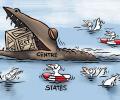
Domestic traders body CAIT on Thursday said that much against the declared spirit of GST as good and simple tax, it has become a "colonial taxation system" not compatible with the ground realities of business in India. Various amendments and introduction of rules under GST in the recent past have made the tax systems system much more complicated and put much compliance burden on the traders, it said in a statement. The Confederation of All India Traders (CAIT) added that it is not alone the centre but largely the state governments are more responsible for distorting the GST taxation system and bringing disparities and anomalies in it which has made it a more complex system and a "big headache" for the traders.

The Securities Appellate Tribunal has suggested setting up of an Advance Ruling Authority in the capital market headed by a High Court Judge with its order binding on the Securities and Exchange Board of India.

The interest charged on an inter-state loan given to a credit card holder without the use of a plastic card would not be subject to the integrated goods and services tax (IGST), a two-judge bench of the Calcutta high court has ruled. In this connection, it recently set aside a ruling by a single judge of the high court. The issue was a loan of Rs 650,000 granted by Citi Bank with an EMI of Rs 58,056 for 12 months and inclusive of integrated GST (IGST) on each installment of interest.
The case lodged against him by one of the Customs officials is pending before the special judge, Thiruvananthapuram.

A robust dispute settlement system would help the government unlock tax revenues, and also aid ease of doing business.

Finance Minister Arun Jaitley on Friday said as many as 37,506 tax dispute cases were pending before various Income Tax Appellate Tribunals having a financial implication of Rs 1.45 lakh crore at end March 2015.

Selling property below market value can lead to litigation. Tinesh Bhasin offers tips on how to avoid it.

The tax department is on a spree to ensure more taxpayers in the country use the PAN card.

The verdict, upholding Centre's November 15, 2019, notification bringing personal guarantors of corporate debtors under the net of the IBC, assumes significance in view of the fact that various high-profile industrialists may now face insolvency proceedings along with their debt-ridden firms under the IBC.
Simplicity will make the Budget investment-friendly
If advance tax revenue fails to meet the expected growth, these PSUs could be asked to pay taxes on past demands raised against them.

Mihir Tanna, Associate Director, S K Patodia & Associates, answers your personal income tax queries.

In a relief to actor Shah Rukh Khan, the Income Tax Appellate Tribunal has overturned an order of the tax authorities to add Rs 2.28 crore he had lent his wife as interest free loan to buy flat and jewellery to his net wealth.

India's Supreme Court in April rejected a patent for Novartis AG's cancer drug Glivec, saying it was an amended version of a known molecule called imatinib, setting the precedent for more such cases in the country.

The order, which came on Monday, stated that revenue authorities cannot split the agreement when the parties to the agreement considered the royalty and technical knowhow as a single package.

The NCLAT's order is offensive because it goes against every tenet of bankruptcy reorganisation. If Justice Sudhansu Mukhopadhyay's tenets are accepted by the Supreme Court, we will not only regress in modern bankruptcy reorganisation but also slide back in the Doing Business rankings, says Omkar Goswami.

'If Rakesh Sinha introduces the bill, but it does not pass the Rajya Sabha in six years, then the bill will lapse.'

Customs and excise duty rates have been amended mainly to promote Make in India.

'There is no Buddha or Gandhi among countries, existing for the service of others; they all exist for the good of themselves.' 'For each country, its own interests should be paramount, and it is futile and churlish to expect China to be an exception to this rule,' says B S Raghavan, the distinguished civil servant and long-time China-watcher.
Attorney General Mukul Rohatgi's stand that AMU is not a minority university reveals the anti-minority stand of the political party now in power, says Mohammad Sajjad, outlining the long history behind one of India's premier universities.
he has to demonstrate the ability of his government to take a quantum leap, almost tantamount to setting the Ganga on fire, in the next six months, if not in 100 days, if the people were to take seriously the cascade of commitments spewing out of the President's address to both Houses of Parliament on June 9, says B S Raghavan. B S Raghavan suggests five practical propositions through which the Modi government can bring in paradigm changes.
 © 2026 Rediff.com - Advertise with us - Disclaimer - Privacy Policy - Sitemap - Feedback - About us - Terms of use - Grievances