
The submission was made before additional sessions judge Hardeep Kaur, who extended the judicial custody of all the six accused till March 1.

Among the Sensex firms, Power Grid, Kotak Mahindra Bank, Tech Mahindra, Bajaj Finserv, ITC, Bharti Airtel, Nestle, NTPC, Bajaj Finance, Reliance Industries, Infosys and HDFC Bank were the major gainers.
Among the Sensex firms, NTPC, Mahindra & Mahindra, Power Grid, Nestle, Tata Motors, ITC, Bharti Airtel and Kotak Mahindra Bank were the major gainers. In contrast, Larsen & Toubro, Wipro, JSW Steel, UltraTech Cement, and Asian Paints were among the laggards.

Total expenses of the company increased by 11.76 per cent at Rs 9,816.3 crore (Rs 98.16 billion) during the reported quarter from Rs 8,782.9 crore (Rs 87.82 billion) in the corresponding period of previous fiscal, the company said in a BSE filing.

Benchmark equity indices Sensex and Nifty settled with marginal gains on Thursday in a highly volatile trade amid the scheduled monthly derivatives expiry and muted trend in the US markets. The 30-share BSE Sensex closed 86.53 points or 0.13 per cent higher at 66,988.44, registering its third day of gains. During the day, it hit a high of 67,069.89 and a low of 66,610.35.

iPhone 3G combines all the features of iPhone with 3G networking, which is said to be two times faster than the first generation iPhone. It has built-in GPS for expanded location based mobile services, a joint press release said. It also has iPhone 2.0 software, which includes support for Microsoft Exchange ActiveSync and runs hundreds of third party applications already built with the recently released iPhone SDK.

From the Sensex basket, Tata Consultancy Services, Nestle, Bajaj Finserv, Wipro, Maruti Suzuki India, Reliance Industries, Larsen & Toubro and NTPC were the major laggards. Tata Steel, Bajaj Finance, JSW Steel and Bharti Airtel were among the gainers.
Among the Sensex firms, IndusInd Bank, Tata Steel, Tata Motors, Sun Pharma, Infosys, Mahindra & Mahindra, Infosys, NTPC, Bharti Airtel, HCL Technologies and Axis Bank were the biggest gainers. Tech Mahindra and Bajaj Finance were the laggards.
The Board of Control for Cricket in India will choose between Bharti Airtel and Sahara Group on Monday as the new team sponsor, as both are the only firms left in the fray at the end of the deadline for submitting the bids for rights along with the requisite security deposit.
If he bets big, billionaire Mukesh Ambani will emerge from this week's airwave auction armed with spectrum that could make his Reliance Industries Ltd a formidable rival to market leaders Bharti Airtel Ltd and Vodafone Group.
From the Sensex pack, Bharti Airtel, HDFC Bank, Titan, ITC, UltraTech Cement, Sun Pharma, Bajaj Finserv, Bajaj Finance, Hindustan Unilever and Kotak Mahindra Bank were among the major gainers. Tata Steel, Axis Bank, IndusInd Bank, NTPC and ICICI Bank were the major laggards.

Dalal Street investors became richer by Rs 9.68 lakh crore in five days of market rally, where the Sensex breached the historic 73,000-mark for the first time ever to reach a new record peak, taking the market capitalisation of BSE-listed companies to an all-time high of Rs 376 lakh crore. The 30-share BSE Sensex jumped 759.49 points or 1.05 per cent to settle at a new closing high of 73,327.94 on Monday. During the day, it zoomed 833.71 points or 1.14 per cent to reach its all-time peak of 73,402.16.

Total revenue, as per the US accounting rules, rose over one per cent to Rs 9,772.20 crore (Rs 97.72 billion) during the December quarter, from Rs 9,633.4 crore (Rs 96.33 billion) in the corresponding period last year, Bharti Airtel said.

Telecom services providers have urged the Ministry of Finance to suspend the universal service obligation (USOF) till the existing corpus is exhausted. In their Budget recommendations, they have also pressed for an exemption from the service tax on "assignment of right to use natural resources" and the slashing of Customs duty on telecom equipment to zero. The Cellular Operators Association of India (Coai), which represents private sector telecom operators Reliance Jio, Bharti Airtel, and Vodafone Idea, called for abolishment of USOF levy.

Among Sensex shares, Bajaj Finserve, ICICI Bank, Bharti Airtel, Bajaj Finance, Sun Pharma, Maruti Suzuki, ITC, and Nestle were the lead gainers. On the other hand, L&T Wipro, IndusInd Bank and TCS and Tata Motors were the lead losers.

The launch of internet-enabled Jio Bharat phones at an "attractive pricing" will enable Jio to gain market share at the lower end segment and signals a reduced probability of tariff hike in the near term, brokerages tracking the sector said. Jio on Monday launched internet-enabled Jio Bharat phones at Rs 999, packing in a cheaper monthly plan of Rs 123 for unlimited voice calls and 14 GB data. The new offering aims to accelerate the '2G Mukt Bharat' vision, as India still has 250 million mobile subscribers trapped in the 2G era with feature phones.

Voice calling will be free on Jio phones for life and post December 31, 10 data plans will be offered
Bharti Airtel announced on Friday that its customers would be able to avail of 'seamless roaming services' on 3G networks across the world, including Japan and South Korea.

Among the Sensex firms, JSW Steel, Titan, Tata Steel, Sun Pharma, Reliance Industries, Bharti Airtel, Tata Motors and HDFC Bank were the biggest gainers. NTPC, Tech Mahindra, Maruti, State Bank of India and Larsen & Toubro were among the laggards.

Enquiries indicate it belongs to an industrialist with links to a prominent cricketer.
The government has held back allocating additional spectrum to Bharti Airtel in Orissa, in view of the telecom tribunal's recent judgment that GSM operators have no vested right to get airwaves beyond 6.2 MHz.
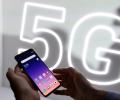
The launch of 5G services in India turbocharged mobile download speeds here, pushing the country's ranking 72 notches higher to 47th spot in Speedtest Global Index, ahead of nations like Japan, the UK and Brazil, according to Ookla. India's speed performance has zoomed up 3.59 times since the introduction of 5G, it said dubbing the country's 5G advancement as "remarkable". In this global pecking order, India ranked not only ahead of its neighbours like Bangladesh, Sri Lanka, and Pakistan, but also some G20 countries, such as Mexico (90th), Turkey (68th), the UK (62nd), Japan (58th), Brazil (50th place), and South Africa (48th place).

The pack is available for Rs 1,495 for existing users and Rs 1,494 for new users, and effectively brings down 4G data rates to Rs 50 per GB

Standard Chartered, Barclays, Citibank, Deutsche Bank are among investment banks that are involved in the process of facilitating investor meets in Asia, Europe and the United States.
India's leading private sector cellular operator, Airtel is targeting a mobile customer base of 25 million in the next two years, Sunil Bharti Mittal, chairman and group managing director, Bharti Enterprises, said on Wednesday.

HCL Technologies was the biggest gainer in the Sensex pack, rising 5.58 per cent, followed by Tata Consultancy Services and Infosys, State Bank of India, Tech Mahindra, Tata Steel, NTPC and Wipro. In contrast, Nestle, Bharti Airtel, Maruti and ITC were among the laggards.
