'Pfizer India has submitted an application on December 4 to the DCGI seeking emergency use authorization for its COVID-19 vaccine in India'

According to sources, around 10 crore doses of the Sputnik V vaccine is likely to be imported for emergency use in the country in the next six to seven months.
India is not keen to 'bow down' to demands related to indemnity against legal liabilities in case any vaccine recipient develops severe adverse reactions post inoculation.
Experts, however, feel that given the intensity of the second wave and the high single dose coverage, India is in a good position to avoid any drastic wave in the near future.
Dr V K Paul, Member (Health) Niti Aayog, who also chairs the national expert group on COVID-19 vaccine administration, said the government attaches 'great importance to this offer of partnership from a very special friend to this nation'.

The Central Drugs Standard Control Organisation has granted restricted emergency use authorisation to two new vaccines and a drug for COVID-19, taking the number of preventives and treatments available in India to 12.
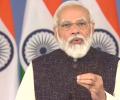
In an address to the nation amid increasing Covid cases through the Omicron variant of the virus, he said the precaution dose will also be available for citizens above 60 years of age and with comorbidities on the advice of their doctor from January 10 next year as well.
According to the sources, there are limited prospects of J&J exporting its vaccine from the US to other countries in the near future and the "entire production" at the BE facilities in India, beginning July/August, will be handed over to the pharma giant under a contract between the companies.
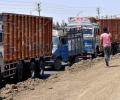
With the government asking the companies to operate with only 50 per cent staff strength, and exports dipping to almost zero, the truck and bus drivers idling at the petrol pump say they hardly have any work now. At a petrol pump on the deserted Bavla-Changodar highway near Ahmedabad in Gujarat, several trucks and buses are neatly parked in a row.

The Serum Institute of India, Bharat Biotech and Pfizer have applied to the DCGI seeking emergency use authorisation for their COVID-19 vaccine candidates and are awaiting approval.

The modalities of COVID-19 vaccine delivery, distribution and administration were discussed during the meeting.

The official expressed hope on the success of the five vaccines that are under different phases of trial in the country.

A second wave of Covid driven by the Delta variant engulfed the country in May-June bringing the health system to its knees and leaving people gasping for help.
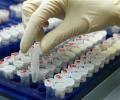
A senior official at the health ministry told ANI: "For HCQ, we have placed orders for about 11.45 crore tablets to two Indian firms -- IPCA laboratories and Zydus Cadila. So far, we have received 6.64 crore HCQ drugs and remaining will arrive by May 16."

Only half India's population has received the first shot of Covishield and Covaxin and the government's immediate task is to first vaccinate its adult population before placing its focus on children.
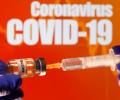
The Serum Institute of India, the largest vaccine maker in the world, has been chosen by Oxford and its partner AstraZeneca to manufacture the vaccine once it is ready. Trials results for the first two phases were published earlier this month.

India will export anti-malarial drug hydroxychloroquine, high in demand globally, only to foreign governments and not to private companies, as the product is under prohibited or banned category of exports, sources said. Although exports of this medicine is completely banned, India has decided to export this anti-malarial drug in sync with its global commitment to deal with the coronavirus pandemic.
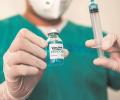
The novel mRNA vaccine candidate, HGCO19, is supported with seed grant under the Ind-CEPI mission of the Department of Biotechnology. The mRNA vaccines do not use the conventional model to produce immune response. Instead, they carry molecular instructions to make the protein in the body through a synthetic RNA of the virus.

This is because while the emergency authorisation for treating Covid was a recent move, the drug has been used since years for rheumatoid arthritis and autoimmune lupus.

On when vaccination for children could start as Zydus Cadila's Covid vaccine has been granted emergency use authorisation for those 12-year-old and above, he said children were not being inoculated against COVID-19 on a large scale anywhere in the world though it has been initiated in some countries in a limited manner.

'India is a pharma dada. We can manufacture enough for our people and for the world.'

Apart from the 1.1 crore doses of Covishield being procured from the Serum Institute of India, 55 lakh doses of indigenously developed Covaxin were being obtained from Bharat Biotech, Union Health Secretary Rajesh Bhushan said at a press conference.
The procurement and distribution will be centralised though the government is yet to take a call on the initial number of doses that will be procured.

The announcement comes a day after the Subject Expert Committee (SEC) on COVID-19 of the CDSCO recommended granting emergency use authorisation (EUA) to the COVID-19 vaccines Covovax and Corbevax with certain conditions.

Five vaccine candidates are in advanced stages of development in India, out of which four are in Phase II/III and one is in Phase-I/II trials.

While Bharat Biotech's Covaxin is in trials among children already, Serum Institute of India will begin Novavax vaccine trials on children from July, whereas the Pfizer vaccine has been approved for adolescents in the United States; and Cadila Healthcare's ZyCoV-D has done trials on 12 year-olds and above already, reports Sohini Das.
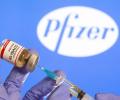
At $37 per dose, the Pfizer vaccine is much more expensive compared to $3 per dose for the Covishield.

The Reproduction number or Rt refers to how many people an infected person infects on average. In other words, it can tell how efficiently a virus is spreading.

Replying to a short duration discussion on COVID-19 management in Rajya Sabha, the minister said technology transfer to several companies has started and they will begin production in the coming days to reduce vaccine shortage in the country.

The health ID will contain information about medical data, prescriptions and diagnostic reports and summaries of previous discharge from hospitals for ailments. The mission is expected to bring efficiency and transparency in healthcare services in the country.

The government is considering setting up air freight stations to enable direct movement of vaccines from pharmaceutical factories to the aircraft.

The government plans to immunise 30 million people in the first phase, starting February, and by July, the target is to vaccinate 250 million people, reports Sohini Das.

865 million Indian adults require vaccination.
Behind each Covid vaccine are hundreds of parents, who had the courage and conviction to come forth with their children for the trial of a vaccine which was, until then, untried in that age group, reports Sindhu Bhattacharya.
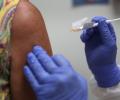
The ministry further stated that it was advisable to receive a complete schedule of the anti-coronavirus vaccine irrespective of past history of infection with COVID-19 as this will help in developing a strong immune response against the disease.
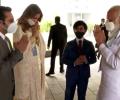
The PM's visit would signal a strong intent towards making sure India becomes a beneficiary as vaccines become a massively traded commodity in the coming years.
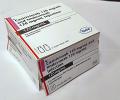
According to medical practitioners, the treatment is especially useful in controlling disease among those who have not received the vaccine or got only one shot and also the high-risk contacts of a patient.

From rising prescriptions to the pharma sales force back on the field with full vigour and companies finally finding their feet with the digital marketing strategies - Indian drug makers have shown that medicine sales is certainly a sunshine sector.

'The prioritisation of groups for COVID-19 vaccine shall be based on two key considerations -- occupational hazard and risk of exposure to infection, and the risk of developing severe disease and increased mortality'
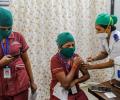
At 8 million a month, times two doses, it will take us 17 years to administer the vaccine to our 800 million adults. The rollout must speed up twenty times, asserts Naushad Forbes.
 © 2026 Rediff.com - Advertise with us - Disclaimer - Privacy Policy - Sitemap - Feedback - About us - Terms of use - Grievances