
'Historically, the markets tend to perform well during election years as governments aim to increase spending and call attention to growth.'

It's all eyes on the consumer durables sector during the festival season after a weak Q1FY24 and Q2FY24 was impacted by an erratic monsoon. Traditionally, this period sees the highest number of purchases. Dealers and manufacturers are complaining about low business-to-consumer (B2C) off-take during the first half.

Nifty 50 firms' net profit estimated to grow by a modest 3.1% in Q2, reports Krishna Kant.

The second wave of the coronavirus pandemic is likely to delay recovery in air passenger traffic with an 80-85 per cent growth year-on-year this fiscal against the earlier estimate of 130-135 per cent, ratings agency ICRA said on Monday. The domestic passenger traffic, which witnessed a steady ramp-up after resumption of airport operations since May 25 last year and reached 64 per cent of the previous year levels in February, has again suffered a setback, the ratings agency said in a report. The spike in coronavirus infections towards March-end and April has resulted in several state governments implementing fresh restrictions, resulting in a marginal 0.7 per cent de-growth sequentially in traffic in March.

Revenue up 15.8% at Rs 34,261 crore over year-ago period.

Maruti Suzuki India (MSIL) has ambitious plans to increase capacity. It is also seeking shareholders' approval for a complex swap transaction, which would acquire Suzuki Motor Gujarat (SMG), a subsidiary of Suzuki Motor Corporation (SMC) through a preferential offer. SMC already holds 56.37 per cent of MSIL's equity.

The economy, though projected to grow 9.6 per cent in the next financial year in year-on-year growth term, may grow just 1 per cent in real terms to Rs 147.17 lakh crore as against Rs 145.66 lakh crore in 2019-20, at the 2011-12 prices, according to a report by India Ratings. The size of the economy, as per the National Statistical Office's data, had stood at Rs 145.66 lakh crore in 2019-20, at the 2011-12 prices. According to the rating agency, the country's gross domestic product (GDP) is expected to contract 7.8 per cent to Rs 134.33 lakh crore in 2020-21, but may grow 9.6 per cent to Rs 147.17 lakh crore in 2021-22.

Strong refining and petrochemical margins seen boosting consolidated net by up to 6%

India's current account deficit narrowed to $1.3 billion or 0.2 per cent of GDP in the January-March quarter of FY23, mainly due to moderation in the trade deficit and a robust increase in services exports, RBI data showed on Tuesday. However, for the 2022-23 fiscal, the current account balance recorded a deficit of 2 per cent of GDP compared to 1.2 per cent in 2021-22. "India's current account deficit (CAD) decreased to $1.3 billion (0.2 per cent of GDP) in Q4:2022-23 from $16.8 billion (2.0 per cent of GDP) in Q3:2022-231, and $13.4 billion (1.6 per cent of GDP) a year ago [Q4:2021-22]," as per the RBI's 'Developments in India's Balance of Payments during the Fourth Quarter (January-March) of 2022-23'.

Fund inflows jumped over 77 per cent in the second quarter of 2021 to $7.55 billion compared to $4.26 billion in the first quarter, according to the data collated by Refinitiv, the London Stock Exchange Group's financial markets data and insights arm. However, volume growth was a tepid 8.8 per cent in Q2 at 296 transactions up from 272 in Q1, totalling the counts in the first half to 568, against 365 transaction in the year-ago period. Total inflows in the first half of 2020 were $5.43 billion across 365 deals, while in the first quarter these were $3.92 billion across 183 deals and the second quarter at $1.51 billion across 182 deals, according to Refinitiv.

Analysts attribute this fall to the recent moderation in energy (mainly crude oil) and commodity prices, lowering of input costs for companies in sectors such as FMCG, consumer durables, and automobiles, reports Krishna Kant.

Consumption-related stocks, such as hotels, and quick service restaurants (QSRs), have been hitting the ball out of the park ahead. On the other hand, the Miss World Pageant scheduled for later this year in New Delhi, too, could provide some tailwind to these stocks, especially hotels and aviation. However, analysts suggest investors put their best foot forward and buy these counters only on a decline given the recent rally and economic headwinds.

There has been a sharp recovery in the headline corporate earnings in the April-June 2023 quarter (Q1FY24), after a dismal showing by early bird companies. The combined net profit of the 983 listed companies that have declared their quarterly results, so far, was up 64.7 per cent year-on-year to record a high of Rs 2.68 trillion in the first quarter, but growth in earnings remained lopsided because most of the incremental gains came from a handful of companies. Moreover, the quarterly numbers showed a continued slowdown in revenue growth.

'We suggest an equity strategy of 5% to 10% exposure to cash, 5% to Gold ETF, close to 50% to Sensex/Nifty/large mid-cap stocks.'
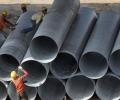
Industrial metals (ferrous and non-ferrous) suffered great volatility once the Ukraine War began in February 2022. First, there was a sharp price rise due to fears of supply disruption, followed by weak global demand. China's weakness and rolling lockdowns have hit production and demand.

New products being designed mainly for auto, oil & gas sectors; firm is raising Kalinganagar plant capacity from three mtpa to eight mtpa

Analysts refuse to read too much into the early birds numbers.

A rate cut could stimulate demand and help revive industrial activity, without much risk of sparking off inflation again.
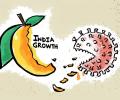
The Reserve Bank on Wednesday retained the GDP growth forecast at 9.5 per cent for the current fiscal but cautioned that the economic recovery is not yet strong enough to be self-sustaining and durable.

Rising crude oil prices, traction in China equities and inflation concerns back home are casting a shadow on the Indian equity markets in the short term, believe analysts at Jefferies. They said this could see the markets remaining range-bound in the near term before the next leg up.

The government is set to earn an equity dividend of nearly Rs 13,800 crore from the listed public-sector banks (PSBs), all 12 of them, for FY23, up 50 per cent from Rs 9,210 crore in FY22. This will be the highest ever dividend for the government from PSBs. The 12 PSBs in our sample are paying an equity dividend of nearly Rs 21,000 crore for FY23, up 53 per cent from Rs 13,710 crore for FY22.

189 people working at 59 Indian airports were found drunk on duty in the first half of this year, marking a 32 per cent year-on-year increase.

There has been a growing shift in weddings happening on non-muhurat dates. Couples prefer a post wedding party/celebration to a traditional reception.

The Business Confidence Index (BCI) prepared by the Delhi-based think tank NCAER declined by 27.5 per cent in the first quarter of the current financial year over the previous quarter mainly on account of the second wave of the COVID-19 pandemic. The BCI on a quarter-on-quarter basis decreased by 35.3 per cent for the services sector, 32.9 per cent for the consumer durables sector, 32.3 per cent for the capital goods sector, 17 per cent for the intermediate goods sector and 14.3 per cent for the consumer non-durables sector, NCAER said in a release.

India's IT and business services market is expected to grow 5.4 per cent annually to reach $13 billion by December this year, research firm IDC said. The segment grew 5.3 per cent year-on-year (y-o-y) in January-June (H1) 2020 period as compared to 8.9 per cent growth in H1 2019, IDC said in a report. Of the IT and business services market, the IT services market contributed 77.4 per cent in H1 2020, growing 5.9 per cent y-o-y as compared to 9.3 per cent growth in the year-ago period.

The argument that India is going towards a 'Hindu rate of growth' is "ill-conceived, biased and pre-mature" when weighed against the respective data on savings and investments, said SBI Research in its Ecowrap report. The term Hindu rate of growth was coined by economist Raj Krishna in 1978, which denoted the economic growth of about 3.5-4.0 per cent in terms of GDP during 1947-1980. "India's quarterly sequential Y-o-Y GDP growth has been in a declining trend in FY23.

Volumes are up over 20 per cent y-o-y in January-April.

India's domestic passenger traffic slipped to a 10-year low at an estimated 53.4 million in the just-concluded financial year, a report said. However, in the previous fiscal there were no passenger flight operations for almost two months due to the pandemic-induced lockdown. During the financial year 2010-11, all domestic air operators together had flown a total of 53.8 million passengers on local routes, according to ratings agency ICRA. The domestic passenger traffic in March 2021 has been estimated at around 77-78 lakh, a marginal decline of about 1 per cent over February during which airlines had flown around 78.30 lakh passengers, it said.

Footfalls increase at retail outlets and auto dealers, but conversions fall.

Bharti's operating margin for India wireless business grew 80 basis points sequentially to 34.9 per cent.

Zomato has lost over 9 per cent thus far in calendar year 2023 (CY23) and has underperformed the S&P BSE Sensex that has slipped nearly 5.3 per cent during this period. Despite this underperformance, analysts at HSBC think that the stock can hit Rs 87 going ahead - up over 64 per cent from the current levels. The food delivery industry, wrote Yogesh Aggarwal and Abhishek Pathak of HSBC in a recent note, has slowed considerably in the last few months.

The problem is actually acute in the diamond jewellery industry where there is no uniform criteria of inventory valuation unlike gold, whose prices are uniform and widely quoted.

'You may opt for a longer minimum guaranteed tenure of 12-18 months. This will ensure that in a rising rental scenario, the landlord doesn't serve you a notice and ask you to vacate the property.'

The average housing prices declined by 2-7 per cent year-on-year during July-September in Delhi-NCR, Mumbai, Chennai, Pune, Kolkata, and Ahmedabad on lower demand amid COVID-19 pandemic, according to Knight Frank India. Prices, however, increased in Bengaluru and Hyderabad by 3 per cent and 4 per cent, respectively, during July-September 2020 compared with the year-ago period. Chennai saw the maximum fall of 7 per cent, followed by Delhi-NCR and Pune at 5 per cent. Rates dipped 3 per cent each in Kolkata and Ahmedabad, while Mumbai witnessed 2 per cent price correction.

The 6.7% growth in Index of Consumer Sentiments in July 2022 is the highest since September 2021, explains Mahesh Vyas.

The stock of the retail chain Avenue Supermarts (Dmart) was the biggest loser in the BSE 100 Index shedding 4.35 per cent on Thursday and added to these losses on Monday by falling an additional 1.3 per cent. The Street was reacting to lower than expected operational performance by the company in the March quarter. The country's largest listed retailer by market capitalisation reported a 20 per cent year-on-year (y-o-y) growth in its top line to Rs 10,337 crore.

The curious case is of Honda, which has moved up the pecking order while actually losing market share!
The growth in two wheelers were triggered by couple of factors such as 4 per cent excise duty cut announced in stimulus package in December 2008, fuel price reduction of Rs 5 per litre in petrol and Rs 2 per litre in diesel as well as the unaffected and untapped demand from the rural market.

Domestic jet fuel prices are up 7%, but are still 14% lower on a y-o-y basis. While lower fuel prices have brought respite to airlines, their non-fuel costs are rising because of rupee depreciation

Despite Covid downturn, CEO salaries went up by an average of 19% in FY21.
 © 2026 Rediff.com - Advertise with us - Disclaimer - Privacy Policy - Sitemap - Feedback - About us - Terms of use - Grievances