
Co-working spaces provider WeWork India is aiming for a revenue growth of over 20 per cent for the coming years, even as its initial public offering (IPO) with only an offer for sale (OFS) component gets valued at Rs 3,000 crore at the top of the price band. The IPO opens on October 3, a newspaper advertisement said.

While not all complaints are frivolous, experts say petitions timed close to an IPO or listing often raise concerns about mala fide intent.

Companies' rent and lease expenses have seen a significant decline relative to the money they make since the pandemic.
Global coworking player WeWork has filed for bankruptcy in the US and has also started a comprehensive reorganisation and restructuring process to cut debt and strengthen its balance sheet. NYSE-listed WeWork Inc said that its centres located outside the US and Canada will not be part of this proceedings. Softbank-backed WeWork Inc, which was once valued at $47 billion, had reported a net loss of $696 million in the first half of this year.
The exit of WeWork from its India unit is unlikely to have an impact on the country's co-working real estate market, according to industry executives. The company last week received approval from the Competition Commission of India (CCI) to sell its entire 27.5 per cent stake in the India unit to Real Trustee Advisory Company. The majority of the stake (72.5 per cent) in WeWork India is owned by Bengaluru-based Embassy Group.
More than a third of 83 mainboard IPOs this year ended their debut sessions in the red, with losses of up to 35 per cent.
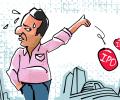
The primary market is set for a busy week as two major companies, Tata Capital Ltd and LG Electronics India Ltd, gear up to launch their initial public offerings (IPOs), collectively worth more than Rs 27,000 crore.

For LG Electronics India, the Rs 11,607 crore initial public offering (IPO) is not just a fundraising exercise. The company's senior executives describe it as a step towards becoming "future-ready", showcasing financial strength while preparing for the next phase of growth in a market they see as still underpenetrated.

Over 60 companies are ready to launch IPOs in the coming months.

India's flexible (flex) office segment, having breached pre-pandemic levels, is thriving as corporates, startups, multinational corporations, and global capability centres (GCCs) expand in India, seeking low-capital yet Grade A plug-and-play facilities. In the first quarter (Q1) of 2025, the flex office segment continued to grow, with flex space leasing rising by 22 per cent to 2.2 million square feet (msf), according to Colliers.

Flush with funds, quick commerce unicorn Zepto is planning to relocate from Powai in Mumbai to a larger office space in Bengaluru's Sarjapur to accommodate its imminent new hires. While the company will maintain an office in Mumbai, its primary operations will shift to the new space in Bengaluru. A spokesperson for Zepto confirmed the development

US-based co-working operator WeWork, Lowe's India, SpiceJet and startups like CureFit stepped in to offer employment to the distressed workers at Jet.

In 2017, absorption in co-working/serviced offices was 2.83 million sq ft, about 186 per cent higher than that of 1.52 million sq ft in 2016.

Keen to back start-ups while they are half-unicorns, SoftBank plans to invest $100 million in a firm with $500-million valuation.

There's no place like home, but even for the affluent buying one in India is difficult. On top of that, the coronavirus pandemic-now in its eighteenth month-has made life uncertain. A hopeful thing is buying a house looks alluring as loan interest rates fall below 7 per cent, their multi-decadal lows. The slow decline in GDP growth after demonetisation, followed by the economic shock caused by Covid-19 waves, has hurt us unevenly.

The Bengaluru-based firm competes with US rival Uber whose lukewarm IPO last year has contributed to the lag in valuation trend among the unicorns across the Indian start-up ecosystem.

Trust today means more than the belief that a brands' products will work as advertised; consumers want to believe that the company truly cares for its customers.

In its latest report for the office market, property consultant Cushman and Wakefield said the total seats leased by enterprises could cross 50,000 during the 2021 calendar year. Enterprises had leased 18,213 seats in the first six months of the 2020 calendar year and 36,255 desks during the entire last year.

Modi will get the maximum chunk of the session time.

Each of the centres will have facilities such as Wi-Fi, air conditioning, free housekeeping services, locker facilities, and CCTV surveillance

The footprints of Indian-origin corporate executives at multinationals is expanding, with Sandeep Kataria taking over the reins of footwear major Bata as its global chief executive officer. From FMCG majors to IT titans, Kataria joins the league of Indian-origin executives who have climbed the highest echelons of corporate across diverse sectors globally. From Nooyi to Pichai to Nadella, the list of such people at the helm of multi-billion dollar enterprises is long.

The event will aim at drawing foreign investment in startups and push local partnerships.

Even at early stage, start-ups are raising more money faster owing to the rise of a lot of specialised early-stage VCs and emergence of seed-stage programmes.

None of the Big Tech companies or tycoons appears to be playing a meaningful role in the testing, spread, cure, or eradication of the virus or even in contact tracing so far, says Prosenjit Datta.

With Awfis, a quirky co-working venture, and other offbeat ideas, Radha Kapoor, the daughter of the Yes Bank CEO, is taking the creative route to entrepreneurship.

Every cog in the wheel must present its unique services at the moment of instructed haste, says Vikram Johri.

The Fortune's 40 under 40 list for this year was topped by Adam Neuman, Co-founder and CEO, WeWork.

Awfis stands out for its 'ambience' and 'ease of doing business'.
 © 2026 Rediff.com - Investor Information - Advertise with us - Disclaimer - Privacy Policy - Sitemap - Feedback - About us - Terms of use - Grievances