
If the weather phenomenon hits India, impact will be felt across sectors; be cautious on stocks based on rural consumption.

Interview with CMD, Motilal Oswal Financial Services

With competitive pressures increasing at home, Bharti is making a third attempt to gain a foothold in the African market.

Larsen & Toubro (L&T), India's largest construction and engineering player, has lost as many as 14 large orders in the country because companies that don't possess adequate technical expertise and experience, of late, have won the projects by bidding lower, claimed A M Naik, non-executive chairman of L&T. But the company has made up for the losses by winning projects overseas, where it has acquired a sizeable market share amid tough competition from large global players, he said.

'But we are much better than what we all had expected and planned, and what all the prophets of doom had predicted.'

'Valuations were depressed at 8,000 (Nifty 50 index) levels. It was a free ride to 12,000 levels.' 'What went down had to come up. Now fundamentals have to support further gains.'

'People are doing a lot of trading.' 'Short-term euphoria can be seen.' 'Retail participation is best through MFs and PMS.'
'We are very watchful about inflation and growth. But the main challenge is economic revival and growth.'

The double-digit growth in itself is eye-popping, given the FMCG sector has seen low single-digit volume growth in recent times.
'A strong foreign exchange reserve is the best safety net against global spillovers.'

After 42 years at Hindustan Unilever (HUL) and different roles across Unilever's global operations, Harish Munwani, 65, retired as HUL's non-executive chairman. A day before Manwani bid adieu at HUL's 85th annual general meeting on Friday, he spoke to Viveat Susan Pinto & Vishal Chhabria on what kept him going at the firm and the challenges that await HUL.

'Mostly, the relief, if needed, would be for housing loans where a person has lost a job and is unable to pay his EMI or there has been a temporary salary cut.'

So long as there are concerns about world trade, growth and oil prices, the domestic market will remain volatile.

These consistent performers are expected to maintain momentum.

'Four times in Indian history, in 1992, 2000, 2007 and now, markets are at 25 times price-earnings.'

The bigger worry is that the miss for FY19 is likely to be significant even after assuming macro factors such as crude oil prices, rupee, input costs, and interest rates, do not worsen from the current levels, reports Vishal Chhabria.

'India is still a cash economy.' 'For a common household, almost everything from grocery to maid services is paid in cash.' 'The demonetised notes account for 85 per cent of the currency in circulation.' 'Until fresh notes flow back into the economy, day-to-day transactions ordinarily done in cash will be impacted.'

In a conversation with Vishal Chhabria and Hamsini Karthik, Gautam Chhaochharia, executive director & head, India Research, UBS, explains why implementing goods and services tax (GST) may not be as disruptive as many perceive it to be. But, he warns investors shouldn't have high expectations on corporate earnings.

Number of stocks trading above 50 times and 100 times earnings are at record highs. When this happened in 2015 and 2016, the Sensex fell 22.6 per cent in a little over a year's time after peaking in January 2015, while it fell by 11.3 per cent in two months from its peak in September 2016.

Arundhati Bhattacharya talks about SBI's strategies, its aim to be among the top 30 banks globally, and stressed assets resolution.
The rally in Indian market is mainly due to resumption of foreign institutional investor inflows.

'The focus is more on the outlook for global growth'.

The markets tend to react six to eight months in advance
The first was wholesale funded banks and non-bank finance companies.

'The big elephant in the room is our misguided view about the rupee.' 'India is scared that if our currency appreciates, who will buy from us. But a breakout is inevitable.'

Despite the headwinds both on the domestic and global fronts, Ramesh S Damani, member, BSE and a prominent investor, says India will weather a global trade war better than a lot of other Asian countries.

Mark Mobius, executive chairman, Templeton Emerging Markets Group, is positive on India and believes the Indian economy is on a strong footing

New strategy for Infosys by October, says Nandan Nilekani. New chairman's other priorities: Hiring CEO, reviewing Panaya probe reports.

The commission asks for notification to be deferred; RIL's KG-D6 pricing issue may return to Cabinet

Short-term gains are always unpredictable.

'India easily remains one among the more attractive large economies, with high growth and stable/improving macros, as a top investment destination.' 'We are looking pretty good.'
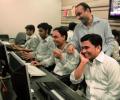
Over the past two decades, India has evolved economically as well as from the market's perspective.
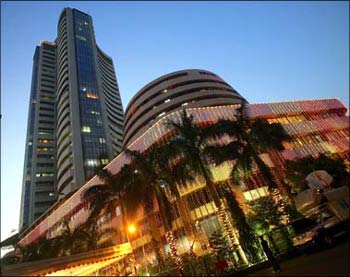
'There is no change in the overall story of economic recovery.'
 © 2026 Rediff.com - Investor Information - Advertise with us - Disclaimer - Privacy Policy - Sitemap - Feedback - About us - Terms of use - Grievances