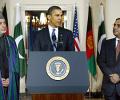
'The real purpose of President Obama writing to President Zardari,' Husain Haqqani tells Rediff.com's Aziz Haniffa, 'was to seek a turnaround on terrorism -- that Pakistan, whatever its grievances, cannot have jihadi groups operating openly on its soil.'

A war hero looks back at the men and the moments that forged India's greatest military victory.

Whether history will remember Edward Snowden as a traitor to his country or as a champion for free speech and less intrusive government is hard to tell, but the issues he has brought into focus need deep thought, writes Ajit Balakrishnan

Defence Minister Manohar Parrikar said in the Lok Sabha that former Air chief S P Tyagi and Gautam Khaitan, both accused in the case, are "small people" who "simply washed their hands in a flowing ganga (of corruption)" and that the government will 'find out where the river was going'.

'A collapsing Pakistan may well unleash its nuclear weapons as the last throw of the dice. With a nuclear arsenal of over 50 bombs, even a regional nuclear exchange can devastate the world.'

Is Devyani Khobragade's arrest connected to India detaining an anti-piracy ship owned by a US security firm, asks Colonel Anil A Athale (retd).

'Obama's decision to end the US military involvement in the Afghan civil war needs to be welcomed as a positive development for regional security and stability. India, too, has a great opportunity opening up here if it plays its cards in sync with the spirit of the times rather than continuing to view the Afghan problem in zero-sum terms,' says Ambassador M K Bhadrakumar.

'Biometric Aadhaar-based surveillance is not only about violation of privacy, but also about the treasure hunt for unprecedented financial surveillance and economic intelligence in the economic history of mankind,' asks Gopal Krishna.
'Under Narendra Modi's leadership, we will be able to regain our rightful place in the community of nations,' veteran diplomat Hardeep Singh Puri, who joined the BJP on January 2, tells Rediff.com's Sheela Bhatt.
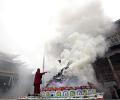
China has been keeping tabs on the restive Tibet province through a 'grid' system and some 600 'convenience police posts' armed with high-tech equipment that monitor the daily life of the citizens of Lhasa and other Tibetan towns. Worse, 'volunteer security groups' known as 'Red Armband Patrols' are roaming around in order to get more information and 'classify' each and every citizen, says Claude Arpi
 © 2026 Rediff.com - Investor Information - Advertise with us - Disclaimer - Privacy Policy - Sitemap - Feedback - About us - Terms of use - Grievances