
Banks and exporters preferred to sell dollars

HCL Tech led the Sensex gainers' chart, spurting 3.58 per cent, followed by UltraCement, Nestle India, Tata Steel, Kotak Bank, ICICI Bank, Bharti Airtel and HDFC twins. In contrast, ITC, Maruti, NTPC, Asian Paints and Sun Pharma were among the main laggards, shedding up to 1.51 per cent.

The domestic equity market on Thursday snapped the five-day losing streak as the benchmark Sensex recouped its lost ground and closed 78 points higher on fag-end value buying in banking, energy and financial stocks. A positive opening in the European market helped the investor sentiments even as clouds hovered over the health of the global banking system amid Credit Suisse woes and bank failures in the US. Halting its five-day losing streak, the 30-share BSE benchmark rose 78.94 points or 0.14 per cent to close at 57,634.84 points, with 17 of its constituents ending in the green.

Rebalance your portfolio in case it has become overweight on equities vis-a-vis your strategic asset allocation.

It said the acceptance of necessity accorded to the procurement by the Defence Acquisition Council noted the estimated cost of $3,072 million as provided by the US government, adding the price will be negotiated once policy approval from Washington is received.

IndusInd Bank was the biggest loser in the Sensex pack, shedding 7.46 per cent, followed by SBI, Tata Motors, M&M, Bajaj Finserv, Axis Bank and Infosys. In contrast, Tech Mahindra was the only winner.

The Indian startup ecosystem has lauded the inclusion of startups in the New Delhi Leaders' Declaration for the first time ever in the history of G20. Industry stakeholders say that the move will lead to easier access to capital, reduce regulatory hurdles, and may revive funding activity. The Declaration, through the Startup20 initiative, recognised startups as "natural engines of growth" and key to socio-economic transformation by driving innovation and creating employment.

Among the Sensex firms, Bajaj Finserv, Tata Motors, Asian Paints, ITC, IndusInd Bank, State Bank of India, Tata Steel, Wipro, Infosys and Maruti were the major gainers. Tech Mahindra, HCL Technologies, Kotak Mahindra Bank, Titan and Larsen & Toubro were the major laggards.

S&P Global Ratings on Thursday said about half of the Indian companies that it rates are getting a boost in their core profitability from rupee depreciation. "Much of our rated India corporate portfolio has sizable US-dollar linked revenue and, therefore, is not exposed to rupee depreciation. "This encompasses entities in the IT, metals, and chemicals sectors. About half of the firms we rate are getting an EBITDA boost from currency weakening," the US-based rating agency said in a report.

Hikes benchmark lending rate by 35 basis points to 6.25 per cent Cuts growth projection for this fiscal to 6.8 per cent from 7 per cent estimated in September Inflation to come down below 6 per cent in March quarter, to average 6.7 per cent this fiscal
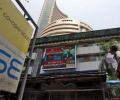
Benchmark indices Sensex and Nifty declined in early trade on Wednesday due to selling in financials, oil and IT stocks amid weak global trends.

India's rupee is likely to remain under pressure due to high prices of crude oil and other commodities, and may stabilise at around 79-80 against the US dollar in the near term, say experts amid limited headroom available with the Reserve Bank to check the weakening of the domestic currency. The currency has slumped over 5 per cent this year after Russia's invasion of Ukraine sent international crude oil prices soaring to a decade high. On Monday, rupee ended at a fresh all-time low of 78.34 (provisional) against the US dollar.

Benchmark Sensex dropped 334 points on Monday due to intense selling pressure in metal and power stocks as FII outflows dampened investor sentiment. Besides, a sharp decline in the rupee against the US dollar also put pressure on domestic equities, traders said. After losing nearly 500 points, the 30-share BSE index recovered some lost ground to settle at 334.98 points or 0.55 per cent lower at 60,506.90. During the session, the index touched its intra-day low of 60,345.61.

The rupee on Friday slipped 1 paisa to close at its all-time low of 78.33 (provisional) against the US dollar. At the interbank foreign exchange market, the local currency opened at 78.20 and finally settled at its all-time low of 78.33, down 1 paisa from its previous close. During the day, the local unit witnessed an intra-day high of 78.19 and a low of 78.35 against the American currency.

Within three trading sessions in May, foreign portfolio investors (FPIs) have pumped in Rs 9,461 crore into Indian equities. This follows net inflows worth Rs 7,936 crore in March, and Rs 11,631 crore in April. The trend, analysts said, could continue going ahead as the US Federal Reserve may soon halt its interest rate hike cycle, which will strengthen foreign fund inflows into emerging markets, including India.

The Indian economy recovered from the Covid-induced downturn during 2022 and is poised for further improvement in the coming quarters though downside risks emanating from geopolitical tensions, strengthening dollar and elevated inflation will continue. The positive trajectory in the growth trend and improved fundamentals will help the nation in neutralising the impact of global headwinds which are expected to have a bearing on the country's exports in the months to come. The challenges before the government and the Reserve Bank in the new year would be to arrest inflation, check declining value of rupee against US dollar and promote private investment and growth, with a view to ensure that the country remains one the fastest growing major economies of the world.

Strong macroeconomic headwinds causing turbulence in the $245-billion Indian IT industry are yet to calm down. Top Indian IT services companies are likely to post a decline or just marginal growth in sequential revenue in Q1FY24 because of a soft discretionary spending environment. Though the first quarter is seasonally strong for IT firms, "June 2023 will be an exception", according to analysts at Kotak Institutional Equities.

The Reserve Bank of India (RBI) has announced a dollar-rupee two-year sell-buy swap auction for $5 billion on March 8, which will suck out rupee liquidity from the system. The swap will be in the nature of a simple sell/buy foreign exchange from the RBI side, in which a bank will buy US dollars from the central bank and simultaneously agree to sell the same amount of US dollars at the end of the swap period. "With a view to elongating the maturity profile of its forward book and smoothen the receivables relating to forward assets, it has been decided to undertake sell/buy swap auction of $5 billion on March 8, 2022," the RBI said in a statement. The auction cut-off will be based on the premium amount in paisa terms up to two decimal points.

'Geopolitical risks and their impact on oil prices, if any, are another concern for global markets, particularly for India.'

Underlining the contribution of non-resident Indians, Union Finance Minister Nirmala Sitharaman on Tuesday said remittances sent to the country by overseas Indians were about $100 billion for the year 2022, an increase of 12 per cent in one year. Speaking at a session during the Pravasi Bharatiya Divas (PBD) convention in Madhya Pradesh's Indore city, she described NRIs as the "real ambassadors of India" and appealed to them to use made in India products and services as far as possible so that the country's individual brand can be promoted across the globe. Sitharaman also said that after the "China plus one" policy, the world is now talking about the "European Union (EU) plus one" policy.
The rupee depreciated 11 paise to a record low of 78.96 against the US dollar in opening trade on Wednesday, weighed down by persistent foreign capital outflows. At the interbank foreign exchange, the rupee opened on a weak note at 78.86 against the American dollar, then lost ground to quote at 78.96 -- its all-time low level, registering a fall of 11 paise from the last close. On Tuesday, the rupee plunged by 48 paise to close at record low of 78.85 against the US dollar.
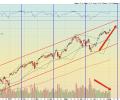
Hoard cash. There will be plenty of time and opportunity at far lower levels, warns Sonali Ranade in her weekly Market Notes

The surprise decision of OPEC and its allies, including Russia, to cut oil output may cause an immediate rise in prices, delaying revision in fuel prices in India, industry sources said. The grouping of Organisation of Petroleum Exporting Countries (OPEC) and its allies, called OPEC+, on Sunday decided to further cut oil output by around 1.16 million barrels. The move led to Brent rising by almost 6 per cent to $84.58 per barrel on Monday.

The rupee plunged 61 paise to decline below the 83-mark for the first time against the US dollar on Wednesday amid unabated foreign capital outflows and a strong dollar in the overseas markets.

Gold burnished its image as the go-to asset class during turbulent times. However, investors seemed to have missed the bus. Net inflows into gold exchange-traded funds (ETFs) plunged to a four-year low of Rs 653 crore in 2022-23 (FY23), even as gold emerged as the top-performing asset class.
Equity benchmarks Sensex and Nifty gave up early gains to close in the red on Wednesday after a selloff in power, metal and consumer durable stocks amid a weak trend in global equities. However, a rally in the rupee against the US dollar and unabated foreign capital inflows helped the indices restrict the losses, traders said. In a largely range-bound session, the 30-share BSE Sensex ended 151.60 points or 0.25 per cent lower at 61,033.55.

'It is like a chicken-and-egg situation.' 'All these product tweaks are innovative, but traders won't move unless there is liquidity.' 'And liquidity cannot be generated until traders move.'

Among Sensex stocks, Tata Motors rose the most by 2.79 per cent. NTPC, Reliance Industries, Infosys, TCS, HDFC twins, Tata Motors, ITC, Power Grid and Bajaj Finserv were among the major gainers. Tata Steel fell the most by 1.22 per cent. L&T, Sun Pharmaceuticals, IndusInd Bank and Ultratech Cement were among the losers.

The biggest risk to India's growth outlook is an escalation of geopolitical tensions, especially if these tensions spread to the Asian region, RBI Monetary Policy Committee (MPC) member Jayanth R Varma said on Wednesday. Varma, in an interview to PTI, said that inflation and inflationary expectations appear to be moderating and high inflation will certainly not become the 'norm' in the country. He is cautiously optimistic about the Indian economy as after the pandemic abated, consumption demand has begun to recover though the recovery is uneven across sectors and industries.

Indian rupee has declined by about 25 per cent since December 31, 2014, and is nearing 80 against the dollar, the Lok Sabha was informed on Monday. The value of the rupee declined from 63.33 against a dollar on December 31, 2014, to 79.41 on July 11, 2022, Finance Minister Nirmala Sitharaman said in a reply quoting RBI data. The exchange rate of the Indian Rupee against the dollar was Rs 78.94 per dollar as of June 30, 2022, Finance Minister Nirmala Sitharaman said in a written reply.

Equity indices nursed losses for the second consecutive session on Tuesday as investors continued to dump IT, banking and FMCG stocks amid a bearish trend in global markets. Unabated foreign fund outflows and the rupee dropping to another record low against the US dollar added to the woes, traders said. Participants were also in wait-and watch mode ahead of release of retail inflation and factory output data.
Equity benchmarks began the week on a downbeat note on Monday, weighed by heavy selling in market heavyweight Reliance Industries and persisting weakness in global bourses. The rupee plunged to its lifetime low against the US dollar amid unabated foreign fund outflows, underscoring the risk-off sentiment prevailing globally as central banks embark on policy tightening to tame soaring inflation. Slipping for the second straight session, the 30-share BSE Sensex shed 364.91 points or 0.67 per cent to close at 54,470.67.
The Reserve Bank of India's (RBI's) outstanding net forward purchases of US dollars fell by more than 50 per cent from the last quarter of FY22 to $30.86 billion in the June quarter (Q1). The net forwards position was at $65.79 billion at the end of the last fiscal year. The purchases fell by $18.33 billion in June as the central bank intervened in both the forwards and the spot market in order to protect the rupee from excessive depreciation in the face of a widening trade deficit.

The domestic unit hovered in a range of 66.45 and 66.61 per dollar during the day.

Benchmark interest rate hiked by 50 basis points to 3-year high at 5.90 per cent. Economic growth projection for FY23 cut to 7% from 7.2% estimated in August. GDP expected to grow at 6.3% in September quarter, 4.6% each in December and March quarters.

A yellow glow is likely to stand out amid grey geopolitical clouds in 2023, with gold price projected to touch Rs 60,000 per 10 grams in the Indian market as more investors veer towards safe-haven assets. In a year where volatility was more a norm than an exception, gold prices in the international market oscillated from a peak of $2,070 per ounce in March to a low of $1,616 per ounce in November and is steadily recovering since then, according to market experts. At the beginning of 2022, gold prices were around $1,800 an ounce.

Benchmark indices ended on a flat note on Thursday as fag-end selling wiped out intra-day gains amid weak global trends. The BSE benchmark Sensex slipped 8.03 points or 0.02 per cent to settle at 53,018.94. During the day, it had gained 350.57 points or 0.66 per cent to 53,377.54. Similarly, the broader NSE Nifty fell 18.85 points or 0.12 per cent to close at 15,780.25.

Seven consecutive sessions of decline in the equity market has eroded the wealth of investors by a whopping Rs 10.42 lakh crore and the benchmark Sensex has tumbled more than 2,000 points during this period. Concerns over more rate hikes by developed economies, weak global equity markets and fresh foreign fund outflows from the domestic market have dented investor sentiments. On Monday, the BSE Sensex dropped 175.58 points or 0.30 per cent to end at 59,288.35 points, marking a decline for seven straight trading sessions.

Former New Jersey Governor Chris Christie and a Republican presidential aspirant have called his fellow rival Indian-American Vivek Ramaswamy a guy who sounds like ChatGPT and described him as an "amateur" Barack Obama.
Indian rupee, which earlier this week touched an all-time low, is likely to remain under pressure and may test new levels as a fallout of the US Federal Reserve indicating more interest rate hikes, experts said. The aggressive rate hikes will dampen demand and increase the possibility of a recession in the US. This could accelerate the pace of capital outflows, weaken the rupee and raise the threat of imported inflation.
 © 2026 Rediff.com - Investor Information - Advertise with us - Disclaimer - Privacy Policy - Sitemap - Feedback - About us - Terms of use - Grievances