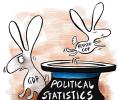
India Ratings and Research on Friday revised down India's FY22 real GDP growth forecast to 10.1 per cent, from earlier projection of 10.4 per cent, citing the second wave of COVID-19 infections and slower pace of vaccination. At a time when large parts of the country are experiencing tremendous pressure on medical infrastructure, the agency said it expects the second wave to start subsiding by mid-May. Earlier this month, the Reserve Bank maintained its 10.5 per cent GDP growth estimate, but Governor Shaktikanta Das has flagged the rising cases as the biggest impediment to recovery.
The Reserve Bank of India on Wednesday retained the economic growth projection for the current financial year at 10.5 per cent, while cautioning that the recent surge in COVID-19 infections has created uncertainty over the economic growth recovery. In its last policy review, the RBI had projected a GDP growth rate of 10.5 pc for FY'22. Taking various factors into consideration, it said, "the projection of real GDP growth for 2021-22 is retained at 10.5 per cent consisting of 26.2 per cent in Q1, 8.3 per cent in Q2, 5.4 per cent in Q3 and 6.2 per cent in Q4."

Fitch Solutions sees RBI keeping benchmark interest rates unchanged during the fiscal to March 2022 following its decision to buy Rs 1 lakh crore of government bonds. "We had initially expected another policy rate cut to arrest the rise in government bond yields since the Union Budget announcement in February. "However, having an explicit bond purchase guidance from the RBI following the announcement of the G-SAP will also achieve a similar effect, if not even be more effective than a rate cut on capping the increase in bond yields," it said in a note. The Reserve Bank of India (RBI) held its policy repurchase (repo) rate unchanged at 4 per cent at its monetary policy meeting on April 7.

60-65 per cent of the FMCG industry's overall sales come from urban areas; 35-40 per cent from rural areas.

At the end of May, out of 26,500 outlets about 60 per cent showrooms and 80 per cent workshops were operational across the country.

Car makers are reaching out to consumers in rural centres as high lending rates slow urban demand.

Moody's Investors Service on Friday said India's economy is expected to contract for the first time in more than four decades saying economic damage owing to the coronavirus-induced lockdown will be significant with lower consumption and sluggish business activity. Even before the coronavirus outbreak, Indian economy already was growing at its slowest pace in six years and with the stimulus measures announced by the government falling short of expectations, the disruptions are likely to be greater. "We now expect India's growth to register a real GDP contraction for the fiscal year ending in March 2021 (fiscal 2020-21), from our earlier projection of zero growth," it said in a research note.

Leading indicators suggest economic activity has been disrupted after demonetisation.

'The answer for a quicker boost to growth is simple -- run a much larger deficit, use the resulting public resources to ensure adequate price support for agriculture, subsidise wage costs of MSMEs and accelerate public sector construction-intensive activities,' advises Nitin Desai.

Significant portion of the funds used to fuel urban demand have become illegal and inoperative.

'India is in a slowdown which most of us have not seen in our living memory.'

The July-September quarter GDP numbers are due on November 30.

Fresh investments are constrained by tepid demand.

For fast-moving consumer goods, growth is likely to be tepid.

The passenger car segment, in comparison, remained sluggish and grew a modest 1.9 per cent to 162,566 units in April

A good monsoon would translate into demand pickup across multiple sectors.
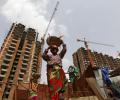
India, he said, has opened up its markets and stepped up public investment including in the infrastructure space and is concentrating a lot on boosting expenditure to improve the quality of rural life

Jaitley said a very large number of reforms have taken place over the last few years and that has helped in restoring the credibility of the Indian economy

Food and fuel are two perennial areas of concern.

For an industry which saw sales shrinking in 2013-14, this is hope indeed.

Rural slowdown may delay growth in the economy.
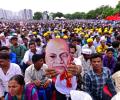
'The reason the protests are not happening in Mumbai, Bangalore, Chennai, Hyderabad, Gurgaon and Noida is that there are options available to the youth in those cities. And many people can access this sort of job because most of them are armed with English, integrating them into the global economy. This is something not available to most youth in Gujarat (the government schools do not teach English till Class 5),' says Aakar Patel.
There has been a decent growth in FDI proposals and new announcements in India to attract foreign investment.
Based on the evidence at hand, Modi's goal of scripting a broader, lasting upturn appears some way off, says Rajesh Kumar Singh.

If the economy gains momentum, that is a big positive for markets, given the strong macro of low inflation, falling rates, and a stable rupee, says Akash Prakash.

The long-term growth perspective or potential for India is one of the highest in the Asia Pacific region.

As rural demand tapers, companies are back at the drawing board, firming up plans to beat the unexpected slowdown in sales.
 © 2026 Rediff.com - Advertise with us - Disclaimer - Privacy Policy - Sitemap - Feedback - About us - Terms of use - Grievances