
The idea is to establish a robust and forward-looking legal framework that addresses the financial stress of power distribution companies, which are facing losses of over 6.9 trillion, while curbing high industrial tariffs that, according to the government, have affected competitiveness, constrained economic growth, and slowed the transition to clean energy.
High spectrum costs limit operators to invest in next-gen network infrastructure.
For the first time, the government is likely to dip into the Oil Industry Development Fund (OIDF) to finance part of its fertiliser subsidy programme for 2025-26, according to official sources. The finance ministry has accounted for Rs 23,000 crore in the FY26 Budget as net additional resources to be drawn from dedicated reserve funds, including the OIDF, the Agriculture Infrastructure and Development Fund, and the Universal Service Obligation Fund.

Of the total proposed allocation, over Rs 1 lakh crore is meant for BSNL and MTNL-related expenses, including Rs 82,916 crore infusion in BSNL for technology upgradation and restructuring at BSNL.

Telecom services providers have urged the Ministry of Finance to suspend the universal service obligation (USOF) till the existing corpus is exhausted. In their Budget recommendations, they have also pressed for an exemption from the service tax on "assignment of right to use natural resources" and the slashing of Customs duty on telecom equipment to zero. The Cellular Operators Association of India (Coai), which represents private sector telecom operators Reliance Jio, Bharti Airtel, and Vodafone Idea, called for abolishment of USOF levy.

On March 13, Minister of State for Finance Pankaj Chaudhary had tabled the second batch of supplementary demands for grants in the House amounting to a total of Rs 2,70,508.89 crore.

Internet major Google has appointed former joint secretary at Niti Aayog Archana Gulati as head of public policy in India. A Google spokesperson confirmed the appointment. Messages sent to Gulati elicited no immediate reply. Gulati was looking after digital communications policy matters at the government think tank and took voluntary retirement in April last year.

The government may be staring at a modest slippage in fiscal deficit for 2022-23 (FY23), with the Ministry of Finance seeking parliamentary approval for additional spending through a second and final tranche of supplementary demands for grants. On Monday, as the Budget session of Parliament resumed, Finance Minister Nirmala Sitharaman sought Parliament approval for additional gross spending of Rs 2.7 trillion in FY23 (which ends on March 31). While net cash outgo is pegged at Rs 1.48 trillion, the rest will be matched by savings or enhanced receipts, the finance ministry said.

The government will conduct a spectrum auction this year, which will facilitate the roll-out of 5G services by private telecom operators during the financial year 2022-23, Finance Minister Nirmala Sitharaman said on Tuesday. "Spectrum auctions will be conducted in 2022 to facilitate the roll-out of 5G mobile services within 2022-23 by private telecom providers," Sitharaman said. She said the telecommunications sector in general and 5G, in particular, can enable growth and offer job opportunities.

The Union Cabinet on Wednesday cleared utilisation of the Universal Service Obligation Fund (USOF) for provision of mobile connectivity in 7,287 uncovered villages across five states at an estimated cost of Rs 6,466 crore. Briefing media on the Cabinet decisions, Information and Broadcasting Minister Anurag Thakur said these uncovered villages of 44 aspirational districts across five states of Andhra Pradesh, Chhattisgarh, Jharkhand, Maharashtra and Odisha will get 4G-based mobile services.

The Department of Telecommunications (DoT) is in the process of issuing a show-cause notice to Vodafone Idea (Vi) for delaying the payment of licence fee. Companies pay 8 per cent of their adjusted gross revenue as licence fee. This also includes a universal service obligation levy. The fee is collected from each of the 22 telecom circles in the country on a quarterly basis.

Bharti will invest an additional $500 million (over Rs 3,700 crore) into OneWeb, to become the largest shareholder in the satellite communications company that billionaire Sunil Mittal-run Bharti Group along with the UK government had rescued from bankruptcy last year. The investment is a result of exercise of a 'call option' by Bharti. On completion of the transaction and with Eutelsat's $550 million investment, Bharti will hold 38.6 per cent. The UK government, Eutelsat and SoftBank will each own 19.3 per cent, OneWeb said in a statement.

With India rolling out 5G services, can telcos get the sizeable 350-400 million 2G customers to upgrade to 4G, or even better -- but very improbably -- straight to 5G?

Air India Chairman Rajiv Bansal has been appointed as the new aviation secretary as part of a major top-level bureaucratic reshuffle effected by the Centre on Wednesday. K Rajaraman, additional secretary in the department of economic affairs, has been appointed as secretary, department of telecommunications, a personnel ministry order said.
The government is planning to merge Bharat Broadband Nigam Limited (BBNL) with the loss-making state-run telecom operator Bharat Sanchar Nigam Limited (BSNL) this month, a senior official has said. BSNL chairman and managing director PK Purwar at a recent event organised by the All India Graduate Engineers and Telecom officers Association (AIGETOA) said that the government is giving the telecom firm an opportunity for a turnaround. "The government has taken a policy decision that BBNL is going to be merged into BSNL. "This means all work of BBNL at the pan-India level is going to come to BSNL," Purwar said at the All India Conference of AIGETOA on March 13.
At the end of Dec, the government had Rs 47,273 crore in the USO fund, with annual accruals of about Rs 6,000 crore.

Reliance Jio and Bharti Airtel have enough capacity to absorb over 113.9 million Vodafone Idea subscribers who are on 4G if Vodafone Idea has to shut operations.
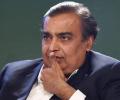
Billionaire Mukesh Ambani on Wednesday pitched for using the USO Fund to subsidise smartphones for select groups to help penetrate the digital revolution and said India should make the rollout of 5G or the fifth-generation technology standard for broadband cellular networks a national priority. As much as 5 per cent of the licence fee paid by telecom operators goes to the Universal Service Obligation (USO) Fund, which was set up in April 2002 for achieving universal service objectives by providing access to telephone services in rural and remote areas and creation of infrastructure for mobile services and broadband in these areas. However, according to the CAG, less than half of the funds so collected are transferred for the said purpose.

The whole process will take 2-3 months, which includes advertising, examination of the tender and signing of the agreement.

India may have achieved a teledensity of over 65 per cent, but as many as 62,443 villages are still to get a taste of telecom revolution that started since 1995-96, says the Economic Survey 2010-11.

Scheme likely to come into force by June or July this year; both PSUs have been losing revenues and market share.

To be headed by Ajay Bhattacharya of Universal Service Obligation Fund of Telecom Ministry, the five-member panel has recently been asked to submit a set of guidelines to suggest ways to promote renewable energy options in the sector within the next three months.

Currently, USO fund administrator invites bid from interested telcos for setting up infrastructure in rural areas and the process is time consuming.

The waiver, decided recently by the Telecom Commission, a wing of the DoT, is worth around Rs 200 crore (Rs 2 billion) per year. The commission also decided to reduce the levy towards the Universal Service Obligation Fund from the present 5 per cent to 3 per cent of the adjusted gross revenue.
The Department of Telecommunications has received 21 bids from telecom operators and infrastructure service providers for the Rs 2,395 crore (Rs 23.95 billion) rural telephony project.
India needs $70bn of private investment in infrastructure and will not get it without a level playing field.
In a move that may hit private courier operators hard, the government on Thursday proposed to stop them from carrying letters weighing below 300 grams.
State-owned Bharat Snachar Nigam has bagged about 80 per cent of the Department of Telecom's Rs 2,500 crore
The government on Monday urged private operators to play a big role in providing rural telephony across the country to reach a respectable level of teledensity.

The temptation to get into businesses that are hot is perhaps too great for any politician, no matter what his public slogans are. Nehru plunged into hot sectors of his time -- engineering and iron and steel. Modi has plunged into digital payments -- the hot sector of his time, notes Debashis Basu.
The government said on Wednesday that the Telegraph Act would be amended to incorporate cellular service providers to get a share from the Universal Service Obligation Fund to connect all villages, highways and rail network.\n\n
Defending the continuation of Universal Service Obligation support, a fund to subsidise unprofitable operations of otherwise profit making telecom PSUs like BSNL, the government on Tuesday said USO exists for all players and not for BSNL alone.

The Universal Service Obligation fund was set up in April 2002 and a statutory status was given to it.
 © 2026 Rediff.com - Advertise with us - Disclaimer - Privacy Policy - Sitemap - Feedback - About us - Terms of use - Grievances