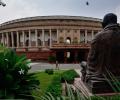
However, the Lok Sabha and the Rajya Sabha will use their respective chambers and galleries for the members to seat, as was the case earlier, they pointed out.
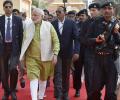
In the Union Budget for 2021-22 presented by Finance Minister Nirmala Sitharaman on Monday, the force received Rs 429.05 crore, an increase of Rs 2.78 crore (or 0.65 per cent hike) from the last budget.

Singh made the remarks while addressing a "CEOs' Roundtable" at the 14th edition of Aero India at the Yelahanka Air Force station complex on the outskirts of Bengaluru.

The Reserve Bank on Friday said it will soon commence the pilot launch of e-rupee for specific use cases with a view to bolstering India's digital economy, making payment systems more efficient, and checking money laundering. In a concept note on Central Bank Digital Currency, the RBI said CBDC is aimed to complement, rather than replace, current forms of money and is envisaged to provide an additional payment avenue to users, not to replace the existing payment systems. "Supported by state-of-the-art payment systems of India that are affordable, accessible, convenient, efficient, safe and secure, the Digital Rupee (e?) system will further bolster India's digital economy, make the monetary and payment systems more efficient and contribute to furthering financial inclusion," the paper said.

For every rupee in the government coffer, 58 paise will come from direct and indirect taxes, 35 paise from borrowings and other liabilities, 5 paise from non-tax revenue like disinvestment and 2 paise from non-debt capital receipts, according to the Budget documents for 2022-23. According to the Union Budget 2022-23 presented in Parliament by Finance Minister Nirmala Sitharaman on Tuesday, goods and services tax will contribute 16 paise in every rupee revenue, while corporation tax will contribute 15 paise to each rupee earned. The government is also looking to earn 7 paise for every rupee from Union excise duty and 5 paise from customs duty. Income tax will yield 15 paise to every rupee collection.

'Indian families' needs and expectations have gone through a revolution across economic demographics.' 'As this latest Modi-Sitharaman Budget demonstrated, politicians have understood this change. They are responding to it,' points out Shekhar Gupta.

The year 2022 saw the Reserve Bank of India (RBI) start acting on the policy repo rate after a gap of two years. The six-member monetary policy committee of the RBI reduced interest rate sharply - by 115 bps - when Covid-19 struck in 2020. In March 2020, days after the nationwide lockdown was announced, MPC in an unscheduled meeting reduced the repo rate by 75 bps, followed by another 40 bps in May. Status quo was maintained for the next two years since the May repo rate hike.

'It has been an ongoing process, talking to the relevant ministries about eliminating leakages and curbing non-core expenditure in various schemes.'

In the Rajya Sabha, Chairman M Venkaiah Naidu could not read out his customary closing remarks that sum up the business conducted in the House during the session, as Shiv Sena and other opposition MPs created a ruckus.

The commerce ministry is proposing a host of direct and indirect incentives such as deferral of import duties and exemption from export taxes to revamp Special Economic Zones through a new legislation, an official said. In the Union Budget this year, the government proposed to replace the existing law governing Special Economic Zones (SEZs) with a new legislation to enable states to become partners in 'Development of Enterprise and Service Hubs' (DESH). The official said the commerce ministry has sought views of different ministries, including finance, on the new bill.

Investors' wealth has jumped Rs 9,57,201.52 crore in the last three days of rally in equity market as stocks continued to march higher amid the Budget-led euphoria. The 30-share BSE benchmark on Wednesday zoomed 695.76 points or 1.18 per cent to settle at 59,558.33 as the post-Budget rally continued. This is the third day of rally in equities and helped by the optimism, the market capitalisation of BSE-listed companies jumped Rs 9,57,201.52 crore to Rs 2,70,64,905.75 crore in three days.

The ministry has also been allocated funds for Lok Sabha polls and photo identity cards for voters.
The recess allows department-related standing committees to examine demands for grants of various ministries. The Finance Bill and related demands for grants are passed in the second phase of the Budget session.
Eminent economist Arvind Panagariya has said India is on the cusp of returning to a high growth trajectory and voiced confidence that the country will become the world's third-largest economy by 2027-28. Currently, India is the fifth largest economy "so it's another five years.We are already in (the year) 2023. "So 2027-28, India should be the third-largest economy," Panagariya, Columbia University Professor and former Vice Chairman of NITI Aayog, told PTI in an interview in New York.
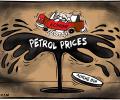
A proposal in the Union Budget 2022-23 to raise excise duty on dirtier, unblended retail petrol and diesel has met with some resistance from the petroleum ministry. However, finance ministry officials say no such communication arguing against the levy of extra duty on diesel has been received from the oil ministry. Until there are discussions between the two departments, the proposal will not be tweaked in the Finance Bill. The Rs 2 per litre additional excise duty proposed on unblended fuels in the Finance Bill will result in a uniform hike of diesel prices across the country from October 1.
A private member resolution seeking that the government implement the recommendations of the Sachar Committee report and other reports that have discussed the educational and social backwardness of Muslims and enact a legislation for the prevention of atrocities against minorities was moved in the Rajya Sabha on Friday.
'... and without necessarily calling them Economic Surveys.' 'One should stick to the main focus, which is to give people a good perspective on how the economy is doing.'

The full-court press on India over Ukraine, the BBC 'documentary', the Oxfam report, the Hindenburg attack on Adani and obliquely on the Indian economy, and any number of other acts are signs that India is a target, warns Rajeev Srinivasan.

As part of the ritual, ''halwa'' is prepared in a big ''kadhai'' (large frying pot) and served to the entire staff involved in the Budget making exercise of the ministry. Halwa was served while maintaining COVID protocol with all present in mask and those distributing sweets were wearing gloves.

The government must expedite its plan for asset sale and privatisation, both of which hardly got any mention in the Budget speech, points out A K Bhattacharya.
The ministry of finance will kickstart its massive budgetary exercise from October 15.

The focus of the Union Budget is on providing basic amenities to the poor, middle class and youth, Prime Minister Narendra Modi said on Wednesday, and asserted that it is imperative that India becomes self-reliant.

'This government has always been fiscally conservative. It never resorted to fiscal profligacy.'

Investors have become poorer by over Rs 10.36 lakh crore in the last four trading sessions as the domestic equity benchmarks extended their losses amid weak global trends. The Sensex and Nifty closed in the red for the fourth straight session on Friday amid continued selling by foreign institutional investors. The BSE Sensex ended 427.44 points or 0.72 per cent lower at 59,037.18.

With days to go before the new tax regime around crypto assets kicks in, several investors are reportedly either booking profits, rejigging their portfolios or moving their crypto assets to their private wallets outside of India. Starting April, gains from trading in crypto and other virtual assets like non-fungible tokens (NFTs) will be taxed at a flat 30 per cent, as announced in the Union Budget. And, 1 per cent of tax will be deducted at source (TDS) on every transaction involving crypto and other virtual assets. The new tax regime also bars investors from offsetting losses from one crypto asset (such as Bitcoin) against gains from another (say, Ethereum).

His remarks assume significance at a time when a large number of Indian students, many of them studying medicine, have been stuck in Ukraine following the Russian attack on that country.

The Union Budget on Monday evoked contrasting responses in the political arena with the ruling Bharatiya Janata Party hailing it as a vision for an 'Aatmanirbhar Bharat' and the Opposition describing it as a 'let down like never before' that was meant to 'deceive' people.

The Centre is looking to improve disclosures made by public sector undertakings (PSUs), and has asked such companies to share monthly progress made on capital expenditure targets and corporate social responsibility (CSR) initiatives undertaken by them. New details such as gender-wise reporting of contractual workers, unused land, and profit share in joint venture companies have also been added in the list of disclosures. The Department of Public Enterprises (DPE), which publishes the Public Enterprises Survey and collects information for Memorandums of Understanding (MoUs) signed with PSUs, is looking to integrate data collected from government-owned companies.

Dr Reddy's, Maruti, Bharti Airtel, Bajaj Auto, Infosys, TCS and Bajaj FinServ were the major losers. On the other hand, IndusInd Bank, Sun Pharma, ICICI Bank and HDFC Bank ended with gains.

The policy was part of the Aatmanirbhar Bharat package announced by Sitharaman in May 2020 as a coherent policy where all sectors would be opened for private sector participation.

"The Union Budget represents the aspirations of 130 crore Indians and lays out the path towards India's development. I invite you all to share your ideas and suggestions for this year's Budget on MyGov," the PM said according to a statement posted on his official website on Thursday.

Sitharaman also said the government is also working on a national language translation initiative.
The Centre and states are likely to budget for higher market borrowings to the tune of Rs 2.3 lakh crore next fiscal even though the Union budget may peg a lower-than-expected fiscal deficit for the Centre at 5.8 per cent of GDP, says a report. Icra Ratings anticipates higher redemptions will lead to gross market borrowings of the Centre to rise to Rs 14.8 lakh crore and of the states to jump by Rs 1.6 lakh crore to Rs 9.6 lakh crore, taking the combined borrowings (of the Centre and the states) to Rs 24.4 lakh crore in FY2024, up by 2.3 lakh crore from FY23 combined. In FY23, the Centre's gross borrowings are budgeted at Rs 14.1 lakh crore and of the states at Rs 8 lakh crore, or a combined borrowing of Rs 22.1 lakh crore, according to the agency.

Adani Group stocks have taken a beating on the bourses after Hindenburg Research made a litany of allegations in its report, including fraudulent transactions and share price manipulation at the Gautam Adani-led group.

Former Prime Minister Indira Gandhi was the first and only women till now to have presented the Union Budget.

Nirmala Sitharaman presents the National Democratic Alliance government's budget amid high hopes and expectations from across the spectrum of society -- from farmers to industralist. Will the Budget fulfill the expectations of all?

Lakhs of employees of public sector banks continued their strike on the second day on Friday as well to protest against proposed privatisation of banks by the government impacting normal operation across the country. Shutters of branches across many parts of the country on Friday were down following the strike call given by the United Forum of Bank Union (UFBU), an umbrella body of nine bank unions including All India Bank Officers' Confederation (AIBOC), All India Bank Employees Association (AIBEA) and National Organisation of Bank Workers (NOBW). As a result, services such as deposits and withdrawal at branches, cheque clearance and loan approvals remains paralaysed due to the two-day strike ending later in the day.

The two Houses of Parliament will meet at separate times of the day for five hours each -- Rajya Sabha in the first half and Lok Sabha in the second half -- to ensure Covid distancing norms during the Budget Session beginning January 31.
This ministry will provide a separate administrative, legal and policy framework for strengthening the cooperative movement in the country, sources added.

Nirmala Sitharaman's messaging was clear when she presented a well-balanced Budget with an eye on state elections in nine states followed by a general election next year, observes Ramesh Menon.
 © 2026 Rediff.com - Advertise with us - Disclaimer - Privacy Policy - Sitemap - Feedback - About us - Terms of use - Grievances