
The rout in Adani Group stocks after US-based short seller Hindenburg Research released a report on January 24 has sparked a rebound in trading activity this month. The average daily trading volume (ADTV) for the cash segment (both NSE and BSE combined) so far in February stands at Rs 59,346 crore, and is around 15 per cent more than the previous month's tally of Rs 51,844 crore, which was the lowest in six months. The ADTV for the futures and options (F&O) segment rose to a record Rs 204 trillion (notional turnover) against Rs 202 trillion in January.

Finance Minister Nirmala Sitharaman will be presenting her fifth Budget that may do a tightrope walk between staying fiscally prudent and meeting general public expectations of lower taxes and a wider social security net, while at the same time firing the engines of the economy.
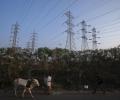
Two years after the Centre's flagship village electrification scheme Saubhagya concluded with the government claiming 99.9 per cent success, several states have added close to 1.1 million rural households that remain to be connected to the electricity grid. This new list includes earlier unwilling households that have now agreed to have a metered connection and also those built or discovered in the states' surveys since 2019. Assam and Uttar Pradesh are the states that have the majority of such new additions.
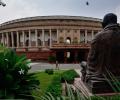
The stormy second part of Budget Session continues. Both houses of Parliament have been facing continuous protests by opposition parties over issues like fuel price hike.

The cement industry continues to present a puzzle to investors.

Finance Minister Nirmala Sitharaman will have to do a tight-rope walk between staying fiscally prudent and general public expectations of lower taxes and a wider social security net, while at the same time firing the engines of the economy before general elections. Sitharaman will on Wednesday present her fifth straight Budget at a time when the economy is slowing due to global headwinds and specific sectors need attention. In the run-up to the Budget presentation, expectations are rife that she may tweak income-tax slabs to provide relief to the middle class and increase spending on the poor through programmes such as the rural job scheme while ramping up financial incentives for local manufacturing.

PEs and VCs are taking a closer look at their bouquet of investments. Leading voices in the sector are categorical that cash-burn rates -- that's blowing up equity to acquire market share -- as a business model can't continue to be the polestar.

Former RBI governor D Subbarao has suggested that the government should come up with a 10-year road map for privatisation of all Public Sector Banks (PSBs) as it would provide much needed predictability to stakeholders. Subbarao further said that the big bang approach to privatisation of state-owned banks is not desirable but at the same time the issue should not be put on the back burner. "Ideally, we should have a road map, maybe over a 10 year timeframe, to privatise all PSBs. "That will give much needed predictability to all stakeholders," he told PTI.

Top on the government's agenda would be getting Parliament's approval to the budgetary proposals and presentation of the budget for the Union Territory of Jammu and Kashmir.

Reminiscent of the past two years, the market has made positive strides ahead of the Union Budget 2023-24 (FY24). The benchmark National Stock Exchange Nifty has gained 1.8 per cent in the last month. Typically, markets tend to gain ahead of the Budget as investors build in optimism.

For fiscal year FY23, the 2022 Union Budget had targeted a capex outlay of Rs 7.5 trillion, which is 35.4 per cent higher than the FY22 Budget Estimate of Rs 5.54 trillion.

In addition to the negative sentiment as a consequence of changes announced in the Union Budget 2023-24 concerning tax treatment for debt repayment distribution, concerns about hiring slowdown and its leasing impact, as well as higher interest rates, could blight the sector in the near term.
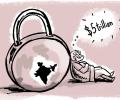
It would be a difficult task for the Indian economy to reach the $5-trillion mark a year before the International Monetary Fund (IMF) projection of 2026-27. Pankaj Chaudhary, minister of state for finance, said in the Rajya Sabha on Tuesday that the government is taking steps to make the country a $5-trillion economy at a date earlier than the IMF's projection. In that context, it would not be difficult to meet the projection in the third quarter of FY27.

The Centre has allocated Rs 73,000 crore for the rural jobs guarantee programme for 2022-23.

Senior tax officials were told to focus on cash collection from the arrears so that the target for FY23 was achieved and the overall revenue position improved.
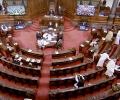
The Rajya Sabha is slated for a 12-hour discussion on the Motion of Thanks to the President's address to the joint session of the two Houses of Parliament, which also includes the reply by the prime minister, which is likely next Tuesday.

The government should scrap the windfall profit tax on domestically produced crude oil as the levy is adversely impacting the capex-intensive exploration of oil and gas, the industry said in its recommendation for the forthcoming annual Budget. India first imposed windfall profit taxes on July 1, joining a growing number of nations that tax super normal profits of energy companies. At that time, a Rs 23,250 per tonne ($40 per barrel) windfall profit tax on domestic crude production was levied.

If somebody wants to do an instant noodle study on contemporary Indian politics, Shobhaji's book, Battlefield India - 25 years of Politricks and Economix, is the one to look into, applauds M R Venkatesh, the well-known economic and political commentator.

Modi claimed that some other parties were also helping the opposition alliance from behind but any vote for them will take Tripura several years backward.

'Each state and central government body may be asked to update its system to ensure PAN is used as a common identification to access its services.'

'Investors should continue to invest because you are looking at the long-term; in the next four to five years, we are bound to outperform (the rest of the world equity markets).'

With the all-party meetings called by Rajya Sabha Chairperson Jagdeep Dhankhar and Lok Sabha Speaker Om Birla producing no breakthrough to end the deadlock in Parliament, Union ministers Piyush Goyal and Pralhad Joshi accused opposition parties of repeatedly 'insulting' Dhankhar.
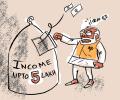
Policymakers are examining the possibility of increasing the tax-free slab to Rs 5 lakh in the two-year-old alternative personal income tax regime to make it attractive, a government official said. At present, taxpayers don't pay income tax if their taxable income is Rs 2.5 lakh and below. Increasing the threshold will reduce the tax outgo for assessees, thereby leaving more money with them to invest, the official said.

Finance Minister Nirmala Sitharaman's Budget speech on Wednesday was marked by the usual thumping of benches by the ruling alliance members, but the loudest cheer was reserved for her announcement of income tax relief, which was welcomed by 'Modi, Modi' chants in Lok Sabha that also witnessed a few instances of protest by the Opposition.

According to state officials, the project envisages lifting of 17.40 thousand million cubic feet of water from river Thunga to Bhadra reservoir and 29.90 TMC from Bhadra reservoir.

The Indian rupee is expected to trade between 80 and 84 against dollar in the first three months of 2023 with support from overseas inflows though worsening current account deficit (CAD) and reduced interest rate differential between the US and India pose challenges. According to a Business Standard Poll of 10 participants, most said the rupee could gain strength in January due to foreign inflows, and the Reserve Bank of India (RBI) is not expected to allow the currency to depreciate ahead of the Union Budget scheduled on February 1. The rupee depreciated 10.15 per cent in 2022, its worst performance since 2013 as the war in Europe and the interest rate increase by the US Federal Reserve prompted investors to flee emerging markets.

Ahead of the Union Budget 2023, insurers are hoping that the Centre will act on their recommendations, which includes increasing the limit for tax deduction under 80D of the Income Tax Act. Also among them are issuance of long-term bonds, tax incentives for home insurance premiums, and a separate section to claim deduction for term-insurance premium, among others. These suggestions would help improve the penetration of insurance in the country.
Catch all the action from the Upper and Lower House of Parliament.

With Nirmala Sitharaman's Budget presentation lasting for about one hour 31 minutes on Tuesday, the finance minister's budget speech this year became the shortest ever since 2019.
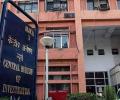
The agency was allocated Rs 835.39 crore to manage its affairs in 2021-22 which was later increased to Rs 870.50 crore in the Revised Estimates given in the Budget document released Tuesday by Finance Minister Nirmala Sitharaman.

Equity benchmarks Sensex and Nifty ended on a mixed note on Wednesday as the euphoria about the Budget fizzled out, with investors going for profit-taking ahead of the Fed interest rate decision. The 30-share BSE benchmark Sensex climbed 158.18 points or 0.27 per cent to settle at 59,708.08 after it trimmed most of the intra-day gains. During the day, it had zoomed 1,223.54 points or 2 per cent to 60,773.44.

The Reserve Bank will launch the first pilot for retail digital rupee in Mumbai, New Delhi, Bengaluru and Bhubaneswar on December 1, and later expand it to nine more cities in the initial phase. This follows a month after the RBI had started a pilot in the digital rupee - wholesale segment on November 1. The Reserve Bank announces the launch of the first pilot for retail digital rupee (e?-R) on December 1, 2022, the central bank said in a statement on Tuesday.
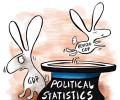
The Economic Survey 2022-23 (FY23), to be presented a day before Union Budget 2023-24 (FY24), is likely to project India's real gross domestic product (GDP) growth between 6 per cent and 7 per cent for FY24, Business Standard has learnt. The broader theme of the Survey could be on how India has dealt with two years of a global pandemic and the ongoing geopolitical disturbance, the strengths and weaknesses that emerged, and what lessons may be learnt. The much-awaited Survey will be the first one by Chief Economic Advisor V Anantha Nageswaran and his team in the finance ministry's economic division.
Ahead of the Union Budget for 2023-24, Budget makers have welcomed the global consensus view that India will remain one of the bright spots in calendar year 2023. But there is some alarm over the grim global situation and how that might impact the Centre's projections and assessments for next financial year. The big global headwinds include a deep and sustained recession in the West, including India's biggest trading partners in North America and Europe, continuing volatility in commodity markets, and renewed Covid-19 fears, as lifting of strict curbs by China could potentially lead to a massive spread again.

The pre-budget Economic Survey, which is tabled in Parliament ahead of the Union Budget to present the state of the economy and suggest policy prescriptions, quite often misses on the GDP forecast, sometimes by a significant margin. This time, Finance Minister Nirmala Sitharaman will table the Economic Survey for 2021-22 in the Lok Sabha on Monday soon after the President's address to both Houses of Parliament. She will present the Union Budget for the next financial year beginning April 1, 2022, on Tuesday.

The CBI had received Rs 802.19 crore initially in the last budget and it was increased to Rs 835.75 crore in the revised estimates for 2020-21.
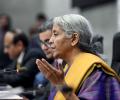
Let's wait for the monetary policy on February 8 -- to see how it complements the fiscal commitments, points out Tamal Bandyopadhyay.

Defence Minister Rajnath Singh on Monday said swift and transparent decision-making and availability of optimal resources were needed for a country's combat readiness.

Presenting the Union Budget for 2020-21, Sitharaman said it is aimed at boosting income and purchasing power of people.

The definition will be revised by raising capital base to Rs 2 crore from the current limit of Rs 50 lakh.
 © 2026 Rediff.com - Advertise with us - Disclaimer - Privacy Policy - Sitemap - Feedback - About us - Terms of use - Grievances