
To further tighten its control of practising accountants, the Centre has brought within the ambit of the Prevention of Money Laundering Act (PMLA) their "financial transactions" such as operating and managing their client firms and trusts, and buying and selling business entities. The Union finance ministry issued a gazette notification on this on Wednesday. Under the new rule, chartered accountants, company secretaries, and cost and works accountants carrying out such transactions (on behalf of their clients) will now be required to go through the Know Your Company (KYC) process before commencing work.

The income tax department has allowed non-resident taxpayers not having PAN to file Form 10F manually till March 31, 2023, a move which would ease their compliance burden and enable them to claim lower TDS rate. The Central Board of Direct Taxes (CBDT) had in July made it mandatory for non-resident taxpayers to file Form 10F electronically to claim benefit of lower Tax Deducted at Source (TDS). However, taxpayers faced problems in electronic filing of the form as the income tax portal did not allow a taxpayer who does not have a Permanent Account Number (PAN) to file Form 10F.
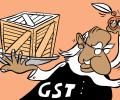
GST taxpayers will be required to reverse by November 30 the input tax credit (ITC) claimed in the last fiscal in case their suppliers fail to deposit the due tax by September 30, the finance ministry has said. The taxpayers, however, can reclaim the ITC later following the deposit of taxes by the supplier. The ministry has inserted Rule 37A in Central Goods and Services Tax rules to give effect to the new provision.

Packed frozen 'paratha' is not 'roti or chapatti' as it requires further cooking before consumption and despite wheat flour being the 'common thread' there are other ingredients used in making parathas, said an order by the Gujarat Appellate Authority for Advance Ruling. Such parathas, whether named Malabar, Mixed vegetable, Onion, Methi, Alu, Laccha, Mooli or Plain, have ingredients like margarine, salt, emulsifying agent, oil, potato, peas, cauliflower, coriander powder, bread improver and water, apart from wheat flour, which make 'quite different' from plain roti or chapatti and hence are not eligible for 5 per cent Goods and Services Tax (GST) rate, the ruling said. The percentage of wheat flour used by Vadilal Industries, which had approached the AAAR, in the eight varieties of paratha manufactured and supplied by it ranges from 36-62 per cent, whereas the ingredient for plain roti or chapatti is wheat flour apart from water.

The Central Board of Direct Taxes (CBDT) has issued detailed guidelines on facilitating tax deducted at source (TDS) on virtual digital assets (VDA) or crypto assets, under which date of transfer and mode of payment will have to be specified. From July 1, TDS of 1 per cent will be levied on payments towards virtual digital assets or cryptocurrencies beyond Rs 10,000 in a year, as the Finance Act 2022 has introduced Section 194S in the income tax (I-T) Act. The department has explained different scenarios through six questions to remove difficulties.

The government has notified a host of procedural changes in the GST rules, including levy of interest for wrongful utilisation of ITC and turnover threshold for filing annual returns for the 2021-22 fiscal. The changes were vetted by the Goods and Services Tax (GST) Council at its meeting last week. With the amendments notified by the Central Board of Indirect Taxes and Customs (CBIC), businesses have also been allowed to make tax payments on the GSTN portal by using IMPS and UPI payment modes.
The tax authorities may tell banks and crypto exchanges to report transactions of virtual digital assets (VDAs) as the government begins taxing gains from cryptocurrencies and non-fungible tokens from April 1. So far, the tax department has relied on voluntary disclosures on transactions of VDAs. Once implemented, the sale and purchase of digital assets will reflect in the Annual Information Statement (AIS). The AIS contains details of at least 46 of the financial transactions done by a taxpayer in a financial year.

A 5 per cent GST rate kicked in on Monday on pre-packed and labelled food items such as cereals, pulses and flour weighing less than 25 kg.

Businesses with monthly turnover of over Rs 50 lakh will have to mandatorily pay at least 1 per cent of their GST liability in cash, the finance ministry said as it moved to curb evasion by fake invoicing. The Central Board of Indirect Taxes and Customs (CBIC) has introduced Rule 86B in Goods and Services Tax (GST) rules which restricts use of input tax credit (ITC) for discharging GST liability to 99 per cent. "... The registered person shall not use the amount available in electronic credit ledger to discharge his liability towards output tax in excess of 99 per cent of tax liability, in cases where the value of taxable supply ... in a month exceeds Rs 50 lakh," the CBIC said.

Businesses that have not filed GSTR-3B returns in the preceding two months will not be able to file details of outward supplies in GSTR-1 from September 1, GSTN has said. While businesses file GSTR-1 of a particular month by the 11th day of the subsequent month, GSTR-3B, through which businesses pay taxes, is filed in a staggered manner between 20th-24th day of the succeeding month. In an advisory to taxpayers, GSTN, which manages the technology backbone for Goods and Services Tax, said that Rule-59(6) of Central GST Rules which provides for restriction in filing of GSTR-1, will come into effect from September 1, 2021.

The bill to nullify retrospective taxation offers a fair solution within the framework of Indian law and Parliamentary sovereignty to companies which have been subjected to such demands, Finance Secretary T V Somanathan said on Thursday. Finance Minister Nirmala Sitharaman introduced 'The Taxation Laws (Amendment) Bill, 2021' in the Lok Sabha that seeks to withdraw tax demands made using a 2012 retrospective legislation to tax the indirect transfer of Indian assets. The Bill provides for the withdrawal of tax demand made on "indirect transfer of Indian assets if the transaction was undertaken before May 28, 2012 (i.e. the day the retrospective tax legislation came into being)."

The Centre is considering a gradual phasing out of certain direct tax exemptions meant for corporate and personal tax payers. This is among the tax proposals being discussed for the upcoming Union Budget 2022-23. A top policymaker said that according to the government's internal assessment, the percentage of corporates and individuals shifting to the new exemption-less tax regime has been very encouraging, and the Budget-makers expect many more to make the switch in the coming years. The person also said the finance ministry is exploring the option of rationalising the capital gains tax rates.
The government has extended the deadline for filing GST annual return and audit report for the 2018-19 fiscal year by a month, till October 31.

The government has reduced the tariff value for import of edible oil, including palm oil, by up to $112 per tonne, a move which experts said can lead to lower domestic prices. The Central Board of Indirect Taxes and Customs (CBIC), through a notification, has cut the tariff import value of crude palm oil by $86 per tonne, and of RBD and crude palmolein by $112 per tonne each. It also reduced the base import price of crude soyabean oil by $37 per tonne. The changes in tariff value of edible oil are effective from Thursday (June 17).

The government has tweaked the income tax laws to make it easier for the new owners of loss-making public sector undertakings (PSUs) to carry forward the accumulated losses and set them off against future profits. This will result in significant tax savings for the new owners if they are able to turnaround operations of the ailing PSU within a few years. This will, in turn, boost the post-tax earnings and returns for the new owners.

The government has notified mandatory requirement of e-invoicing for B2B transactions for businesses with a turnover over Rs 100 crore with effect from January 1, 2021. Under Goods and Services Tax (GST) law, e-invoicing for business-to-business (B2B) transactions is mandatory for companies with turnover of over Rs 500 crore from October 1. In a notification, the Central Board of Indirect Taxes and Customs (CBIC) said e-invoicing will be extended to businesses with a turnover over Rs 100 crore from January 1.
What are the five things that need to be looked at to ensure a seamless transition to GST?

Supplying food to schools under mid-day meal scheme, pre-schools and anganwadis is exempt from GST, the Central Board of Indirect Taxes and Customs (CBIC) has said. Issuing a set of clarification on certain decisions taken by the GST Council in its 43rd meeting on May 28, the CBIC said it had received representations regarding applicability of GST on the issues as to whether serving of food in schools under mid-day meals scheme would be exempt if such supplies are funded by government grants and/or corporate donations. Under the goods and services tax (GST), any catering service, including mid-day meals, provided to an educational institution is exempt from the levy.

New Delhi and Washington have agreed to count the benefits of a global agreement on taxation from the next financial year. However, the benefits would actually accrue once the global pact comes into effect or March 31, 2024, whichever is earlier, in the form of credit.

Recently, the finance ministry waived off basic customs duty and health cess on imported oxygen and related equipment for three years.

Discussions are said to have been heating up over how long a tax indemnity clause, which is part of such deals, should run, according to multiple people familiar with the matter.

GST revenue for the month of June stood at Rs 92,849 crore, a 2 per cent increase over the same month a year ago, the Finance Ministry said on Tuesday. The gross GST revenue collected in the month of June 2021 stands at Rs 92,849 crore of which central GST is Rs 16,424 crore, state GST Rs 20,397, Integrated GST Rs 49,079 crore (including Rs 25,762 crore collected on import of goods) and cess is Rs 6,949 crore (including Rs 809 crore collected on import of goods), the ministry said. The GST revenues for the month of June 2021 are 2 per cent higher than Rs 90,917 crore collected in June 2020.

In signs of acceleration in economic activity, India's tax collections on goods sold and services rendered returned to over Rs 1 lakh crore in July after the second wave of Covid-related restrictions caused a blip in the previous month. Goods and Services Tax (GST) mop-up grew 33 per cent year-on-year in July to over Rs 1.16 lakh crore, indicating that the economy is recovering at a fast pace. In July 2020, the collection was Rs 87,422 crore. This is the second highest collection so far this fiscal after a record Rs 1.41 lakh crore mop-up in April.

Goods and Services Tax (GST) collections at Rs 95,480 crore in September touched the highest level so far this fiscal, the finance ministry said on Thursday.

The government could look at providing deductions for expenses incurred by salaried employees while working from home in the upcoming Budget as it looks to boost demand, consulting firm PwC India said on Thursday. Addressing a pre-Budget session, Pwc India senior tax partner Rahul Garg said demand creation is particularly focussed on money being given or left in the hands of the individuals.

GST collections in March touched a record high of over Rs 1.23 lakh crore, a 27 per cent growth over the year-ago period, the Finance Ministry said on Thursday. "GST revenues crossed above Rs 1 lakh crore mark at a stretch for the last six months and a steep increasing trend over this period are clear indicators of rapid economic recovery post pandemic," the ministry said. Closer monitoring against fake-billing, deep data analytics using data from multiple sources including GST, income tax and customs IT systems and effective tax administration have also contributed to the steady increase in tax revenue over last few months, it added.

However, where the directors' remuneration is in the nature of professional fees and not salary, GST will be levied on a reverse charge basis.

Although the June collections were higher than that in July, however, it is important to note that during the previous month, a large number of taxpayers also paid taxes pertaining to February, March and April 2020 on account of the relief provided due to COVID-19.
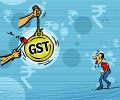
The high court's order, which says refunds paid on service inputs can be restricted, runs contrary to Gujarat HC verdict and could complicate matters.

Pulse oximeters, hand sanitisers, temperature check equipment and ambulances too will attract lower 5 per cent tax.

'As regard to specific reference to high net worth individual, the moment we finish the 75th anniversary of India's independence, we shall review and take a call,' Finance Minister Nirmala Sitharaman said.

A taxpayer filing ITR electronically without digital signature has to verify it using either Aadhaar OTP, or logging into e-filing account through net banking, or by Electronic Verification Code or by sending a duly signed physical copy of ITR-V through post to CPC Bengaluru within 120 days of uploading the ITR.

The data primarily pertains to activities in March, which had only a few days under the Covid-19 lockdown. For April , hence, CGST collections could be much lower, fear analysts.

Mop up grows 10% y-o-y at Rs 1.05 trillion, almost equal to levels in February before a nationwide lockdown to contain the coronavirus pandemic

Digital commerce operators advertising on global social media, which earlier did not pay Google tax on their operations in Jammu & Kashmir, may now have to cough it up at 6 per cent.

The new restriction will be challenging for businesses, as they will have to do regular follow-ups with their suppliers.

While experts pointed out the impact of corporation tax cuts cannot yet figure in collections as most companies are yet to decide on their choice, government officials said a part reason for slow collection is the tax cut.

HUFs are not used for tax evasion but for tax avoidance/to save the tax within the four corners of the law. Experts say that there will be little or almost insignificant change in tax revenues.

Experts said this will mean that companies, which have offices in multiple states, will have to raise Goods and Services Tax invoice for functions performed by employees in head office that has helped branches in other states.

GST collections in March slipped below the psychological Rs 1 lakh crore-mark for the first time in four months to Rs 97,597 crore as the Covid-19 lockdown that shut most businesses compounded tax collection woes in an already sluggish economy. Goods and Services Tax (GST) mop-up in March recorded a 8.4 per cent decline over March 2019 collection of Rs 1.06 lakh crore. The collections were lower on account of dip in revenues from domestic transactions as well as imports.
 © 2026 Rediff.com - Advertise with us - Disclaimer - Privacy Policy - Sitemap - Feedback - About us - Terms of use - Grievances