
Maruti Suzuki India (MSIL) will hold discussions with the Centre and state governments on how the production of compressed biogas (CBG), which can be used in vehicles that run on compressed natural gas (CNG), can be expanded in the country, its majority shareholder Suzuki Motor Corporation (SMC) said. The demand for CNG vehicles has been rising significantly in the country. MSIL sold 145,000 CNG vehicles in the first quarter of 2024-25, marking a 28.3 per cent year-on-year (Y-o-Y) growth.

Passenger vehicle sales in India kicked off on a flat note in new fiscal 2024-25 with 3.38 lakh units sold in April, impacted by high base effect and muted demand due to the ongoing general elections. Dispatches of passenger vehicles from manufacturers to dealers were at 338,341 units in April 2024 as compared to 332,468 units in the same month last year, a growth of 1.77 per cent with major players Maruti Suzuki India, Hyundai and Tata Motors reporting marginal growth in their domestic wholesales.

The name of the country's most popular car brand, Maruti Udyog Ltd, has been changed to 'Maruti Suzuki India Ltd' with effect from September 17.

Foreign share holding limit in Maruti Suzuki India has reached trigger limit and any further investment by FIIs will be allowed only after RBI's approval.

At present, MSI has a staff strength of 7,500 employees. Enrollment in the next fiscal will be higher than the 800 people recruited this fiscal by the company.

The Federation of Automobile Dealers Associations (Fada) has raised concerns over the rising inventory levels of four-wheelers at dealerships which have now reached a 60-day stockpile or around 550,000 units. This situation could mean a significant financial burden on dealerships due to the additional interest cost for the extended holding period. These 60-day inventory levels are nearing the 2018-19 levels when inventory days had approached 70 days, leading to the closure of around 282 passenger vehicle dealerships.
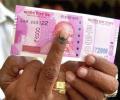
These are the top buyers of the scrapped electoral bonds, the data for which was released by the Election Commission on Thursday.

Maruti Suzuki India, Mahindra & Mahindra, Hyundai Motor and luxury car maker Audi have extended support to customers in cyclone and flood affected regions of Tamil Nadu and Andhra Pradesh. In a statement, Maruti Suzuki India said it has collaborated with its dealer partners and made several arrangements at its workshops. As soon as the news about the cyclone 'Michaung' was reported, the company proactively sent out 7 lakh SMS alerts containing precautionary steps to its customers to ensure that even before the cyclone hits, customers could take precautionary measures to safeguard their cars against potential damage, it said in a statement.

Airports across the country witnessed chaotic scenes on Friday after dozens of flights were either delayed or cancelled after a widespread global computer outage that also hit operations like cash withdrawal at some banks, and impacted functioning of some brokerages. Globally, the Microsoft cloud outage led to US airlines cancelling flights, but the tech giant later reportedly said its cloud services outage in the Central US region has been resolved.
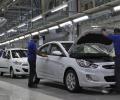
Leading automakers Maruti Suzuki, Hyundai and Tata Motors on Friday reported robust sales for February as demand for sports utility vehicles continued to remain strong. Mahindra & Mahindra, Toyota Kirloskar Motor and Honda Cars also witnessed higher vehicle dispatches to dealers last month. February turned out to be the third-best month for sales for the industry ever.

Passenger vehicle sales are expected to experience muted growth in the current financial year.

Passenger vehicle wholesales in India witnessed a marginal growth in May on account of high base effect and muted demand due to general elections. The overall passenger vehicle dispatches from companies to dealers stood at 350,257 lakh units last month as compared to 335,436 in the same month a year ago, registering a growth of 4 per cent.

Auto manufacturers have focused on launching CNG variants of their popular models to meet consumer demand for vehicles with lower running costs.

Maruti Suzuki India's net profit surged 80.3 per cent to Rs 3,716.5 crore in the September quarter, driven by better sales, softening commodity prices, cost reduction efforts and higher non-operating income. The company had delivered a net profit of Rs 2,061.5 crore in the year-ago period, Maruti Suzuki India said in a statement on Friday. Maruti said it is expecting the affordability of small cars in the domestic market to come back in the next 2-3 years in the face of rising income levels of people and a growing economy, among others.

Maruti Suzuki India on Friday said it is recalling 7,213 units of its Baleno RS model due to a suspected defect in vacuum pump, which assists brake function. The recall will impact vehicles manufactured between October 27, 2016 and November 1, 2019, Maruti Suzuki India said in a regulatory filing. "It is suspected that there is a possible defect in vacuum pump, which assists the brake function.
Automakers Maruti Suzuki, Mahindra & Mahindra and Audi India on Monday announced plans to hike prices of their passenger vehicles in January 2024 citing reasons, including cost pressure driven by overall inflation and increased commodity rates. Besides, Tata Motors and Mercedes-Benz India are mulling increasing the prices of their models from January. The country's largest carmaker Maruti Suzuki India, which sells a range of vehicles from entry-level small car Alto to multi-utility vehicle Invicto, priced between Rs 3.54 lakh and Rs 28.42 lakh (ex-showroom Delhi), on Monday said the price hike would vary from model to model.

Operating margins have been the primary driver of corporate earnings in India in recent quarters, despite revenue growth suffering from weak consumer demand. Companies across sectors have reported a sharp improvement in earnings before interest, tax, depreciation, and amortisation (Ebitda) margins over the past two years, benefiting from lower commodity and energy prices. Higher margins more than compensated for slower revenue growth, resulting in double-digit growth in net profit for five consecutive quarters.

'Gujarat is the frontrunner at present.'
'However, Tamil Nadu's robust automobile ecosystem and Telangana's aggressive incentives make them strong contenders.'

'It will take some more time because the affordability of these cars have changed drastically.'

Interim Budget, the US Federal policy decision and quarterly earnings will be the major drivers for stock markets which may also see some consolidation this week, say analysts. Besides, investors would also focus on the trading activity of foreign investors and global trends for further cues. From the macroeconomic front, the PMI (Purchasing Managers' Index) data for the manufacturing sector is scheduled to be announced on Thursday.

The Invicto hybrid, priced at Rs 24.79 lakh (Rs 2.479 million), is a Multi-Purpose Vehicle, which is based on the Toyota Innova Hycross.

The stock of the country's largest passenger vehicle maker, Maruti Suzuki India (MSIL), has been hitting successive all-time highs over the past three trading sessions. The rally in the scrip has helped it notch over a 21 per cent gain since the start of February, outperforming the National Stock Exchange Nifty Auto Index. The gains for the leader of small passenger cars have been more recent, as the company still trails the Nifty Auto over one- and two-year periods.

It's not only the Indian markets that command a valuation premium over their global peers; shares of subsidiaries of India-listed multinational companies (MNCs) also trade at rich valuations compared to their parent companies. An analysis of 12-month forward price-to-earnings (P/E) and price-to-book (P/B) multiples of domestically listed MNCs shows that most quotes have a premium ranging from 2.1x to 6x that of their parent. Similarly, P/B, in most cases, is significantly higher in the domestic market.

Maruti recorded a 13.12% year-on-year surge in average revenue earned per car in 2023 compared to M&M's 7.56%, Hyundai's 6.76% and Tata Motors' 1.88%.

Corporate India is starting to step up its capital expenditure plans amid government incentives and signs of rising demand, company executives and analysts have indicated. This coincides with the Reserve Bank of India (RBI) recently citing a double-digit growth in private capital expenditure. Healthy balance sheets of banks and corporates, along with increasing capacity utilisation and improving business sentiment, are contributing to a favourable environment for sustained growth in private sector investments, the RBI said in its policy last week.

Passenger vehicle sales in India touched a record high of 41.08 lakh units in 2023, growing by 8.3 per cent over the previous year driven by SUVs, which accounted for almost half of the total dispatches from manufacturers to dealers. The record sales have been achieved despite an increase in the average price of vehicles to Rs 11.5 lakh last year as compared to Rs 10.58 lakh in 2022. Market leader Maruti Suzuki, Hyundai Motor India, Tata Motors and Toyota Kirloskar Motor reported their best-ever annual sales in 2023.

Consumer goods firms and auto companies are witnessing an upturn in rural demand, which had been lagging for most of FY24. Expectations of a bumper rabi crop harvest have helped turn the tide. The Reserve Bank of India's (RBI's) Monetary Policy Committee kept the repo rate unchanged last week, noting that as rural demand catches up, consumption is expected to support economic growth in 2024-25.

Tata Motors surpassed Maruti Suzuki (India) (MSIL) to become the most-valuable automobile company, in terms of market capitalisation (mcap), after a gap of seven years. With this, the company's stock hit a new high on the BSE on Tuesday (January 30). The combined mcap of Tata Motors (Rs 285.51 crore) and Tata Motors DVR (Rs 29,119 crore) stood at Rs 3.146 trillion.

Maruti Suzuki India on Tuesday said it is recalling 9,125 units of its models Ciaz, Brezza, Ertiga, XL6 and Grand Vitara to fix possible defects in a part of the front row seat belts. The affected vehicles were manufactured between November 2-28, 2022, Maruti Suzuki India said in a regulatory filing.

Maruti Suzuki India on Monday said it has hiked prices of its vehicles across models by about 1.1 per cent. This is the second price hike that the carmaker is undertaking in the ongoing fiscal year, after increasing it in April 2022. In December last year, the company had said it would hike prices of its vehicles to offset the impact of rising input costs and make provisions to update the model range to conform to stricter emission norms which will kick in from April 2023.

If Tesla comes in, India's position as a manufacturing hub will rise many notches, as it will become only the second country, after China, to have both Apple as well as Tesla.

Maruti Suzuki India on Friday reported an over four-fold increase in consolidated net profit to Rs 2,112.5 crore in the second quarter ended on September 30, 2022, riding on record sales. The company had posted a consolidated net profit of Rs 486.9 crore in the same period last fiscal, Maruti Suzuki India said in a regulatory filing. Total revenue from operations was at Rs 29,942.5 crore as against Rs 20,550.9 crore in the year-ago period.

Passenger vehicle wholesales in India rose to a record high in October as companies pushed dispatches to dealers to cater to the enhanced demand in the festive season. The overall passenger vehicle wholesales in October rose to 391,472 units, up 16 per cent from 336,679 units in the same month last year. Last month witnessed the highest-ever dispatches of passenger vehicles in the domestic market by Maruti Suzuki India and Mahindra & Mahindra.
Maruti Suzuki India's production in December 2022 was lower by 17.96 per cent at 124,722 units, according to a regulatory filing by the company. The company had a total production of 152,029 units in the same month a year ago. Production in mini cars and compact segment, comprising models such as Alto, S-Presso, Baleno, Celerio, Dzire, Ignis, Swift and WagonR, was lower at 83,753 units last month as compared to 106,090 units in December 2021.
Passenger vehicle wholesales in India rose 9 per cent year-on-year in August on the back of strong demand for utility models, industry body SIAM said on Monday. Overall passenger vehicle dispatches to dealers rose to 359,228 units last month from 328,376 units in August 2022. Utility vehicle sales increased 34 per cent year-on-year to 181,825 units.
Maruti Suzuki India on Wednesday reported a 42 per cent rise in consolidated net profit to Rs 2,671 crore for the fourth quarter ended March 2023, driven by higher sales, improved realisation and favourable forex movement. The country's largest carmaker logged a net profit of Rs 1,876 crore in the January-March of 2021-22. Net sales during the fourth quarter rose to Rs 32,060 crore compared to Rs 26,749 crore in the year-ago period, Maruti Suzuki India (MSI) said in a regulatory filing.

'The decrease in the popularity of white cars and the rise in preference for darker colours like black, grey, and blue over the past three years reflect changing consumer attitudes.'

'Nearly all companies are extending festival offers for entry-level, sedan, and hatchback segments.'

Equity benchmark indices Sensex and Nifty on Friday reversed their six-session losing streak and rebounded more than 1 per cent on value buying in auto, IT, financial and energy stocks. Better than expected quarterly financial results of corporates also boosted investor sentiments even as uncertainties persisted over the escalating tensions in the Middle East, according to analysts. In a largely range-bound trade, the 30-share BSE Sensex rose 634.65 points or 1.01 per cent to settle at 63,782.80 points.

Tata Motors, Mahindra & Mahindra and Kia India on the other hand witnessed an increase in their market share based on the retail sales last fiscal. As per the Federation of Automobile Dealers Associations (FADA), the retail sales of country's largest carmaker Maruti Suzuki India rose to 14,79,221 units in 2022-23 fiscal, attaining a market share of 40.86 per cent. It had retailed 12,39,688 units in 2021-22 and grabbed a market share of 42.13 per cent.
 © 2026 Rediff.com - Investor Information - Advertise with us - Disclaimer - Privacy Policy - Sitemap - Feedback - About us - Terms of use - Grievances