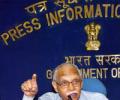
Prime Minister Manmohan Singh mourned his death in his message to Tendulkar's wife Sunetra.

State Bank of India (SBI), in a report on Friday, claimed a significant decline in the headline poverty ratio in rural areas on account of enhanced physical infrastructure, higher consumption growth in the bottom fractile and direct benefit transfers (DBTs).
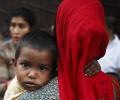
The 14-member task-force will develop a working definition of poverty.

The Planning Commission has issued poverty estimates based on the Suresh Tendulkar methodology, while admitting it was not taking this seriously.

The Planning Commission's de-linking entitlement benefits for the poor from the Suresh Tendulkar committee's recommendation on determination of poverty has left a big question mark on the number of beneficiaries to be covered under the proposed Food Security Act.
The present turmoil in Air India has thrown up many alternatives including privatisation. Memories are short. Recalling the past may be relevant.

The Reserve Bank of India may consider withdrawing excess liquidity in the system to tame high inflation in its monetary policy review later this month, Suresh Tendulkar, economist and former head of the Prime Minister's Economic Advisory Panel, said on Tuesday.
India's projected growth rate may be marginally affected if there\nis a bad monsoon, as it will affect agricultural output, said Suresh Tendulkar,\nchairman of the prime minister's Economic Advisory Council.
Although the WPI-based inflation has been in the negative for two consecutive weeks, the Consumer Price Index, which measures movement in the prices that consumers pay, reported double-digit increase in May.

Inflation jumped to 4.78 per cent in November, driven by rising prices of essential food items like pulses, fruits and vegetables.

Rangarajan, 77, who will replace Suresh Tendulkar, gave his resignation to Rajya Sabha chairman Hamid Ansari, who has accepted it.
"India's economic fundamentals are quite robust and its economy remains the second-fastest growing one in the world," the prime minister's Economic Advisory Council's chairman Suresh Tendulkar told reporters in Mumbai. According to him, the financial meltdown in advanced economies 'has been very serious'.

The overall poverty figure is 37 per cent and not 27 per cent as was estimated in 2004.
Last week, the India Meteorological Department downgraded its monsoon forecast to 'below normal'. This has led to fears whether it would affect agricultural output and bring down India's growth in the current fiscal. The agriculture sector contributes around 17 per cent to the gross domestic product and employs around 60 per cent of the nation's total workforce.
Since the poverty estimates released by the Planning Commission determine the eligibility of benefits such as BPL allocation of foodgrain to the states, he said, "a firm choice of reference period is necessary." Different reference periods (30-day recall period and 365-day recall period) used in the early surveys, he added, had prompted the Planning Commission to come out two with sets of poverty figures.
Bringing back money stashed in Swiss banks by Indians is not going to make any 'significant difference' to the overall economy, Prime Minister's economic advisory panel head Suresh Tendulkar said on Monday.
Earlier the council's outlook was 7-7.5 per cent for the year. Even the revised forecast is yet quite optimistic compared to other agencies.
Public sector banks have already begun slashing their prime lending rates while some in the private sector space have so far refrained from doing so. "Private sector banks will (now) have to reduce their rates," Prime Minister's Economic Advisory panel chief Suresh Tendulkar said. "Banks are well-capitalised but the current problem is that they are unwilling to lend."

The Planning Commission's latest poverty estimates, based on the 2011-12 consumption expenditure survey, shows that across India, the number of people living below the poverty line declined by more than 15 percentage points -- from 2004-05 to 2011-12 and from 37 per cent to 21.9 per cent.
.jpg)
The number of poor in the country declined to 27 crore (270 million) in 2011-12, from 40.74 crore in 2004-05, Minister of State for Planning and Parliamentary Affairs Rajeev Shukla said on Wednesday.

The recent release of the updated index for comparing the value of currencies across countries - generally known as purchasing power parity, or PPP - will have far-reaching implications.

'The Indian economy has been subsidised by the poor.'

These figures are based on purchasing power parity of 2005.

The notes argue that it will widen the talent base available to govt to deliver increasingly complex services to a demanding population.

There is lack of scientific basis in computing the poverty line, says govt.
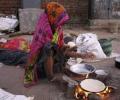
India could gain four times over by winding up dysfunctional subsidies.

Majority of 'Bimaru' states register faster fall in rural poverty, while pace mostly other way round for others

National carrier Air India is running in losses and needs government's attention.
 © 2026 Rediff.com - Advertise with us - Disclaimer - Privacy Policy - Sitemap - Feedback - About us - Terms of use - Grievances