
Among the Sensex firms, Axis Bank fell over 4 per cent, emerging as the biggest laggard. State Bank of India, IndusInd Bank, NTPC, UltraTech Cement, Bajaj Finserv, Tata Steel, JSW Steel, Maruti and Larsen & Toubro were the other major laggards. Nestle, Hindustan Unilever, HDFC Bank, Tata Consultancy Services, Infosys, HCL Technologies, and Asian Paints were among the gainers.

HCL Technologies was the biggest gainer in the Sensex pack, rising 5.58 per cent, followed by Tata Consultancy Services and Infosys, State Bank of India, Tech Mahindra, Tata Steel, NTPC and Wipro. In contrast, Nestle, Bharti Airtel, Maruti and ITC were among the laggards.

Rajya Sabha MP Kapil Sibal on Friday described the electoral bonds scheme as a 'very big scam' and demanded that a special investigation team (SIT) be set up with court-appointed officials to probe the alleged quid pro quo and wrongdoings under it.

RBI's exercise will take into account standards of governance, the viability of the payment bank (PB) business model, and changes, if any, if needed.
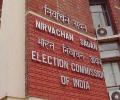
From steel tycoon Lakshmi Mittal to billionaire Sunil Bharti Mittal's Airtel, Anil Agarwal's Vedanta, ITC, Mahindra and Mahindra, and a lesser-known Future Gaming and Hotel Services were among the prominent buyers of the now-scrapped electoral bonds for making political donations.
Among the Sensex firms, NTPC climbed over 3 per cent emerging as the biggest gainer. Tata Motors, Sun Pharma, Tata Steel, State Bank of India, UltraTech Cement, JSW Steel, Bajaj Finance, Reliance, ICICI Bank and IndusInd Bank were the other major gainers. Power Grid, HCL Technologies, Tech Mahindra, Tata Consultancy Services, Infosys and Titan were among the laggards.

As the total number of bank frauds increased from 6,800 in FY19 to more than 13,500 in FY23, the share of private banks in the occurrence went from 34 per cent to 66 per cent.

The other prominent gainers were Tech Mahindra, HCL Technologies, Wipro, State Bank of India and Larsen & Toubro. Bajaj Finserv, Power Grid, UltraTech Cement and HDFC Bank were among the laggards.
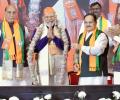
'My suspicion is that most of the bonds were given by companies who had got contracts or who had benefited from policy changes by the government.'

Future Gaming of lottery king Santiago Martin was the biggest purchaser of electoral bonds at Rs 1,368 crore, of which nearly 37 percent went to the DMK.

Axis Bank, Tata Steel, Kotak Mahindra Bank, ICICI Bank, Tata Motors, and Bajaj Finance were among the other major laggards. Tata Consultancy Services, Reliance Industries, UltraTech Cement, Infosys, HCL Technologies, and Tech Mahindra were among the gainers.

Among the Sensex firms, State Bank of India, Infosys, Titan, Tech Mahindra, IndusInd Bank, NTPC, ICICI Bank, Power Grid, Reliance Industries and Kotak Mahindra Bank were the major laggards. On the other hand, Tata Motors, Nestle, Hindustan Unilever, Tata Steel, Bajaj Finance and UltraTech Cement were among the gainers.

All political parties put together received more than Rs 12,000 crore till last fiscal since the introduction of the now-annulled electoral bond scheme in 2018, of which the ruling BJP got nearly 55 per cent or Rs 6,565 crore, according to the data available with Election Commission and Association for Democratic Reforms (ADR).

Among the Sensex firms, Infosys, Tech Mahindra, HCL Technologies, Tata Consultancy Services, Wipro and JSW Steel were the major gainers during the morning deals. Nestle, Bharti Airtel, Axis Bank ITC were among the laggards.

Eight of the 10 most valued firms faced a combined erosion of Rs 1,17,493.78 crore in market valuation in an overall weak trend in equities last week, with Infosys taking the biggest hit. Reliance Industries, Tata Consultancy Services (TCS), HDFC Bank and ICICI Bank were among the eight companies that suffered a decline in their valuation. ITC and State Bank of India were the only gainers. Last week, the 30-share BSE Sensex fell by 775.94 points or 1.28 per cent.

Notwithstanding the recent sharp decline in the stocks of public sector companies, analysts at Jefferies remain bullish on this segment. State Bank of India, Coal India, and NTPC are their top picks in this space, they said in a recent note. The public sector undertaking (PSU) or state-owned enterprise (SOE) index, with a 70-percentage-point outperformance versus the National Stock Exchange Nifty50 over the past 12 months, comes after a decade of underperformance before 2020.

Bajaj Finance, ICICI Bank, Bajaj Finserv, IndusInd Bank, Infosys, Kotak Mahindra Bank, Wipro, and Reliance Industries were among the other laggards. On the other hand, Larsen & Toubro, Hindustan Unilever, Power Grid, Asian Paints, Nestle and Mahindra & Mahindra were the major gainers.

India's economic growth prospects should remain strong over the medium term, with GDP expanding 6-7.1 per cent annually in fiscal years 2024-2026, S&P Global Ratings said on Thursday. In a report titled 'Global Banks Country-By-Country Outlook 2024', S&P said the banking sector's weak loans will decline to 3-3.5 per cent of gross advances by March 31, 2025, on the back of structural improvement, including healthy corporate balance sheets, tighter underwriting standards and improved risk-management practices. Interest rates in India are unlikely to rise materially, and this should limit the risk for the banking industry, it added.

The Union home ministry has granted approval to the Shri Ram Janmbhoomi Teerth Kshetra to receive contributions from foreign sources for the construction of Ram temple in Ayodhya, its general secretary Champat Rai said on Wednesday.

Which entrepreneur would willingly part with her or his hard-earned money for grasping, self-serving politicians? asks Debashis Basu.
The Election Commission (EC) had, in 2019, flagged its concerns in the Supreme Court on the changes made in several laws relating to political funding to facilitate the electoral bonds scheme, saying it will have 'serious repercussions' on transparency.

Among the Sensex firms, JSW Steel, Tata Motors, Tata Steel, Tata Consultancy Services, NTPC, Wipro, HCL Technologies, State Bank of India, Larsen & Toubro, UltraTech Cement, IndusInd Bank, Kotak Mahindra Bank, Power Grid and Reliance Industries Limited were the major laggards. Mahindra & Mahindra and Bajaj Finance were the gainers.

Electoral bonds have been pitched as an alternative to cash donations made to political parties as part of efforts to bring transparency to political funding.

The bank is also mulling a mega Tier 2 bond issue in June-July 2006 to support credit growth.

'However, to establish a quid pro quo, one can potentially see several things, like whether they got any benefits from the party that they gave money to. That is something that people (of India) will gauge. But to finally establish that there was money paid as consideration, it would require an investigation, a proper investigation, to be able to come up with such conclusions.'
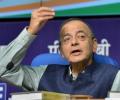
Years before the Supreme Court struck down as 'unconstitutional' an opaque political funding tool that allowed individuals and companies to donate money to political parties anonymously and without any limits, the then finance minister Arun Jaitley -- the prime mover of electoral bonds -- had termed them legitimate and transparent.

A five-judge Constitution bench headed by Chief Justice D Y Chandrachud, which was hearing an application filed by the Election Commission (EC) seeking a modification of the operative portion of its March 11 order in the electoral bonds case, directed its registrar (judicial) to ensure that the data filed earlier by the poll panel before it in a sealed cover be scanned and digitised.

Given the 2024 general elections, it is unlikely that the allegations around electoral bonds, raised by the Opposition, will disappear easily or with a shrug of the BJP's shoulders and fabled 56-inch chest, argues Shyam G Menon.

Among the Sensex firms, Larsen & Toubro, UltraTech Cement, JSW Steel, Titan, Bajaj Finance, Wipro, Tech Mahindra and Nestle were the major laggards. Maruti, Power Grid, Axis Bank, State Bank of India, NTPC, HDFC Bank, ITC and IndusInd Bank were the gainers.

At a time when the role of corporate boards is once again under the scanner, independent directors on the Paytm Payments Bank board have indicated that red flags were raised over regulatory issues but they may have been late in doing so. "As independent directors, we asked questions and monitored responses to the Reserve Bank of India (RBI). Many changes were made on compliances. "Obviously, in retrospect, it was not found to be enough," said one of the independent directors on the condition of anonymity.
ITC was the biggest loser from the Sensex pack, sliding 2.04 per cent, followed by Power Grid, Reliance Industries, Larsen & Toubro, Nestle, Kotak Mahindra Bank, Bajaj Finance and JSW Steel. On the other hand, Titan, State Bank of India, Bajaj Finserv, Axis Bank, Tata Steel, Sun Pharma, Tech Mahindra and Bharti Airtel were the gainers.

Funds raised by India Inc. through offshore loan syndication hit a 15-year high in 2023 with companies and banks raising $21.4 billion, the highest since 2007. The momentum is expected to continue in 2024 as well with over $4 billion fund raising expected in the first three months of this year. Companies raise funds, both onshore and offshore, depending on interest rates and activities. Funds raised offshore can be deployed in overseas activities.
Sun Pharma emerged as the biggest gainer from the Sensex pack, climbing 2.09 per cent, followed by ITC, Titan, Bajaj Finance, Nestle, Infosys, L&T, JSW Steel, Reliance Industries and Kotak Mahindra Bank. UltraTech Cement, Maruti, HDFC Bank, Wipro, State Bank of India and NTPC were among the laggards.
Between 2016-17 and 2021-22, the last year for which the data is available, seven national parties and 24 regional parties received a total donation of Rs 9,188.35 crore through electoral bonds.

Wipro was the biggest loser among Sensex firms, sliding 2.32 per cent, followed by HDFC Bank, Power Grid, UltraTech Cement, ITC, ICICI Bank and Tata Motors. IndusInd Bank, Maruti, State Bank of India, Mahindra & Mahindra, Asian Paints and Bajaj Finserv were among the gainers.
Among the Sensex firms, Infosys, Bharti Airtel, NTPC, Tata Motors, IndusInd Bank, Bajaj Finance, ICICI Bank, Tech Mahindra, Titan and Axis Bank were among the major laggards. Tata Steel, State Bank of India, Mahindra & Mahindra, Maruti and Nestle were the gainers.

Loan against gold as a product is catching on fast. Let's keep the momentum going, but aim for sustainable growth. A few bad apples should not ruin the brunch, argues Tamal Bandyopadhyay.
From the Sensex pack, Infosys, Hindustan Unilever, Reliance Industries, ICICI Bank, Larsen & Toubro, Asian Paints, Nestle, Axis Bank, Wipro and Kotak Mahindra Bank were the major gainers. JSW Steel, State Bank of India, Tata Steel, Bajaj Finserv, UltraTech Cement, IndusInd Bank, Tata Motors and Bajaj Finance were the major laggards.

'We are also conducting ongoing training and grooming at the branch level to pre-empt such cyberattacks.'

ICICI Bank was the biggest loser in the Sensex pack, slipping 2.81 per cent, followed by Mahindra & Mahindra, State Bank of India, UltraTech Cement, IndusInd Bank, Kotak Mahindra Bank, Tata Motors, Bajaj Finserv, Axis Bank and Power Grid. Tech Mahindra, Bharti Airtel, Infosys, Asian Paints, Hindustan Unilever, Larsen & Toubro and Titan were the gainers.
 © 2026 Rediff.com - Advertise with us - Disclaimer - Privacy Policy - Sitemap - Feedback - About us - Terms of use - Grievances