
Shuja Nawaz, arguably the most authoritative expert on the Pakistani military, assesses the US-Pakistan strategic dialogue.
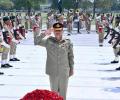
Sections in the US State Department and Pentagon have always felt more comfortable dealing with all powerful Pakistani generals instead of elected civilians, points out Rana Banerji, who headed the Pakistan desk at RA&W.

What drives Pakistani men to join its military, despite the toll it takes on them?
'This is in its own interest.' 'Only the State must have the monopoly of power in the country.'
'Militias have no place in democracies,' says Shuja Nawaz, Distinguished Fellow at the Atlantic Council, the Washington, DC-based think-tank.
'I don't see any relationship between them and ex-army or ex-ISI as has been happening in the past,' says strategic analyst Shuja Nawaz, who is convinced the Pakistan army and its intelligence wing, the Inter-Services Intelligence, are not complicit in the Mumbai terror attacks.

The plan hinged on two critical assumptions: India would not be able to replenish supplies quickly to launch a counter-attack. India could not respond in enough strength to dislodge the Pakistanis. Both assumptions would be proved wrong due to the ferocity of the Indian response, reveals former RAW officer Tilak Devasher in his new book, Pakistan At The Helm.
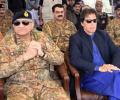
'Any conventional conflict could trigger a nuclear war with results that neither India nor Pakistan could survive easily.' >A revealing excerpt from Shuja Nawaz's The Battle For Pakistan: The Bitter US Friendship And A Tough Neighbourhood.
'Both India and Pakistan are now, for the first time in history, very closely allied and connected with the US -- economically and politically.'
 © 2026 Rediff.com - Investor Information - Advertise with us - Disclaimer - Privacy Policy - Sitemap - Feedback - About us - Terms of use - Grievances