
With the Mukesh Ambani-promoted Reliance Industries Ltd (RIL) planning to approach the Supreme Court, challenging a High Court order for selling gas at $2.34 per million British thermal unit (mBtu) to Reliance Natural Resources Ltd (RNRL), the chances of an agreement between the Ambani brothers by July 15 appear remote.

Sebi was probing a complaint by S Gurumurthy of Swadeshi Jagran Manch, alleging that RIL and its investors lost at least Rs 2,700 crore.

Mukesh Ambani's Reliance Industries Ltd may be one of the biggest producers of natural gas in the country, but its power foray is likely to be coal or renewable energy based. The company is planning to not only bid for ultra mega power projects but also go in for acquisition of the power plants, said industry sources.

The firm is looking to raise as much as Rs 1,000 crore through short-term commercial paper.
The officials also said that the ministry of commerce and industry had recommended the Maharashtra government to take back the land acquisition notification that it had issued. The zone has been given in-principle approval by the BoA, as RIL is yet to acquire the requisite land.

Mukesh Ambani's Reliance Industries Ltd on Wednesday told the Supreme Court that the demerger scheme worked out with his brother Anil Ambani was categorical that the gas supplies from the KG Basin to his group was not for trading and meant for promoting power generation plant.

RNRL had sought 28 mscmd of gas for 17 years at $2.34 per million British thermal units (mBtu) from Mukesh Ambani's RIL.

Read the full text of the Supreme Court ruling in the Krishna Godavari Basin gas dispute between Mukesh Ambani-led Reliance Industries Ltd and Anil Ambani's Reliance Natural Resources Ltd.

Ajit Mishra, vice president, research, Religare Broking, answers your queries.
With the Supreme Court likely to announce its judgement on the gas price tussle between Ambani brothers next week, the share price of Reliance Industries Ltd has taken a sharp knock while Reliance Natural Resources Ltd witnessed a spike.
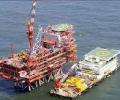
Reliance had committed to drill 22 wells in the Dhirubhai-1 and 3 fields or D1, the largest of 18 gas discoveries in the block KG-DWN-98/3 or KG-D6 block in the Bay of Bengal, by April 2011 to produce 53.4 million standard cubic meters of gas per day (mscmd).
Jai Corp Ltd, promoted by Reliance Industries Ltd chairman Mukesh Ambani's confidant Anand Jain, on Friday said that it has complied with requirements laid down by the Income Tax department and that nothing was found from the chairman's residence during searches on Thursday.
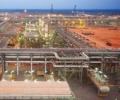
A day after Reliance Industries Ltd announced sale of 30 per cent interest in its 23 oil and gas blocks, Canada-based Niko Resources, RIL's partner in three fields - D6, NEC 25 and D4 - on Tuesday said it has the option to increase its stake in the fields by up to 30 per cent from current working percentages.
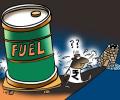
The windfall tax on oil produced within India and fuel exported overseas will make up for more than three-fourths of the revenue that the government lost when it cut excise duty on petrol and diesel to cool soaring inflation, industry sources said. India on July 1 joined a select league of nations globally that have taxed windfall gains accruing to oil companies from soaring energy prices. The government slapped a Rs 6 per litre tax on the export of petrol and jet fuel (ATF) and Rs 13 a litre on the export of diesel effective July 1. Additionally, a Rs 23,250 per tonne tax was levied on crude oil produced domestically.

This follows a letter by RIL to the ministry, justifying the increase in capex.

This is significantly higher than the government revenues of Rs 500 crore (Rs 5 billion) that ADAG has been claiming in an advertising campaign that it launched on August 17. The exercise marks the first time the directorate general of hydrocarbon, the upstream oil regulator, has worked out such an estimate. The exercise is not carried out in the normal course for oil or gas fields.
The government told the Bombay high court on Friday that the empowered group of ministers decided that Mukesh Ambani-led RIL will start supplying gas from the KG basin to Anil Ambani's Dadri power project and other upcoming power plants once it is ready to begin operations.

Reliance Jio, together with partners, has tested its 5G solutions in India, successfully demonstrating speeds of over 1 GBPS, and its 'Made in India' solution is "globally competitive", RIL chairman Mukesh Ambani said on Thursday. Ambani also exuded confidence that the company will be the first to launch full-fledged 5G services in the country. Jio is not just working to make India '2G-mukt' (free from 2G) but also '5G-yukt' (5G empowered), he added. Jio's engineers have developed a 100 per cent home-grown and comprehensive 5G solution that is fully cloud native, software defined, and digitally managed.
The Mukesh Ambani-led company had a net profit of Rs 4,008 crore (Rs 40.08 billion) in the same period last year.

Amidst the ongoing war of words between the Ambani brothers over the issue of pricing of gas, Mukesh Ambani, chairman, Reliance Industries Ltd, on Tuesday met TKA Nair, Principal Secretary to the Prime Minister, at the latter's office in the South Block.

Industrialist Anil Ambani on Tuesday dared the petroleum ministry to take back the ownership of gas fields from Reliance Industries Ltd if it seriously believed that terms of the contract were violated by Mukesh Ambani-led firm, which he alleged was wanting to make a super-profit of Rs 50,000 crore (Rs 500 billion).
After Uttar Pradesh, Mukesh Ambani's Reliance Industries Limited is facing the wrath of local vegetable vendors and wholesalers in Uttarakhand for venturing into retail business.

The Supreme Court on Monday asked Mukesh Ambani-run Reliance Industries Ltd and Anil Ambani group firm Reliance Natural Resources Ltd to reply to the government's prayer for declaring 'null and void' their family agreement on gas supply, and posted the matter for hearing on September 1.
Blaming RIL for delay in starting its Dadri power project, RNRL said it was RIL's wrongful conduct that delayed its gas-based power plant by four years. However, it had sought a direction to RIL to supply the gas immediatley to it. On July 7, the Supreme Court issued notice to RIL, RNRL and the Centre (as intervener) on cross-appeals by both the companies on their gas supply dispute.

The company's turnover dipped to Rs 64,990 crore.
Anup Sheth and two others had filed applications, objecting to the merger scheme in the present form. The objectors had demanded that high court should order inquiry by Securities and Exchange Board of India, Reserve Bank of India and other financial governing bodies before sanctioning the merger.
If crude oil prices stay at current levels, the Indian government would not be required to issue additional oil bonds to the four state-run oil marketing companies in the current financial year, Finance Minister P Chidambaram said on Monday. Oil retailers, however, are unlikely to cut prices of petroleum products in response to falling crude prices unless private retailers like Essar Oil and Reliance Industries Ltd restart operations and offer a lower price.
A division bench of Justices J N Patel and K K Tated said that the new agreement should be as per the memorandum of understanding between the Ambani brothers Mukesh and Anil. The MoU stipulates that RIL would supply 28 mmscmd of gas to RNRL for 17 years at the rate of $2.43 per million British Thermal Units.

The market regulator Securities and Exchange Board of India (Sebi) has asked the government to consider appropriate action against Reliance Industries Ltd (RIL) for allegedly routing funds to dummy companies for buying large quantity of its shares 2000.
The ministry of petroleum and natural gas would be issuing instructions for fresh gas allocation from D6 this week.
Petronet LNG, which operates a recently expanded ten-million-tonne gas regassification plant in Dahej on the west coast, is exploring a swap option with the gas from the Krishna-Godavari field (K-G D6) on the east coast owned by Reliance Industries Ltd.
RIL is aiming to revive its 350-odd outlets in Gujarat and Maharashtra by the end of April, followed by the rest of the country. The company may sell only these two products for some time. The company had closed all its 1,400-odd retail outlets through the country last year, after sales dropped drastically due to its inability to match the subsidised prices offered by state sector oil marketing companies.
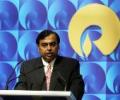
Reliance Industries Ltd has decided not to use its allocation of gas from the Krishna-Godavari basin's D6 field for petrochemical production; it will, instead, swap it with gas available from other sources. It will use D6 gas only for power generation.
A company executive said unlike India, the price of petrol changed on a daily basis in the US. "In India, we don't have a level playing field, since the government gives public sector oil marketing companies subsidies. Since the RIL refineries operate on better refining margins, we could earn more revenue from free markets," he said. "We have better understanding beyond a theoretical knowledge about the US and European markets after our long experience in these markets."

The petroleum ministry has said Reliance Industries Ltd (RIL) is not right in seeking an out-of-turn rise in the price of natural gas produced from the KG-D6 fields and asserted the $4.205 per million British thermal unit (mBtu) rate will prevail unless pricing formula is changed.
Government-owned Oil and Natural Gas Corporation, the country's largest petro exploration company, wants to hire an ultra deep-sea drill rig, the daily cost of which is about Rs 5 crore.
India's largest refiner, Reliance Industries Ltd, is in talks with public sector oil marketer Hindustan Petroleum Corporation for a tie-up to run the former's fuel retail outlets, closed a year earlier.HPCL has issued a limited tender to five merchant bankers to advise it on the deal.Last year, RIL closed 1,400 petrol pumps -- 900 owned by the company and the rest managed by dealers.
RIL's merger with RPL will mean non-issue of treasury stock worth Rs 26,000 crore, which means less headroom to raise funds. Since no treasury stock is going to be created, RIL will issue 69.2 million shares to RPL's ordinary shareholders. As a result, RIL's paid-up capital will increase to only Rs 1,643 crore from the present Rs 1,574 crore. This, in turn, will enhance the earning per share proportionately for RIL shareholders.
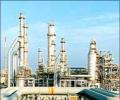
State-run NTPC Ltd is likely to sign by month-end an agreement to buy natural gas allocated by the Centre from Mukesh Ambani-run Reliance Industries Ltd at government-approved rate of $4.20 per mmBtu, power secretary H S Brahma said on Wednesday.
The newly set up Petroleum and Natural Gas Regulatory Board has received over 100 applications from domestic and foreign companies interested in supplying gas to domestic households and vehicles in cities.
