
'The risk is in not being invested and missing out on an upmove.'
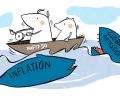
'...over the long-term can be done only by investing in equities.' 'And during weak macros, one needs t1o allocate more than drawing it down, because they offer the best entry point.'

'Historically, equities have consistently outperformed debt, gold, property, and other assets over a reasonable period.'

The sharp rally in the markets thus far in fiscal 2023-24 (FY24) has left analysts struggling to find investment-worthy themes. The S&P BSE Sensex has surged nearly 7 per cent thus far in FY24 and hit a fresh 52-week high of 63,601.71 levels on June 22, mostly led by foreign institutional (FII) flows. "The Indian market has seen a broad rally in the past few months but headline indices have seen more modest performance. "We are not very clear about the reasons for the rally and the divergent performance and struggle to find ideas in the consumption, investment and outsourcing sectors after the sharp run-up in several of our favored sectors and stocks in the past two months," wrote Sanjeev Prasad, co-head, Kotak Institutional Equities, in a recent co-authored note with Anindya Bhowmik and Sunita Baldawa.

'The market should maintain optimism on the back of range-bound oil prices, a robust fiscal balance sheet, a better-than-expected monsoon, and moderating inflation.'
'We are in a sweet spot.' 'Equity, on a standalone basis, will continue to remain the asset class to stay invested in.'

'Earnings will be the catalyst for markets to march higher from here on out.'

'Markets are not expensive; they are fairly priced.'

'India is an equity market with a breadth and depth of companies to invest in.'

'Geopolitical risks and their impact on oil prices, if any, are another concern for global markets, particularly for India.'

Elevated food price-led inflation could become a sore point for markets, which they seem to be ignoring at current levels, observe analysts. Retail inflation in India - as measured by the Consumer Price Index (CPI) - came in at a three-month high of 6.52 per cent in January 2023, compared with 5.72 per cent in December and 5.88 per cent in November 2022. The inflation print for February, according to Madan Sabnavis, chief economist at Bank of Baroda, will be critical for the Reserve Bank of India's monetary policy committee.

Earnings growth, attractive valuations and change in FPI flows from negative to positive over the next 12 months are some of the key triggers for an upside. "A poor monsoon, high inflation and further rate hike are some of the key risks

However, in the last few sessions, the stock of Mukesh Ambani-controlled Reliance Industries Limited (RIL), hit its 52-week low level of Rs 2269.75, and has been one of the worst performers among the Sensex pack thus far in calendar year 2023 (CY23). Thus far in CY23, RIL has tanked nearly 11 per cent as compared to a fall of around 5 per cent in the S&P BSE Sensex. The fall in the stock, according to Gaurang Shah, senior vice-president at Geojit Financial Services is mostly due to the overall dip in the market sentiment, which in turn has impacted large-caps, including RIL.

An aggressive rate hike by the US Fed and the possibility of a recession can trigger a slide in these stocks, which will be a good opportunity to buy from a long-term perspective.

'If there is any reason to change my holding in Adani group stocks, the Hindenburg report on the group is not the one.'

'Indian equity valuations, although not very expensive, are not cheap either.'

'Markets could face uncertainty in the short to medium term.' 'It would be prudent to invest in alternative asset classes, especially debt, for about a year.' 'Bank fixed deposits are offering rates as high as 9 per cent per annum and these can be used as a great hedging tool until equity markets stabilise.'

'The Fed rate will peak in the range of 5.1-5.3 per cent during the second quarter of CY23 and will most likely stay there for a while before rate cuts start in CY24.'

Foreign portfolio investor (FPI) flows into India may remain tepid in 2022, said a recent note by Goldman Sachs, who now peg the foreign portfolio investment into India at $5 billion in 2022, down from their earlier forecast of $30 billion with risks skewed to the downside. "There has been $15 billion of equity outflows YTD in India already, and the IPO of the largest insurance company has been pushed out. "Additionally, with no mention of India's inclusion in global bond indices in the Union Budget, there are risks to our already conservative base case assumption of an announcement of India's likely inclusion into the GBI-EM Global Diversified Bond Index in Q4-2022," wrote Andrew Tilton, Goldman Sachs' chief Asia-Pacific economist in a co-authored report with Santanu Sengupta and Suraj Kumar.

'As the Indian economy continues to expand over the next three years, mid- and small-caps should do well as they have higher exposure to the domestic economy than large-caps.'

'While foreign institutional investor flows are still negative, they will turn positive in the latter part of 2023 as India's resilient growth becomes perceptible.'

With a change in investor preference to cyclical stocks like those of capital goods, infrastructure and automobile firms, the defensives, especially the IT pack, have taken a back seat.

'The market will focus on the fact that India does have strong earnings growth this year.'
These are testing times for the mutual fund industry.
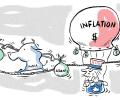
'The biggest risk to the Indian markets from a 12-18-month view is that the current government does not get re-elected, or loses in a way that is not represented at all in the next central government.'
Jim Rogers says India needs to do a lot to put its house in order.
Interview with Vice-Chairman and Joint Managing Director, First Global
With the US housing and labour markets on the mend, the healing looks more durable, say RBS's Sanjay Mathur and Louis Kuijs.
The new Guv needs to focus on structural inflation problems.
Interview with Asia-Pacific economist, Morgan Stanley
He also feels that the govt should hike diesel and petrol rates.

He also feels that central banks have injected too much liquidity, which is not sustainable and will end badly for investors.

Interview with president and CEO of Tata Mutual Fund.

Given the recent weakness in the rupee and the high forward premium, information technology companies can prove to be good defensive stocks with low downside risks in the prevailing market conditions, Moses Harding, head (global markets group), IndusInd Bank, tells Puneet Wadhwa.

India, per se, is witnessing more promising growth.

'India seems to be on a relatively better wicket compared to other emerging markets.'

The key triggers would be price of oil, inflation and results of state elections. If oil and inflation levels come down, there could be a rally.

'There will be a series of rate hikes, but the pace and quantum will depend on how the economy in the US and the rest of the world behave.'

'We have relatively strong growth and a healthy corporate earnings cycle as positives, but a worrisome current account deficit and high inflation as challenges.'

'Recent underperformance notwithstanding, equities should constitute a major part of investors' financial portfolio.'
 © 2026 Rediff.com - Advertise with us - Disclaimer - Privacy Policy - Sitemap - Feedback - About us - Terms of use - Grievances