
The rupee appreciation would affect exports, which has been rising more than 20 per cent in the last 5 year, if there is no offsetting factor, economic think-tank NCAER said.

We asked colleagues, present and past, to reflect on a man who has made such a difference to their lives and careers. Here it is then, a rich collection of memories that offer enchanting glimpses of the enigmatic Ajit Balakrishnan.
With improved agriculture performance, Indian economy is projected to clock 7.6 per cent growth this fiscal, but inflation is likely to average at 5.9 per cent, economic think-tank NCAER said. \n
The economc research council has projected Centre's fiscal deficit this financial year to be 5% of GDP.
According to NCAER quarterly review for 2007-08, the high inflationary expectation stems from surging prices of crude oil and hardening metal prices and high economic growth which it forecast at 8.53 per cent for the current fiscal.
Close on the heels of a UN body projecting a slowdown for India, National Council for Applied Economic Research said on Monday that the economy was expected to grow by only 6.7 per cent this fiscal due to an all round deceleration in agriculture
Economic think-tank NCAER on Thursday revised downwards economic growth projection to 7.8 per cent from its earlier estimate of 9 per cent for the current fiscal and said global slowdown and rise in inflation will have an adverse impact on the growth of Indian economy.

'What we have to think about is, how to improve the efficiency of public sector banks.' 'You have to make decision-making more prudent, and free from government intervention.'

'We have to think of the repercussions if public sector banks are privatised and if they go to foreign hands.'

The government on Friday appointed Suman K Bery as the vice chairman of Niti Aayog, following the sudden resignation of Rajiv Kumar.

19 per cent of all travel in India (by bus, train or air) was pilgrimage or religious travel (possibly the single largest after business and family-related travel), discovers Ambi Parameswaran.
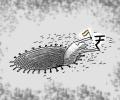
Claims of a spike in poverty and inequality in India during the Covid-19 pandemic are patently false as such claims are based on uncomparable different surveys, according to a paper co-authored by eminent economist Arvind Panagariya. The paper also noted that inequality fell in the country during Covid years, both in rural and urban areas as well as nationally. Panagariya, Columbia University Professor and former vice chairman of NITI Aayog and Vishal More of Intelink Advisors, New Delhi have co-authored a detailed paper 'Poverty and Inequality in India: Before and After Covid-19'.
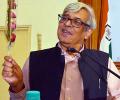
The government on Wednesday reconstituted the Economic Advisory Council to the Prime Minister (EAC-PM) under existing chairman Bibek Debroy, for a period of two years. V Anantha Nageswaran has been dropped, Rakesh Mohan (former deputy governor of RBI), Poonam Gupta (director general of NCAER) and TT Ram Mohan (professor, IIM Ahmedabad) have been appointed as part-time members of the reconstituted EAC-PM. The other part-time members of the Council include Sajid Chenoy, Neelkanth Mishra and Nilesh Shah.
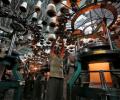
The wholesale price index inflation is projected at 6.4 per cent for 2017-18.

Former RBI governor D Subbarao on Monday said there is a strong motivation for the central bank to launch a digital currency and cash is going to coexist with the new-age currency. Addressing an event virtually organised by economic think tank NCAER, Subbarao further said cybersecurity is also one of the downside risks of the Central Bank Digital Currency (CBDC). "There is a strong motivation for the RBI to launch CBDC... Cash is going to coexist with CBDC," he said.
The increase by more than three per cent is largely due to jump in the rate of inflation in the case of WPI for fuel, power, light and lubricants

In Round 1, 62 per cent strongly supported the continuation of the lockdown and 24 per cent expressed some support.
The Indian consumer goods industry holds huge potential for growth as affordability is increasing and size of the low income segment is shrinking, according to R K Shukla of National Council for Applied Economic Research.
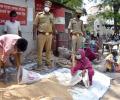
In the three months leading up to the Assembly elections, Chief Minister Yogi Adityanath's government distributed over 1.4 million tonnes (MT) of wheat, 0.95 MT of rice, 0.10 MT of chana (gram), 101.9 million litres of soybean oil and 100,000 tonnes of salt as free ration. This was part of the Covid relief package, officials said.

International Monetary Fund (IMF) chief economist Gita Gopinath has made a strong case for regulating cryptocurrencies, saying it will always be a challenge to ban them as they operate from offshore exchanges. Gopinath also suggested a global policy and co-ordinated action for regulating cryptocurrencies. "I think cryptocurrencies are a particular challenge for emerging markets. "It seems to be more attractive to adopt cryptocurrencies and assets in emerging economies than in advanced economies," she said while addressing an event organised by the National Council of Applied Economic Research (NCAER) on Wednesday.
With fears of delayed monsoon doing the rounds, an economic think tank on Tuesday said lower agricultural production is unlikely to affect the industrial growth this fiscal.\n\n

Bihar, Uttar Pradesh and Jharkhand will have to do a significant amount of catching up.
Three months down the line, the National Council of Applied Economic Research has revised its forecast for the gross domestic product growth rate this fiscal by 0.3 per cent to 5.83 per cent due to better prospects in industrial outlook.
Foreign investments in India almost tripled in FY' 08 than the capital it received during the same period in last fiscal, the National Council of Applied Economic Research said. The country maintained the trend of attracting funds that also boosted its forex reserves, it added.

India is among 75 countries with which Switzerland's Federal Tax Administration has exchanged information on financial accounts within the framework of global standards on Automatic Exchange of Information.
Dr Rajesh Shukla, author of How India Earns, Spends and Saves: Unmasking the Real India, warns against the rising income inequalities India has witnessed after economic liberalisation.
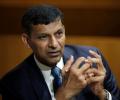
India needs foreign exchange buffer reserves to insulate itself from exchange rate volatility as we have "no friends" for swap lines and Japan was the only country that helped during the taper tantrum in 2013, former RBI Governor Raghuram Rajan said on Tuesday. Participating in a virtual event organised by economic think tank NCAER, Rajan said during the taper tantrum in 2013, India asked for swap lines, and only country who helped was Japan. "We need this (foreign exchange) reserve buffer to insulate ourselves because we have no friends.

Business confidence in India continued to improve and touched a two-year high in January, according to the latest National Council of Applied Economic Research (NCAER) - MasterCard Worldwide Index of Business Confidence.
The National Council of Applied Economic Research, which had forecast the country's economy to grow by 8.5 per cent in 2007-08, has raised projection to 8.9 per cent on improved performance of agriculture and services sectors.In case of industry, although the investment climate continues to be strong, the slower growth of exports may be a dampening factor, but retained the growth in industrial sector unchanged at 9%.

Indian economy is expected to grow by 8.1 per cent in the current fiscal on the back of a turn-around in agriculture production and an anticipated good showing by the industry and service sectors, a leading economic think-tank said.
The truckers' strike, which entered the second day, can push inflation by 50 basis points on account of shortage of perishable goods and panic buying by traders, said economic think tank National Council for Applied Economic Research (NCAER).

IMF's Chief Economist Gita Gopinath on Thursday said it would be damaging for India to start tightening policy support in the midst of the COVID-19 pandemic and also stressed on reducing wasteful expenditures in the upcoming Budget. Delivering NCAER's '9th C D Deshmukh Lecture' virtually, Gopinath said there is scope for the Indian government to provide more direct support to people.
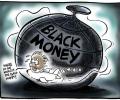
The studies found that sectors with the highest unaccounted income included real estate, mining, pharmaceuticals, pan masala, gutkka and tobacco, bullion and commodity markets, film industry, educational institutes and professionals.
NCAER has warned that India's exports might miss the target of 12 per cent growth this fiscal due to the appreciating rupee.
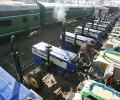
Indian Railway's sustenance, freight traffic, - which accounts for about 70 per cent of its revenue - has been plateauing of late.
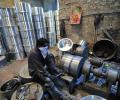
While players in the financial ecosystem are opening up to the idea of receivables funding for the sector, this market needs a regulator, which a Parliament panel feels only RBI can provide.
 © 2026 Rediff.com - Investor Information - Advertise with us - Disclaimer - Privacy Policy - Sitemap - Feedback - About us - Terms of use - Grievances