
Currently, the NAPCC has eight active missions across sectors like water, energy, and agriculture, aimed at addressing climate change.

Under his leadership, India launched the National Action Plan on Climate Change, passed the landmark Forest Rights Act to protect the rights of tribal communities and established the National Green Tribunal to safeguard the environment through swift legal action.

2015 is going to witness new agreements on climate change.

India and the US have mutually resolved all six trade disputes pending at the World Trade Organisation (WTO), in line with the commitment made by the two countries during the US visit of Prime Minister Narendra Modi last month, an official said. The official said that both countries have informed the WTO's dispute settlement body (DSB) about the resolution of all the pending disputes. The WTO has already issued a communication with regard to one of the disputes related to the imposition of additional customs duties by India on 28 US products.

The company plans to leverage its presence in rural areas; looking at off-grid solar products as well
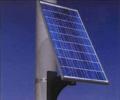
Financing of solar projects under the Centre's ambitious national solar mission has hit a major roadblock as banks have argued that the current structure of the power-purchase agreement was not bankable due to the credibility of many states.

With over Rs 17-crore (Rs 170-million) investment needed per Mw of solar power, an estimated Rs 18,000 crore investment would come in the Phase I.

For the first time in the country, Tata BP Solar India Ltd, a joint venture of Tata Power and BP Solar, has installed and commissioned a megawatt-scale solar power plant under the rooftop and other small solar power generation plant scheme as part of Jawaharlal Nehru National Solar Mission (JNNSM).

Tejpreet Chopra, former chief executive of GE India, and Rahul Sankhe, business development director of SunEdison Energy India Private Ltd, criticised certain aspects of the Jawaharlal Nehru National Solar Mission that ambitiously targets 20,000 MW of solar energy in India by 2022 in three phases.

As part of efforts to combat climate change, Prime Minister Manmohan Singh on Monday advocated creation of Solar Valleys in India on the lines of Silicon Valleys and asked industrial houses to view the Solar Mission as a huge business opportunity.

Life expectancy of Indians at birth in 2019 was 69.7 years while Bangladesh has a life expectancy of 72.6 years and Pakistan 67.3 years, the 2020 Human Development Report said.

The central government plans to set up a group of public sector banks headed by State Bank of India (SBI), which would brainstorm on ways to make low-cost funding available for power projects that are being set up under the National Solar Mission.

The mission stipulates the target under three phases for various solar application segments including Utility Grid Solar power.

State-run Indian Oil Corporation plans to set up solar power panels and power plants at its over 18,100 retail outlets across the country at a cost of Rs 500 crore (Rs 5 billion).

The government's proposal to roll out a plan by the year-end to raise solar power generation capacity to 20,000 mega watts (MW) by 2020 is laudable but could be a case of vaulting ambition, and therefore not very realistic.
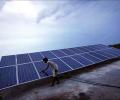
The project is the largest investment undertaken by any private sector entity in CSP in India.
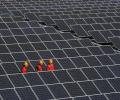
Cheap equipment imports, especially from China, is a major reason for falling tariffs in solar tenders

The President in his address to the joint sitting of Parliament unveiled the policies and priorities of the Bharatiya Janata Party-led National Democratic Alliance government which assumed power last month after elections to the 16th Lok Sabha.

The three-month deadline for the finance ministry to take a decision on the recommendations of the commerce ministry has ended this week.

India has an unprecedented opportunity to develop solar industry because like China, it offers scale which is critical to reducing costs and to stimulate innovation, says Shyam Saran.

The Indian economy is expected to return to the pre-crisis growth trajectory of about 9 per cent in a couple of years.

Import curbs on Chinese panels and modules may help, but low demand and capacity remain problem areas, says Shreya Jai.

The power minister briefed the investors on various steps undertaken by the government.

'In terms of growth rate, India is better than China.'
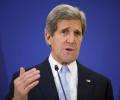
The US is keen to improve business ties with India.

The WTO dispute panel had its last hearing in early May.
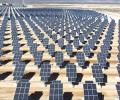
The plan includes close to 6,000-Mw capacity to be set up by NTPC alone.

Observing that climate change has become an urgent concern across the globe, Prime Minister Manmohan singh said on Friday ways and means should be developed to reduce India's carbon footprint as it would be among the nations to be 'most seriously' impacted.
India said on Tuesday it was investigating US policies supporting solar panel makers, the latest move in an escalating row over renewable energy that has worsened already strained ties between the two countries.
.jpg)
The government wants to generate 100,000 Mw of solar power by 2022.

Sushil Reddy took a seven day trip to spread awareness on solar power.

We need transformative policies and incentives with purpose, especially in solar power and digital infrastructure.

Bunker Roy, founder of the Barefoot College at Tilonia in Rajasthan, was awarded the Clinton Global Citizen Award at a ceremony in New York on September 25.

President Pranab Mukherjee on Monday addressed the first joint sitting of Parliament as mandatorily required under the Constitution after the general elections. The address is the political, economic and foreign policy road map of the Narendra Modi government and covers virtually all crucial areas.
 © 2026 Rediff.com - Investor Information - Advertise with us - Disclaimer - Privacy Policy - Sitemap - Feedback - About us - Terms of use - Grievances