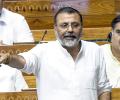
Fourth-term Bharatiya Janata Party MP Nishikant Dubey, one of the more vocal party members in the Lok Sabha, launched a broadside against the Supreme Court on Saturday, saying Parliament and state assemblies should be closed down if the apex court has to make the laws.

While naming him as the NDA candidate for the Vice President's post, the BJP had described him as 'Kisan putra', a move seen in the political circles aimed at reaching out to the politically significant Jat community which had participated in huge numbers in the year-long farmers' protests against agriculture reform measures unveiled in June 2020.

Rijiju made the remarks while responding to Delhi Chief Minister Arvind Kejriwal, who dubbed as 'extremely dangerous' the government's move to ask the Supreme Court to include its nominees in collegium.

Replying to questions in the Upper House of Parliament, the law minister said the Centre has limited powers over appointments of judges.

Now, every state election -- first up, Maharashtra, Haryana and Jharkhand later this year, then Delhi in January and Bihar in September next year -- will be seen by his followers for evidence of his recovery, and by rivals of sharpening decline, points out Shekhar Gupta.
Justice Sodhi said the right to frame laws lies with Parliament.

Justice Chandrachud also dealt with questions about criticism by eminent lawyers on the allocation of cases to particular judges and 'bench hunting', and said the allocation of cases is not "lawyer-driven" and vowed to maintain the credibility of the institution of the Supreme Court.

The Supreme Court will on Monday resume hearing arguments on the constitutional validity of the National Judicial Appointment Commission Act, notwithstanding the ongoing summer vacation.
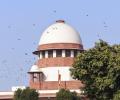
Law Minister Kiren Rijiju tweeted to announce the appointment of Justice Pankaj Mithal, Chief Justice, Rajasthan High Court; Justice Sanjay Karol, Chief Justice, Patna High Court; Justice P V Sanjay Kumar, Chief Justice, Manipur High Court; Justice Ahsanuddin Amanullah of Patna High Court; and Justice Manoj Misra of Allahabad High Court as apex court judges.

Law Minister Kiren Rijiju on Tuesday said it was a "matter of grave concern" that certain portions of sensitive reports of the Intelligence Bureau and Research and Analysis Wing were put in public domain by the Supreme Court collegium.

Government on Monday brought into force a controversial law to appoint members to the higher judiciary, two days before a Constitution Bench of the Supreme Court hears a clutch of petitions challenging the National Judicial Appointments Commission Act.
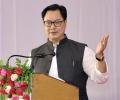
There is a need to think about the collegium system so that appointments in higher judiciary can be accelerated," Rijiju said.

Sodhi told the news channel that Parliament makes the law and the courts have the power of judicial review over it and added it was not right to make his opinion "political".

What some of our leaders were up to on Monday and Tuesday.
If it is opaque, then who else will speak up against it if not the concerned minister, Rijiju said.
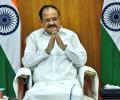
He said the legislature, the executive and the judiciary are bound to work within their respective domains as defined in the Constitution. Addressing the 80th All India Presiding Officers' Conference on 'Harmonious Coordination between Legislature, Executive and Judiciary -- Key to Vibrant Democracy', Naidu said harmony lies in each organ doing its job without interfering with that of the others.
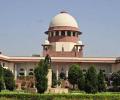
The Supreme Court has got four new judges with President Pranab Mukherjee signing their warrants of appointment on Wednesday.

The Supreme Court on Friday issued a show cause notice to advocate M L Sharma for making "irresponsible" and "scandalous" allegations in his PIL challenging the new law on appointment of judges for higher judiciary, saying "this is not a political platform".
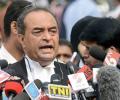
He said he considers this duration as enough and would like to return to his practice.
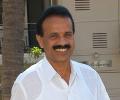
Expressing "surprise" over the Supreme Court verdict striking down the National Judicial Appointments Commission Act, Union Law Minister D V Sadananda Gowda said.

Attorney General Mukul Rohatgi said the collegium system, which became re-operational with Friday's Supreme Court verdict, is not found in the Constitution.
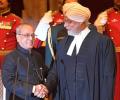
President Pranab Mukherjee administered the oath of office and secrecy to Justice Kehar at the Darbar Hall of Rashtrapati Bhawan.
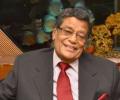
Venugopal, who is the recipient of Padma Vibhushan and Padma Bhushan, is likely to represent as the top law officer for the second time, as he was one of the Additional Solicitors General during Morarji Desai's government.

The government has returned twice to the Supreme Court collegium a recommendation made by it.
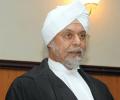
Justice J S Khehar will be sworn in on January 4 and will hold the tenure for over seven months till August 27, 2017.
The Centre expressed its inability before the SC in formulating the draft Memorandum of Procedure for appointment of judges.

Vice President Dhankar's and Law Minister Rijuju's recent interventions have the danger of destabilising the Constitutional equilibrium, cautions N Sathiya Moorthy.
The Supreme Court is likely to pronounce on Wednesday the verdict on bringing transparency in the collegium system of appointing judges in higher judiciary.

"We have a stake (in judges' appointments) and we will continue to pursue that stake in consultation with the Supreme Court and the high courts to expedite the appointments," Law Minister Ravi Shankar Prasad said on his first day in office.

Eminent jurist Ram Jethmalani on Sunday asserted that Indian Parliament "is not sovereign" for its decisions can be challenged in court, as he hit out at Finance Minister Arun Jaitley for criticising the Supreme Court verdict to scrap NJAC Act on appointment of higher judiciary.
Senior advocate K K Venugopal's name has been cleared for appointment as the Attorney General for India, following the decision of Mukul Rohatgi to step down as the top law officer.

Justices A M Khanwilkar, D Y Chandrachud, Ashok Bhushan and L Nageshwar Rao were on Friday sworn in as Supreme Court judges, taking the apex court's strength to 29, including Chief Justice T S Thakur.
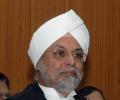
Justice Khehar, 64, will be the first Chief Justice from the Sikh community and he will succeed CJI Thakur who will be demitting office on January 3, 2017.

Justice Kurian Joseph, who will turn 65 on November 30, was part of the five- judge bench which by a majority of 3:2 had ruled the practice of divorce through triple talaq among Muslims as "void", "illegal" and "unconstitutional".

Vacancies in high courts continue to mount with the collegium which made a comeback three months ago yet to recommend fresh names for the posts, including that of chief justices to eight of them.

The finance minister said he said, "The judgement has upheld the primacy of one basic structure -- independence of judiciary -- but diminished five other basic structures of the Constitution, namely, Parliamentary democracy, an elected government, the Council of Ministers, an elected prime minister and the elected leader of the opposition."
At a time when there is no mechanism in place to appoint or elevate judges to the higher judiciary, 8 high court judges have retired in a month, raising the vacancies from 384 in August to 392 this month.

The statement, made in the backdrop of the historic apex court verdict quashing the National Judicial Appointment Commission Act, assumes significance as the President said that the judiciary is "autonomous" and a vital feature of democracy.
The Supreme Court on Monday witnessed sharp exchanges when it took exception to Attorney General Mukul Rohatgi using the phrase "judges appointing judges" to attack the collegium system and observing that B R Ambedkar would have turned in his grave at the way the power was taken away from the executive.
The SC on Wednesday restrained all high courts from entertaining any petition challenging validity of NJAC act meant to replace the two-decade-old collegium system.
