
At the 45th Annual General Meeting of Reliance Industries (RIL) in August, chairman and managing director (CMD) Mukesh Ambani described the company as an "unputdownable book" with never-ending chapters of success. "Reliance grew from strength to strength because we internalised the founder's mindset of purpose, philosophy and passion," he said. Wednesday marked the 90th birth anniversary of RIL founder Dhirubhai Ambani.

Brokerages expect Nifty50 companies to have cumulatively witnessed strong double-digit growth in their earnings in the first quarter of FY24 (Q1FY24). This growth in the combined earnings is expected to have been driven by banks, automakers, and oil & gas companies. Other sectors may report muted profit growth.

Tata Steel was the biggest gainer in the Sensex chart, rising 2.39 per cent, followed by Tata Motors, Power Grid, Reliance Industries, UltraTech Cement, NTPC, Nestle, HUL, Mahindra & Mahindra, Wipro, Kotak Mahindra Bank and Asian Paints. In contrast, Bajaj Finance, IndusInd Bank, Axis Bank, Bharti Airtel, Bajaj Finserv, ICICI Bank, Infosys and Titan were among the laggards.

Despite the best ever quarterly net profit of Rs 3,091 crore during April-June of financial year 2023-24 (Q1FY24), challenges are mounting for InterGlobe Aviation-run IndiGo in the near term, said analysts. Given this, most brokerages have retained their ratings from 'buy to underperform', as well as their target price for the stock. For instance, Motilal Oswal Financial Services has retained its 'neutral' rating on the scrip as it believes the low-cost airline is facing teething issues at present.
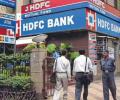
This will be the lender's first result after its merger with HDFC Ltd, effective from July 1, and will keep analysts glued to the management's earnings growth guidance for the merged financial behemoth.

At a time when investors are preferring higher-risk investment products like thematic and small-cap mutual fund (MF) schemes, some fund houses are exploring the possibility of going further down the market-capitalisation (m-cap) ladder to unearth newer investment opportunities. HDFC MF had filed papers with the capital markets regulator - the Securities and Exchange Board of India (Sebi) - earlier this year for an active micro-cap scheme. Some more fund houses are keen on launching such schemes, say industry observers.

'Like all long-term bull markets, the Indian stock market will continue to climb the proverbial wall of worry.'

The recent sell-off in IT stocks such as Infosys and Tata Consultancy Services (TCS) has resulted in a sharp decline in the IT sector weighting in the Nifty50 index. The sector's weighting in the index has slipped to a five-year low of 12.2 per cent, down from the 17.7 per cent at the end of March 2022. The top IT companies - TCS, Infosys, Wipro, HCL Technologies, and Tech Mahindra - accounted for 13.6 per cent of the index at the end of March this year.
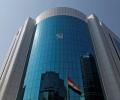
Capital markets regulator Sebi on Tuesday barred five brokerage houses for up to six months from making fresh applications seeking registration as commodity brokers as they failed to meet 'fit and proper' criteria in the NSEL case. The affected brokerage houses include India Infoline Commodities, Anand Rathi Commodities and Geofin Comtrade (banned for 6 months each), and Phillip Commodities and Motilal Oswal Commodities Broker (for 3 months each). "There were enough red flags for a reasonable person to come to conclude that what was being offered as paired contracts on NSEL were not spot contract in commodities," Sebi said in five separate orders.

Following a strong performance in the 2022-23 January-March quarter, publicly listed paint industry giants displayed a mixed performance in the 2023-24 (FY24) April-June quarter. While Berger Paints India outperformed its peers and reported results in line with expectations, market leader Asian Paints and Kansai Nerolac Paints fell slightly short of expectations.

Benefitting from the economic rebound, banks are expected to report a healthy bottom-line and asset quality profile in the quarter ended March 2023 (Q4FY23). The net profit of listed commercial banks is projected to grow by an average 43.6 per cent year-on-year (YoY) in Q4FY23 amid better net interest margins (NIMs) and declining credit costs. This is based on a combined assessment of analyst estimates for 17 banks on Bloomberg database.

The country's largest listed footwear brand by market capitalisation, Metro Brands, posted better than expected December quarter results for the 2022-23 financial year (FY23), riding on store expansion and strong same store sales (SSS) growth. Profitability too remained robust, even as net profit growth was marginally lower. The company, which retails across the Metro, Mochi, Walkway, Crocs and Fitflop formats, posted a 24 per cent growth in revenues over Q3FY22.

Omkeshwar Singh, head, Rank MF, a mutual fund investment platform, answers your queries.

Friday will be a landmark day for domestic markets, with all the listed stocks entering the professed T+1 (trading plus one day) settlement cycle. About 200 stocks, which account for more than 80 per cent of India's market capitalisation, will be settled on a next-day basis, with effect from January 27. This will evidently complete the transition to the T+1 cycle that started in February 2022 with the bottom 500 stocks in terms of market value.

The rupee declined by 10 paise to close at 79.23 (provisional) against the US dollar on Friday, tracking the strength of the American currency in the overseas market. At the interbank foreign exchange market, the local currency opened at 79.20 and finally ended at 79.23, down 10 paise over its previous close of 79.13. "Gains for the currency were short-lived even after RBI announced forex related measures. "Pound held on to its gains after Boris Johnson said he was quitting as prime minister following a rush of ministerial resignations and calls for him to go," said Gaurang Somaiya, Forex & Bullion Analyst, Motilal Oswal Financial Services.

Trading in the domestic stock market would be influenced by trends in the global equities, macroeconomic data and foreign fund movement in a holiday-shortened week, analysts said. Markets may face volatile trends on Monday after Federal Reserve Chair Jerome Powell's speech at the Fed's annual economic symposium in Jackson Hole on Friday.

Interview with CMD, Motilal Oswal Financial Services

Equity market sentiment this week will be guided by global trends in the absence of any major domestic triggers, while bourses may also see some volatility amid expiry of derivatives contracts, analysts said. Fears of sooner-than-expected tapering in monetary stimulus by the US Federal Reserve, rising cases of the Delta variant of the coronavirus coupled with China's regulatory crackdown triggered selling in global markets in the previous week.

Analysts attribute the surge to a host of factors, particularly the interest shown by the retail investors in these two market segments.

Oil-to-telecom conglomerate Reliance Industries (RIL) has emerged as the country's largest wealth creator, adding a staggering Rs 9.6 trillion over the past five years, according to Motilal Oswal's 26th Annual Wealth Creation Study. In doing so, the Mukesh Ambani-led company has beaten its own record of Rs 5.6 trillion generated in 2014-19. The study covered financial year 2015-16 (FY16) to FY21 and ranks the top 100 companies in descending order of absolute wealth created, subject to the company's stock price outperforming the BSE Sensex. The firms were also ranked according to speed (price CAGR during the period).

Gross inflows into active equity mutual fund (MF) schemes dipped 34 per cent month-on-month (MoM) -- to Rs 25,400 crore -- in April as investors applied brakes on lump sum investments amid a sharp upwards movement in the market. Gross inflows for March stood at Rs 38,641 crore. The sharp decline pulled the net inflows to a five-month low of Rs 6,480 crore, shows data released by the Association of Mutual Funds in India (Amfi).

The stocks of Mumbai-based real estate companies have been hitting lifetime highs on expectations that launches, steady demand, and price increases in the largest real estate market in the country would boost their financials. Macrotech Developers (Lodha) and Oberoi Realty hit their all-time highs last week, while Godrej Properties came close to its 52-week high last month before witnessing a sharp correction.

The equity cult has grown at a rapid pace in India in the last few years, with retail investors latching on to the stock markets like never before. At 126.6 million, the number of dematerialised (demat) accounts, where investors hold their securities in electronic form for trading purposes, are at record high levels. The growth rate, on an annualised basis, stood at 27 per cent in 2022-2023, up from barely 6 per cent a decade ago.

Reliance Industries may report a muted performance for the April-June quarter of FY24, with most brokerages expecting it to have witnessed a year-on-year (YoY) and quarter-on-quarter (QoQ) contraction in revenue and net profit during the period because of a poor showing by its oil-to-chemicals (O2C) division. The O2C division, which includes refining and petrochemical businesses, accounts for a little over half of RIL's revenue and profit. A muted showing by RIL in the first quarter of 2023-24 may weigh on the overall corporate earnings, as well as the equity markets.

Despite markets turning volatile, share sale activity at India Inc has surged to its highest level in five months. So far in March, promoters, strategic investors and other large shareholders have been able to offload shares worth more than Rs 33,000 crore-the most since November-defying uncertain market conditions. Both the Sensex and the Nifty are on course to post their fourth straight monthly loss amid headwinds, such as interest rate tightening by the US Federal Reserve and the global banking crisis.

Since its October high last year, the stock of innerwear major Page Industries has been on a downtrend, shedding a little over 30 per cent of its market value. Higher competitive intensity, muted volumes, pressure on margins, and rich valuations have led to downgrades for the stock. The October-December quarter (third quarter, or Q3) performance was lower than the Street's expectations - both on volumes/sales and margins.

Investors' wealth tumbled over Rs 2.58 lakh crore on Monday as equity markets suffered a heavy sell-off, with the Sensex plunging 2 per cent. The BSE benchmark tanked 1,172.19 points or 2.01 per cent to settle at 57,166.74 after a weak opening. During the day, it plummeted 1,496.54 points or 2.56 per cent to 56,842.39. Tracking the weak trend in equities, the market capitalisation of BSE-listed firms tumbled by Rs 2,58,855.59 crore to stand at Rs 2,69,44,207.98 crore.

Over 85 per cent of SIP AUM, or Rs 5.8 trillion, is in equity schemes, compared to just Rs 6,100 crore in debt.

The current valuation is 38 per cent higher than the 10-year average of 22x and over 50 per cent higher than the 20-year average of around 20x.

The inflation data for May and the US Fed interest rate decision are the crucial factors that would dictate terms in the equity market this week, analysts said. Moreover, foreign fund trading activity, movement of rupee and crude oil prices would be the other key monitarables for the markets, they added. "All eyes will be on the US FOMC (Federal Open Market Committee) decision scheduled on June 15, and the market is fearing aggressive rate hikes amid inflation monster. "Bank of Japan will also announce its credit policy on June 17.

The steady inflows from systematic investment plans (SIPs) into mutual funds (MFs), coupled with outflows from debt schemes, has propelled the share of SIPs in the total assets being managed by the industry to a new high of 17.1 per cent in February. SIPs are used predominantly by retail investors. Nearly seven of every 10 SIP accounts are in equity-oriented active MF schemes.

Investors' wealth has eroded by over Rs 680,441 crore in three days of market fall amid weak global trends and muted domestic sentiments. Extending its losses for the third straight day, BSE benchmark Sensex on Thursday finished below the 60,000-level, weighed by hectic selling in IT, energy and finance stocks amid a sell-off in European equities. The index has lost 1,844.29 points in three sessions.

Equity investors' wealth jumped by over Rs 10.19 lakh crore in the three-day market rally to Monday. On Monday, the 30-share BSE Sensex soared by 1,041.08 points or 1.90 per cent to settle at 55,925.74. In three days, the bechmark has zoomed 2,176.48 points or 4 per cent. Helped by jump in equities, the market capitalisation of BSE-listed firms went up by Rs 10,19,936.84 crore to Rs 2,58,47,092.40 crore in three days.

Tata AIG, ICICI Lombard and Nippon Life have evinced interest for the profit-making insurance arm of Reliance Capital (RCap), joining several prominent financial companies from India and abroad in the race for RCap's assets. The final day to submit an expression of interest (EoI) was March 25 and the bidders will now get access to the latest information about RCap before they make financial bids.

Strong Q3 brings Infosys comfort amid macro risks.

A seasonally-strong quarter, with no immediate impact of the second wave and continued acceleration of digital transformation will allow the IT services sector to report a robust Q1 this financial year. However, key metrics to look out for will be attrition rate and margin lever as they will be impacted by salary hikes. Analysts expect growth for the quarter to be broad-based, with sectors like banking, financial services and insurance (BFSI), retail, manufacturing, hi-tech and life sciences driving revenue growth. Analysts across brokerage houses are pegging revenue growth in the range of 1.5 per cent to 4.5 per cent.

For the first time, the rupee declined to the low level of 80 against the US dollar in intra-day spot trading on Monday before ending the session 16 paise lower at 79.98 amid a surge in crude oil prices and unrelenting foreign fund outflows. At the interbank forex market, the local unit opened at 79.76 against the greenback but lost ground to touch the psychological low mark of 80 against the American currency. The local unit clawed back some lost ground and closed at 79.98, registering a fall of 16 paise over its previous close.

The stock of the retail chain Avenue Supermarts (Dmart) was the biggest loser in the BSE 100 Index shedding 4.35 per cent on Thursday and added to these losses on Monday by falling an additional 1.3 per cent. The Street was reacting to lower than expected operational performance by the company in the March quarter. The country's largest listed retailer by market capitalisation reported a 20 per cent year-on-year (y-o-y) growth in its top line to Rs 10,337 crore.

Tata Motors' 2022-23 (FY23) January-March quarter (fourth quarter, or Q4) results were better than Street estimates, with strong showing across Jaguar Land Rover (JLR), as well as commercial and passenger vehicle businesses in the domestic market. The company posted its highest consolidated top line and operating profit, with growth of 35 per cent and 46.5 per cent, respectively, over the year-ago quarter. While the top line was aided by a 49 per cent growth in the JLR unit, all key segments reported margin expansion.

rediffGURU Dev Ashish answers your personal finance and mutual fund queries.
 © 2026 Rediff.com - Advertise with us - Disclaimer - Privacy Policy - Sitemap - Feedback - About us - Terms of use - Grievances