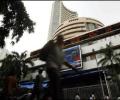
Market participants were cautious ahead of WPI data release tomorrow.

The company's investments in telecom business reached 15-20% of capital employed.

The ugly underbelly of the policies of economic liberalisation followed over the last two decades has been crony capitalism at its worst.

Jayesh Gandhi, executive director, Morgan Stanley Investment Management in an interview with Business Standard, says Indian equities continue to remain a long-term bull story based on the growth prospect for the country and, hence, in a way cannot be ignored by global investors.
Bhartiya Janata Party patriarch Lal Krishna Advani has picked up for his blog this week a new book by the US-based Morgan Stanley executive Ruchir Sharma that identifies "graft driven inflation" and "crony capitalism" among the weaknesses and difficulties that can be a damper for India's high expectations.

A person familiar with the matter said the deal could be finalised in a month.
With their home markets in turmoil, large global investors such as Blackstone, Carlyle, Morgan Stanley, JP Morgan and the Government of Singapore Investment Corporation are actively scouting for and signing deals in the Indian property sector.

Indian markets started 2012 on a positive note. Ridham Desai, managing director and strategist and head of India equity research, Morgan Stanley, says, he expects a 15 per cent upside in the Sensex this year.

Billionaire Mukesh Ambani's Reliance Industries is reported to have held talks with Saudi Aramco on a cash and share deal for sale of a 20 per cent stake in its oil refining and petrochemical arm. Ambani had in August 2019 announced talks for the sale of a 20 per cent stake in the oil-to-chemicals (O2C) business, which comprises its twin oil refineries at Jamnagar in Gujarat and petrochemical assets, to the world's largest oil exporter. The deal was to conclude by March 2020 but has been delayed for reasons not disclosed by either company.

The Indian economy remains on track to regain its position as the world's fastest-growing major economy after official estimates on Friday put the expansion at a tempered 9.2 per cent this fiscal amid concerns over the impact of a resurgent virus on the fragile recovery. The growth in the gross domestic product (GDP) of 9.2 per cent in April 2021 to March 2022 fiscal (FY 2021-22) given by the National Statistical Office (NSO) in its first advance estimate compares with 9.5 per cent expansion forecast by the Reserve Bank of India (RBI) last month. The economy had contracted by 7.3 per cent in the previous financial year.

He says he has tremendous expectations from RIL's broadband digital services business.

FSN E-Commerce Ventures, which runs online marketplace for beauty and wellness products Nykaa, has filed preliminary papers with markets regulator Sebi to raise Rs 3,500-4,000 crore through an initial share-sale.

The figure is based on the base price of spectrum for the upcoming auction fixed by the TRAI and on the assumption that there will be no bidding war.

The markets ended lower amid a volatile trading session on Monday after profit taking was seen across the board because of growth concerns.

International oil prices retreated from an over seven-year high but was still above $100 a barrel and continue to pose threat to India's inflation rate and current account deficit. While there are no supply concerns as the oil route remained open, consumers will feel the pinch when PSU oil firms start passing on the increase in international rates through a revision in petrol and diesel prices, which have been on a pause for over three-and-a-half-months in view of elections in Uttar Pradesh and four other states. The government is "closely monitoring the situation" and will "take appropriate steps as and when required", a top official said. Brent crude oil surged past $105 per barrel on Thursday for the first time since August 2014, following Russia's invasion of Ukraine.

The India story is on a roll. The country's benchmark indices are on their way to touching historical highs, aided largely by inflows from foreign institutional investors. But Ridham Desai, managing director, Morgan Stanley (India), still thinks there's "some reticence" in FII participation.

The biggest losers on the National Stock Exchange's benchmark Nifty 50 index are stocks that have seen the highest turnover over the past 12 months, according a report by Morgan Stanley.
Given the expectations of growth in the packaged foods segment, the company seeks to become a Rs 1-trillion FMCG business by FY30.
Urbanisation is a core component to the process of city formation and building out India's competitive strength in the global markets.
Foreign institutional investors have offloaded shares worth nearly Rs 3,000 crore (Rs 30 billion) in 23 Indian companies, such as mortgage lender HDFC and Bombay Dyeing, among others, so far in 2011.

Even though stocks may remain volatile in the run-up to the polls, as political parties stitch up alliances, the long-term trajectory for the markets remains bullish.

Analysts are bullish on consumption and investment themes.

Sensex has lost almost 1,500 points since December 31, 2014.

Reliance announced energy asset sales worth around $ 16 billion; end of the investment cycle in telecom; bringing net-debt to zero in 18 months; value-unlocking options for real estate and financial assets; listing of telecom and retail in five years; and focus on dividends.
If the latest strategy reports of some leading foreign institutional investors (FIIs) are anything to go by, then the outlook for the Indian equity market appears bleak. This is, despite section of experts pitching for the current attractive valuations.

Finance Minister Pranab Mukherjee is slated to present the Budget on February 26.

Markets regulator Sebi has kept in abeyance the processing of Go Airlines' draft papers for an initial public offer worth Rs 3,600 crore. Go Airlines (India) Ltd, which has announced rebranding itself as 'Go First', filed preliminary papers for an initial share sale worth Rs 3,600 crore in May. The proceeds will be mainly used to repay dues. The "issuance of observations (has been) kept in abeyance", according to Sebi's latest update on processing status of Go Airlines' draft offer documents. The information was updated on June 25. In Sebi parlance, issuance of observations implies its go-ahead for the IPO.

In the mid-year monetary policy review on Tuesday, RBI, left the key interest rate unchanged but reduced cash reserve ratio by 0.25 per cent to infuse additional liquidity of up to Rs 17,500 crore (Rs 175 billion) into the system.

They own 27.5% in top 75 listed firms; investments bounce back after falling two straight quarters

The research also suggests that they are willing to cut their savings to retain their expenditure growth at previous year's levels.
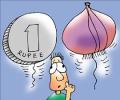
The first issue is inflation, which has been widely discussed. The government is now rightly working on reversing fiscal and monetary stimulus to manage the inflation pressure.
J M Morgan Stanley Pvt Ltd said ECE Industries Ltd will buy back 14,33,278 shares of face value of Rs 10 each or 25% at Rs 30 per share totaling Rs 42.998 million from the open market.

With India's stock markets being one of the best performing among the emerging markets, a number of global pension funds are planning to make India-specific allocations.

Unacademy may see a funding dry spell for at least next 12-18 months and even last till 24 months and will cut costs to weather the lean period, said the chief executive of the education technology unicorn that recently laid off more than 600 employees. "This is a test for all of us. We must learn to work under constraints and focus on profitability at all costs. We must survive the winter," said Unacademy's co-founder and CEO Gaurav Munjal in a letter to the employees. "Winter is here. We are looking at a time when the funding will dry up for at least 12-18 months.

The 'Indian story' will be badly damaged if the Modi government is not re-elected, argues investment banker Christopher Wood.

Many get confused between investing in equities and equity mutual funds. They think equity funds are the same as equities or stocks

From March 3, investors in India will be able to trade in select US stocks through the NSE International Exchange (NSE IFSC), a wholly owned subsidiary of the National Stock Exchange (NSE). Investors can invest in NSE IFSC receipts on US stocks, which will be in the form of unsponsored depository receipts (DRs). For a start, this will include DRs of 50 US stocks such as Apple, Alphabet, Amazon, Tesla, Microsoft, Morgan Stanley, Nike, P&G, Coca-Cola, and Exxon Mobil. Indian retail investors will be able to transact on the NSE IFSC platform under the Liberalised Remittance Scheme (LRS) limits prescribed by the Reserve Bank of India (RBI), which currently stand at $250,000 per year.

Loses notional value by 37.5% because of markdowns by investors

Bank of America Merrill Lynch, Citigroup, Credit Suisse, Goldman Sachs International, JP Morgan Securities, Morgan Stanley, Nomura and UBS have confirmed their commitment to the FSA Rule and the supporting Code on remuneration practices. These were published in August and would come into force on January 1, 2010 (and cover payments for performance year 2009).
 © 2026 Rediff.com - Advertise with us - Disclaimer - Privacy Policy - Sitemap - Feedback - About us - Terms of use - Grievances