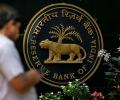
The government on Tuesday appointed three external members -- Ram Singh, Saugata Bhattacharya and Nagesh Kumar -- to the RBI's rate-setting Monetary Policy Committee for four years. The central government has reconstituted the Monetary Policy Committee (MPC) of RBI, the finance ministry said in a statement. Ram Singh is the director of the Delhi School of Economics, Saugata Bhattacharya is an economist, and Nagesh Kumar is the director and Chief Executive, Institute for Studies in Industrial Development, New Delhi.

The government had amended the RBI Act through Finance Act 2016.

Will seek to bring inflation to the mid-point: Rajan

Finance Minister Arun Jaitley on Saturday said that retail inflation is expected to remain close to 5 per cent
A three-year validity of an inflation target is, perhaps, more reasonable and practicable.

A host of factors including the reform measures taken by the government and decline in global oil and commodity prices have led to lower inflation, the Finance Ministry said on Wednesday.

Starting August, various festivals are celebrated in different parts of the country leading to higher sales of commodities ranging from sweets, fruits and food items

Moody's on Thursday said the new 'inflation targeting' mechanism is a "credit positive" move.

According to D&B, food price levels might witness a rebound as foodgrain production is estimated to have declined during 2014-15.

Nitin Desai suggests some concrete measures to revive investment and boost growth.

Soon after RBI announcing a much- awaited rate cut, Chief Economic Advisor Arvind Subramanian on Wednesday said that the global rating agencies should look at upgrading their stance on India's credit outlook. "Now we have a 50 basis points rate cut (in two tranches within two months) and I think that is good for the economy and all rate cuts benefits... If the outlook is looking good, the rating agencies should draw their lessons from that om improving the outlook," Subramanian told reporters. After presentation of Union Budget 2015-16 last week, global and domestic agencies had ruled out any immediate upgrade in India's sovereign ratings and had red-flagged the country's delayed fiscal consolidation roadmap and had also warned against any slippages from the "ambitious" disinvestment plan proposed in Budget. Subramanian said that the rate cut is consistent with the government's views in the last week's Economic Survey and thereafter in the Union Budget for the outlook on inflation and for the outlook on overall economy. "It (rate cut) shows that RBI and government are on the same page in terms of how we view the economy. It also means that Budget can be seen as conducive to non-inflationary growth," he added. On monetary policy framework agreement, Subramanian said that both Finance Ministry and RBI have shared concern about inflation. Recently, the Finance Ministry and the Reserve Bank agreed to 'inflation rate targeting' under which the apex bank will aim to lower retail inflation to below 6 per cent by January 2016.

In the current fiscal so far, retail inflation stabilised around 5 per cent, while wholesale price-based inflation averaged around 2.9 per cent during April-December.

Drop in oil prices and the government's reform agenda has helped India to be out of the Fragile Five group

With the setting of MPC, the interest rate setting powers would move from RBI Governor to the panel.
Amendments to RBI Act likely soon
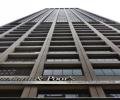
S&P in November ruled out an upgrade in the country's rating for some considerable period, citing India's low per capita GDP and relatively high fiscal deficit.

The RBI will have to focus on constructive change to ensure growth.

The country saw two straight years of deficient monsoons.

Inflation targeting framework is now enshrined as a formal agreement by the government and the RBI; thus, it may seem that we are flogging a dead horse, says Soumya Kanti Ghosh.

After Raghuram Rajan leaves, the world for the succeeding RBI governors will be distinctly different.

India's economy is not like Western ones, and thus needs restrained fiscal policy even during a recession, says Ajay Shah.

This Budget plans for an increase to 10.3% of GDP from 9.9%.

Finance Minister Arun Jaitley presented the Union Budget.

Chief Economic Advisor Arvind Subramanian's interview.

Attired in his trademark half sleeves kurta and sporting a Rajasthani turban, Prime Minister Narendra Modi devoted a bulk of his 90-minute address on the occasion of the 70th Independence Day to presenting in effect a report card of his government's work particularly in boosting economic growth, ease of doing business and welfare schemes for the poor and farmers.

NDA government has shunned populism.

Indian economy about to take-off
 © 2026 Rediff.com - Investor Information - Advertise with us - Disclaimer - Privacy Policy - Sitemap - Feedback - About us - Terms of use - Grievances