
The Reserve Bank of India (RBI) is expected to cut interest rates for the first time in nearly five years in Governor Sanjay Malhotra's first monetary policy committee (MPC) meeting on Wednesday. The meeting of the six-member MPC, which will culminate on Friday, aims to boost sluggish economic growth, which is seen falling to a four-year low. Malhotra took charge as the 26th RBI governor in December last year.
The government has invited applications for the post of deputy governor of the Reserve Bank of India (RBI) from interested candidates with at least 25 years of experience and below 60 years of age as on January 15, 2025. One of the deputy governors, Michael Patra's current term will end on 15 January. The last date of submission of applications is November 30, 2024.
The government on Tuesday appointed three external members -- Ram Singh, Saugata Bhattacharya and Nagesh Kumar -- to the RBI's rate-setting Monetary Policy Committee for four years. The central government has reconstituted the Monetary Policy Committee (MPC) of RBI, the finance ministry said in a statement. Ram Singh is the director of the Delhi School of Economics, Saugata Bhattacharya is an economist, and Nagesh Kumar is the director and Chief Executive, Institute for Studies in Industrial Development, New Delhi.

'I think today RBI supervision is much sharper than what it was earlier.'
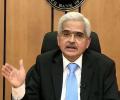
The Reserve Bank is unlikely to cut the benchmark interest rate in its forthcoming bi-monthly monetary policy review later in the week as retail inflation is still a cause of concern, and there is a possibility of the Middle East crisis deteriorating further, impacting crude oil and commodity prices, say experts.

Patra, as executive director of the central bank, was the principal advisor to the Monetary Policy Department since July 2012.

Acharya was one of the youngest deputy governors in the central bank's history and was in charge of the critical monetary policy department which also made him a part of the rate-setting panel.

As per the RBI Act, the central bank should have four deputy governors - two from within the ranks and one commercial banker and the fourth one an economist to head the monetary policy department.

The government on Wednesday appointed RBI's senior-most executive director M Rajeshwar Rao as the deputy governor of the central bank. Rao was appointed to the post vacated by N S Vishwanathan, who stepped down three months ahead of his extended tenure on health grounds.

The finance ministry has received about 100 applications for the post, which have been sent to the high-level panel that will select a suitable candidate for the post, sources said.
This is the second high profile resignation in the past six months at the Reserve Bank of India.

India's economic growth is estimated to have slowed down to 11-year low of 5 per cent during the current financial year ending March 2020.

The second post of deputy governor became vacant after V Leeladhar superannuated a few months ago. Punjab National Bank chairman and managing director K C Chakrabarty is to take over as deputy governor on Monday. Apart from monetary policy, Subbarao will also handle the department of economic analysis and policy, department of statistics and information management.

Select bankers will meet RBI Deputy Governor Subir Gokarn, who is in-charge of the monetary policy department, and other central bank officials on July 12.
Deputy governors Subir Gokarn, Usha Thorat and Shyamala Gopinath will get additional portfolios, which were until now under K C Chakrabarty, RBI said in a statement today. The central bank did not give any reason for the reshuffle and said the changes will be effective tomorrow.

Along with Subir Gokarn's appointment as the fourth deputy governor, the Reserve Bank of India on Wednesday reshuffled some of the key portfolios of its deputy governors and executive directors.

As per the RBI Act, the central bank has to have four deputy governors.

Urjit Patel's reappointment will raise market hopes that Rajan, will also be offered an extension when his tenure ends in September.
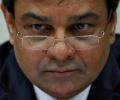
Patel, 55, who took over as the 24th Governor of the central bank on September 5, 2016, had the shortest tenure since 1992.
.jpg)
Many countries, including Japan, are having deflation and they are trying to go back to an era of inflation.
Historically, the RBI has tried to keep the crooks at bay by issuing a circular a day. What it needs is more onsite supervision. Merely checking high-frequency data with the help of technology is insufficient, notes Tamal Bandyopadhyay.
Given the pressure from India Inc and the banking fraternity, it is surmised that the portfolio rejig will take place before April.

Gokarn was the first Indian central banker who regularised warnings to the government, through the monetary policy statement, on the need to reduce fiscal deficit.
Governments that do not respect central banks' independence will sooner or later incur the wrath of the financial markets, ignite economic fires, and come to rue the day they undermined an important regulatory institution; their wiser counterparts who invest in central bank independence will enjoy lower costs of borrowing, the love of international investors, and longer life spans, said Acharya, who will return to the New York University's Stern Business School in August.
Relations between the Mint Road and North Block have often been frosty, with the former's calls for lowering rates being the biggest point of difference

Linking all new floating rate loans to an external benchmark won't impact existing borrowers, so customers who have taken long-term home loans recently should watch things carefully, say Joydeep Ghosh and Sanjay Kumar Singh.
A staunch defender of demonetisation, it would be interesting to see how he handles the government's increasing demand for more cash from the RBI, and letting some weak banks get out of prompt corrective action.
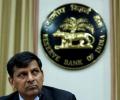
Here is some background on the candidates seen as potential successors to Rajan at the RBI

The resignation is sure to create more political firestorms for the government as it comes on the eve of the winter session of Parliament where the Opposition has already made it clear to the treasury benches that infringing on the RBI autonomy would be a big talking point for them.

He will be the eighth Deputy Governor to be made Governor at RBI

Hopefully, the grey world of central banking in a nation hit by demonetisation, will lighten up with some of his notes soon.
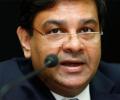
Janmejaya Sinha lays down Urjit Patel's agenda - cleaning up bank balance sheets, evaluating robustness of CPI and pushing for digitisation in financial services.

Will Arundhati Bhattacharya be the RBI's first woman governor? Or will Urjit Patel succeed Raghuram Rajanas RBI governor when his term ends on September 4?
 © 2026 Rediff.com - Investor Information - Advertise with us - Disclaimer - Privacy Policy - Sitemap - Feedback - About us - Terms of use - Grievances