
Interest rates on all loans linked to MCLR stand reduced by 5 bps with effect from May 10, 2019: SBI

Benefitting from the economic rebound, banks are expected to report a healthy bottom-line and asset quality profile in the quarter ended March 2023 (Q4FY23). The net profit of listed commercial banks is projected to grow by an average 43.6 per cent year-on-year (YoY) in Q4FY23 amid better net interest margins (NIMs) and declining credit costs. This is based on a combined assessment of analyst estimates for 17 banks on Bloomberg database.

If you have availed a home loan from an NBFC, you can shift your existing home loan to a bank and benefit from the MCLR regime, suggests Ratan Choudhary, head - home loans, Paisabazaar.com.

Those who are on the old lending rate regimes and have not moved to MCLR, will be benefited from this reduction.

Bank of Baroda Q4 results: Key brokerages have raised their target prices on Bank of Baroda after the state-owned lender posted better-than-expected March quarter (Q4FY23) results. Analysts now see up to 29 per cent upside in the stock from a one-year perspective as they believe BoB is well-placed among the large public banks with nearly all key business metrics moving closer to the top-tier banks. Valuations, too, remain attractive despite steady strong quarterly performances.

Telecom operator Bharti Airtel Chairman Sunil Mittal on Wednesday said the telecom sector reforms approved by the Cabinet will ensure that the industry is able to invest fearlessly, and the company will respond to Prime Minister Narendra Modi's call to invest and accelerate the country's growth. Among a series of breathers for the stressed telecom sector, the Cabinet has approved the inclusion of revenues earned only from telecom services in the adjusted gross revenue (AGR), and the removal of penalty on dues to be paid to the government prospectively. Mittal congratulated and thanked the government for undertaking these seminal reforms to lift an industry that is at the core of his Digital India vision.

With this reduction, the one-year MCLR, to which most of its loan prices are linked, will come down to 8 per cent, the bank said in a statement.

The new rates vary from 8.80 to 9.05 per cent on various slabs of loans.

While existing base rates and loans linked to it will continue, new loans will be linked to the MCLR, which is likely to be lower

SBI is the third state-run lender to lower the lending rates after Indian Overseas Bank Tuesday and Bank of Maharashtra which also lowered their loan prices by 5 bps on loan tenors of one year and above, effective April 10.

Lead indicators suggest that domestic current account deficit (CAD) is likely to reduce in 2023, while macro-economic stability has received a boost from inflation being brought back to the official tolerance band, according to the Reserve Bank of India's (RBI's) January 2023 Bulletin. "With the merchandise trade deficit reaching an all-time high of $83.5 billion in a quarter, and a rise in net outgo from the income account, the current account deficit increased to 4.4 per cent of GDP in Q2FY23," the State of the Economy article in the bulletin said. "It is noteworthy, however, that the CAD for Q1 was revised down from 2.8 per cent to 2.2 per cent on account of downward adjustment in Customs data.
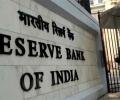
In the last three years, public sector banks have responded to the RBI's policy rates more strongly than private banks.

American brokerage BofA Securities on Friday said the Indian economy continues to be "weak", pointing to activity indicators tracked by it. On the positive side, the brokerage said credit demand is bottoming out and the real lending rates adjusted for wholesale price inflation are falling. It can be noted that there has been a slew of reports lately about a stronger recovery being underway after the jolt caused by the pandemic.

New borrowers should go for banks over housing finance companies as the new benchmark -- MCLR -- is more transparent.

MCLR-linked loans are more responsive to RBI's rate movements, and rate cuts may be transmitted to borrowers in a manner useful to them.

State Bank of India hikes lending rates, and other banks pick up the signal.

In case the repo rate keeps trending downwards, borrowers can expect a downward revision of their MCLR-linked loans.

Liquidity in the banking system has slipped into a deficit for the first time in three weeks, prompting banks to borrow the largest quantum of funds from the Reserve Bank of India (RBI) in around a month and a half. The key catalyst for the sudden tightening in liquidity was due to outflows on account of advance tax payments, which occur towards the end of a quarter. Analysts also cited other factors such as a currency leakage and possible interventions by the RBI in the foreign exchange market, which contributed to the tighter liquidity conditions.

'If the new rate is lower than your current rate, ask your bank to shift you to it.' 'This can be done by paying a fee of Rs 5,000 to Rs 6,000.'

Over a five-year period, the benefit of a sharp drop in interest rates would mean saving Rs 76,880 -- a significant number. But if the rate cuts are slimmer, say 25 bps or the number of years left is barely one or two years, shifting may not make too much sense.

None of the four benchmarks suggested by the RBI is ideal as banks in India create loan assets from their deposits and not borrowing from the regulator or market, says Tamal Bandyopadhyay.

The country's largest lender, SBI, has reduced marginal cost of funds based lending rate by 0.9 per cent from 8.90 per cent to 8 per cent for one-year tenure, the bank said in a statement.
Banks are cheating customers with rates that are unfairly high, discriminatory, and opaque, denying legitimate savings to borrowers, while the RBI has been looking the other way, says Debashis Basu.

It is clear as daylight to anyone that a charge or a cost to simply reduce interest on a floating rate loan is extortion, but this is exactly what the RBI has officially sanctioned, says Debashis Basu.
The new rates, effective Wednesday, is the third reduction by SBI in this financial year having cut the rates by 5 bps each in April and May, while its home loan rates has come down by 20 bps during this period.

Since January 2015, the central bank has lowered its policy rate.

Yet, no bank has been taken to task for its actions, says Harsh Roongta.

Experts say lending rates won't come down significantly,as banks are grappling with NPAs
SBI said revision of saving bank rate will enable the bank to maintain MCLR based lending rate at existing rates.

State Bank of India has revised lending rates based on marginal cost of funds, a new methodology that will take effect from April 1.
State Bank announced a 15 basis points reduction in its lending rates, effective August 10 across all tenors.

The one-time restructuring of loans will help every firm and prevent cost-cutting measures such as lay-offs.
You would find NBFCs more willing to lend even if you have a poor credit score, says Adhil Shetty

RBI had asked banks to price fixed rate loans of up to three years based on marginal cost of funds from April 1
With home loan rates headed north, experts advise how borrowers should cope with their rising liabilities.

All public sector banks have moved to such a regime voluntarily, while private banks are yet to. The state-run banks have introduced repo-linked products for floating-rate home and auto loans, but the RBI said loans to micro, small and medium enterprises (MSMEs) should also be linked to an external benchmark.

While rate cuts may increase churn between banks, these may not boost credit offtake meaningfully.

While its deposits from Iran accounts have come down from a peak of around Rs 25,000 crore to Rs 2,200 crore, it's been offset by the bank receiving almost Rs 24,000 crore in deposits post note ban.

The implementation of MCLR from April 1 has already led to a rate cut of 10 basis points on home loans by the country's largest bank, State Bank of India, and others.

Existing bank deposits will continue with past rates until renewed on maturity.
 © 2026 Rediff.com - Advertise with us - Disclaimer - Privacy Policy - Sitemap - Feedback - About us - Terms of use - Grievances