
Weighing 6,100 kg, the communication satellite would be the heaviest payload to be placed into the Low Earth Orbit (LEO) in LVM3 launch history from Indian soil.

The satellite, weighing about 4,410 kg will be the heaviest to be launched from the Indian soil and into a Geosynchronous Transfer Orbit (GTO), the space agency said. The satellite will travel onboard a LVM3-M5 rocket, dubbed as 'Bahubali' for its heavylift capability.

ISRO is set to launch its communication satellite CMS-03 from Sriharikota. The satellite, weighing 4,410 kg, will be the heaviest launched from Indian soil into a Geosynchronous Transfer Orbit (GTO).
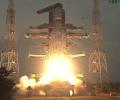
The heaviest communication satellite to be launched from the Indian soil onboard a new generation, homegrown 'Bahubali' rocket was successfully placed into the intended orbit on Sunday, the Indian Space Research Organisation said.
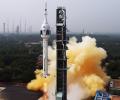
ISRO Chairman V Narayanan announces ambitious space program goals, including landing Indians on the Moon by 2040 and launching the 'Gaganyaan' mission in 2027. The agency is also working on a national space station and uncrewed missions.
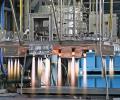
With these successful tests, ISRO has moved a step closer to India's first human spaceflight mission, Gaganyaan.

Indian astronaut Shubhanshu Shukla, currently on the ISS as part of the Axiom-4 mission, has acknowledged ISRO's efforts in ensuring his safe travel. He spoke with ISRO chairman V Narayanan about his well-being and the experiments being conducted on the ISS.
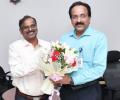
Narayanan has a long and distinguished career at ISRO, having played a key role in several important missions, including Chandrayaan-2 and 3, and the Gaganyaan programme.
'The work is already on with various data being studied.'

His village didn't have a school so he went to school in a neighbouring village and often studied by kerosene light.

This is the second of the series conducted at Aeronautical Test Range, Chitradurga, in Karnataka at 7.10 am.

Only three countries (United States, Russia and China) have successfully landed spacecraft on the airless lunar surface.
While the historic success of Chandrayaan-3 is celebrated by Indians across the world, two untrumpeted engineering colleges in Kerala are basking in the glory of the key role played by some of their alumni in the crucial Moon mission.
Days after landing on the Moon, India will aim for the Sun on Saturday with its maiden solar expedition, as ISRO's trusted PSLV will carry the Aditya L1 mission on a 125-day voyage to the Sun.

Prime Minister Manmohan Singh on Monday hosted lunch for space scientists after the successful launch of an imaging satellite Cartosat-2B last week.
The long-duration static test of liquid core stage (L110) for a new-generation heavy rocket being developed by Indian Space Research Organisation has failed, sources said.

"The panel's report is awaited. The committee has been given a guideline to prepare the mission before the end of next year," a senior ISRO official said. "There is a good launch window in November".

Eminent rocket scientist S Somanath has been appointed as the chairman of the Indian Space Research Organisation as well as the space secretary, a personnel ministry order issued on Wednesday said.
The rocket can put satellites weighing upto four tonnes in space, double the weight that the current GSLV-Mark-II can lift.

The launch will be a major feat in country's space history as no exercise on this scale has been attempted before.
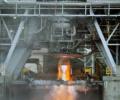
India's first indigenously designed and developed high-thrust cryogenic rocket engine generating a nominal thrust of 19 tonnes was successfully endurance hot-tested for 800 seconds.
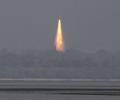
Enthused over its successful launch of GSLV D5 with GSAT-14 communication satellite from Satish Dhawan Space Centre in Sriharikota on Sunday, the Indian Space Research Organisation is planning a series of GSLV launches and an experimental launch of the advanced version GSLV Mark III soon from the spaceport.

Rajeev Srinivasan on the disastrous after-effects of a made-up spying incident
 © 2026 Rediff.com - Advertise with us - Disclaimer - Privacy Policy - Sitemap - Feedback - About us - Terms of use - Grievances