
>It's not easy to predict the market. But there are at least two positive factors to back the PSU banks, explains Tamal Bandyopadhyay.

From the Sensex pack, ITC, Bajaj Finserv, Kotak Mahindra Bank, Bajaj Finance, Axis Bank, HCL Technologies, Wipro, UltraTech Cement, Maruti and Infosys were the biggest gainers. Tata Steel, Tech Mahindra, Nestle, Larsen & Toubro, Tata Motors and Titan were among the laggards.

Benchmark Sensex and Nifty closed at new lifetime high levels on Monday on foreign fund inflows and buying in index majors HDFC Bank and Reliance Industries. The 30-share BSE Sensex jumped 529.03 points or 0.80 per cent to settle at its new all-time closing high of 66,589.93. During the day, it climbed 595.31 points or 0.90 per cent to hit its lifetime intra-day peak of 66,656.20. The NSE Nifty went up by 146.95 points or 0.75 per cent to end at a new record high of 19,711.45.

Omkeshwar Singh, Head, Rank MF, a mutual fund investment platform, answers your queries.

Corporate margins and profits in India remain vulnerable to changes in crude oil prices in the international market. Historical quarterly data from listed companies (excluding banks, finance and insurance, oil and gas, and power sectors) indicate an adverse correlation between corporate margins and crude oil prices.

Shares of Bajaj Finance sprinted 4.7 per cent to Rs 7,732 per share on the BSE in Thursday's (January 4) intra-day trade as the non-bank finance company's (NBFC's) December quarter business update reflected minimal impact of the Reserve Bank of India's ban on two of its lending products. The shares, eventually, ended 4.4 per cent higher at Rs 7,710 per share as against 0.69 per cent gain in the benchmark S&P BSE Sensex. The NBFC's asset under management (AUM) topped the Rs 3-trillion-mark at the end of December 2023, swelling by roughly Rs 20,700 crore (35 per cent year-on-year) to hit Rs 3.11 trillion-mark.

The contribution from asset management companies (AMCs) has surpassed the Rs 3,000 crore target for the creation of a Rs 33,000 crore backstop facility for debt mutual funds (MFs). The initial corpus for the Corporate Debt Market Development Fund (CDMDF) is nearly Rs 3,100 crore, according to multiple government officials and AMC executives. "The fund is operational now. "The required corpus has been raised by AMCs and the remaining part (Rs 30,000 crore) is in the form of a guarantee from the government which will be activated only in case of a credit event," explained D P Singh, joint CEO and deputy MD, SBI MF.

Brokerages believe that the Bharatiya Janata Party's (BJP's) stronger-than-expected showing in state elections reduces political risks for the domestic markets going into 2024. However, after the short-term excitement, the focus will soon shift to earnings, global liquidity conditions, and the interest rate trajectory. "BJP's win in the three state elections is much better than what exit polls suggested and reinforces the consensus expectations of a Modi win in the 2024 national elections with a greater likelihood of 300+ seats for the BJP.

Longer-tenure FDs generally give higher returns. Nonetheless, going for a tenure higher than two to three years is not advisable.

The sharp surge in investment accounts (folios) in midcap and smallcap mutual funds (MF) in recent months is likely driven by the do-it-yourself (DIY) investors. In the first five months of the present financial year (FY 2024), net folio additions in direct MF plans (4.5 million) has outpaced that in regular plans (3.9 million), contrary to the trend seen in the previous three six-month periods. The net folio additions in direct plans in the five-month period (April-August 2023) is 40 per cent higher than the total additions made in the previous six month period.

The Reserve Bank is likely to maintain status-quo on the key interest rates for the third time in a row in its upcoming bi-monthly policy review despite the US Federal Reserve and the European Central Bank hiking benchmark rates, as domestic inflation is within the RBI's comfort zone, say experts. The borrowing cost which started rising in May last year has stabilised with RBI keeping the repo rate unchanged at 6.5 per cent since February when it was raised from 6.25 per cent. In the previous two bi-monthly policy reviews in April and June the benchmark rate was retained.

From the Sensex pack, Mahindra & Mahindra emerged as the biggest gainer, climbing nearly 5 per cent. Power Grid, Tata Motors, Reliance Industries, NTPC, Axis Bank, Nestle, Kotak Mahindra Bank, Asian Paints and Wipro were among the other major gainers. Maruti, HCL Technologies, Bajaj Finance, IndusInd Bank, Infosys and Tata Steel were among the laggards.

With the markets scaling new highs, as many as 43 stocks from the Nifty50 index and 27 of the 30 scrips that are part of the S&P BSE Sensex are trading above their respective 200-day moving average (DMA). The 200-DMA is seen as one of the most relevant trend indicators by investors and traders, who believe that stocks and indices trading above this level possess strength and are likely to rally in the short to medium term, while the ones trading below this level are viewed as bearish and expected to see a sell-off. Wipro, UPL, Kotak Mahindra Bank, Hindalco, Infosys, Cipla, and Adani Enterprises are the only stocks from the Nifty50 pack that are still below their respective 200-DMA, the exchange data suggests.

The Junior Cricket Committee has picked India A squad for the upcoming ACC Men's Emerging Teams Asia Cup 2023 to be played from July 13th to 23rd in Colombo, Sri Lanka.

The sharp rally in the markets thus far in fiscal 2023-24 (FY24) has left analysts struggling to find investment-worthy themes. The S&P BSE Sensex has surged nearly 7 per cent thus far in FY24 and hit a fresh 52-week high of 63,601.71 levels on June 22, mostly led by foreign institutional (FII) flows. "The Indian market has seen a broad rally in the past few months but headline indices have seen more modest performance. "We are not very clear about the reasons for the rally and the divergent performance and struggle to find ideas in the consumption, investment and outsourcing sectors after the sharp run-up in several of our favored sectors and stocks in the past two months," wrote Sanjeev Prasad, co-head, Kotak Institutional Equities, in a recent co-authored note with Anindya Bhowmik and Sunita Baldawa.

rediffGURU Ramalingam Kalirajan answers your personal finance queries.

From the Sensex pack, Tata Motors, HCL Technologies, Power Grid, Tech Mahindra, NTPC, Axis Bank, Kotak Mahindra Bank, Larsen & Toubro, Wipro, Nestle, Tata Consultancy Services and Infosys were among the major gainers. Bajaj Finance, Bajaj Finserv, Mahindra & Mahindra, UltraTech Cement, IndusInd Bank and State Bank of India were the major laggards.
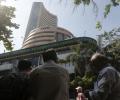
From the Sensex pack, Tata Consultancy Services, Reliance Industries, NTPC, Bharti Airtel, Power Grid, Larsen & Toubro, HDFC Bank, Kotak Mahindra Bank, Tech Mahindra and HDFC were the major laggards. Maruti, Tata Motors, Titan, UltraTech Cement, Bajaj Finserv, Mahindra & Mahindra, State Bank of India and IndusInd Bank were the biggest gainers.
Investors may have to wait a little longer for Unified Payments Interface (UPI)-based block mechanism in the secondary market even as the market regulator has set the effective launch date as January 1, 2024. Several brokerage firms said they may take a few months more to implement it. Investors will be able to register for this facility only if the stock broker has opted for the UPI block facility.

The Reserve Bank of India's (RBI's) latest order on unsecured loans is set to hit the banking sector's growth in the near-term, cautioned analysts, as they see banks slowing down on aggressive retail lending. Besides, cost of funds for non-banking finance companies (NBFC) is expected to inch up as banks will pass on higher capital charge to NBFCs. "We believe the fallout of the RBI action will be mainly on growth, given the rising dependence on unsecured retail loans and lending to NBFCs for growth.

Among the Sensex firms, PowerGrid, IndusInd Bank, Larsen & Toubro, Nestle, HCL Tech, Axis Bank, Tata Motors, HDFC Bank, Tata Consultancy Services and HDFC were the major winners. Bajaj Finserv, NTPC, Reliance Industries and Kotak Mahindra Bank were the biggest laggards.
People are availing far more of certain kinds of unsecured loans than was the case before the pandemic. Bank lending for buying consumer durables and funding of credit cards and other personal loans have risen by Rs 6.9 trillion between August 2019 and August 2023, shows a Business Standard analysis of data from the Reserve Bank of India (RBI). These loans are typically unsecured, which means they are provided without collateral.

rediffGURU Kirtan A Shah answers your personal finance queries.

Benchmark equity indices continued their record-shattering spree on Tuesday, with the Sensex and Nifty hitting their fresh all-time high levels in early trade, amid persistent foreign fund inflows. Also, buying in Bajaj Finance, Bajaj Finserv, Tata Consultancy Services and HDFC twins added to the positive market momentum. Rallying for the fifth straight session, the 30-share BSE Sensex jumped 381.55 points to hit its all-time peak of 65,586.60 in early trade.

BharatPe co-founder Ashneer Grover and his wife Madhuri Jain were stopped at the Delhi international airport following a look out circular issued against them in the alleged fraud at the fintech firm, sources said. The couple were to travel to New York late on Thursday for vacation when they were stopped at the airport on the basis of a look out circular issued by the Economic Offences Wing (EoW) of the Delhi police. EoW is investigating complaints of payments being made at BharatPe to fake human resource consultancies allegedly operated by Grover and family. They have also been accused of backdating invoices to use funds.

Macroeconomic data announcements, global trends and trading activity of foreign investors would guide momentum in the equity market this week, analysts said. Markets ended a five-week losing streak and gained nearly a per cent last week, helped by a sharp rebound on Friday. Last week, the BSE benchmark jumped 500.65 points or 0.77 per cent and the Nifty gained 169.5 points or 0.87 per cent.

Brokerages expect India Inc to report an upturn in earnings for the March quarter of 2022-23, after a relatively muted showing in the previous two quarters. This growth is expected to be led by banking, financial services and insurance (BFSI) companies, FMCG firms, and automobile makers. The combined net profit of the Nifty50 companies (excluding Adani Enterprises) is expected to have grown 15.6 per cent to Rs 1.77 trillion in Q4FY23, from Rs 1.53 trillion a year ago.
Global financial markets are not yet fully factoring in any escalation in the Israel-Palestine geopolitical conflict, said Christopher Wood, global head of equity strategy at Jefferies in his latest weekly note to investors, GREED & fear. The pertinent point about ongoing events in West Asia from a financial market perspective, according to him, is that, despite much talk about a pending ground invasion of Gaza, no such invasion has yet happened. "This is beginning to make GREED & fear wonder if it is ever going to happen.

Since their highs in September, chemical stocks have underperformed the benchmarks and broader indices over the past month with larger players witnessing a 9-22 per cent fall during this period. Expectations of weak September quarter results amid high inventory, demand woes and weak realisations have led to the underperformance.
Among the Sensex stocks, Reliance Industries climbed the most by 3.11 per cent. Bajaj Finance, Titan, Axis Bank, ICICI Bank, Bajaj Finserv, IndusInd Bank, UltraTech Cement, Larsen & Toubro, HDFC Bank, HDFC and Kotak Mahindra Bank were among the other major winners. Power Grid, Hindustan Unilever, Tech Mahindra, Tata Consultancy Services, Infosys and Asian Paints were among the biggest laggards.

From the Sensex pack, Reliance Industries jumped the most by 3.78 per cent. Tata Steel, Bharti Airtel, IndusInd Bank, Kotak Mahindra Bank, UltraTech Cement, ICICI Bank and Tata Motors were the other biggest gainers. Titan, HCL Technologies, Power Grid, Tata Consultancy Services, Wipro, Hindustan Unilever, Axis Bank and Nestle were among the major laggards.

Nikunj Saraf, Vice President Choice Wealth, answers your queries.

'Focus on 19,400/64,900 as the key resistance levels for the Nifty/Sensex.'

Mutual funds recorded Rs 7,600 crore net inflows into active equity schemes in July even as redemptions surged to a 30-month high of Rs 30,400 crore owing to profit booking, reveals data from the Association of Mutual Funds in India (Amfi). Equity net inflows were 13 per cent lower compared to the preceding month's tally. The inflows were supported by a strong flow from retail investors through the systematic investment plan (SIP) route.

Bajaj Finserv was the biggest gainer in the Sensex pack, rising 2.21 per cent, followed by Titan, ITC, Kotak Mahindra Bank, HDFC Bank, HDFC, Bajaj Finance, IndusInd Bank, ICICI Bank, HUL, Reliance Industries and Mahindra & Mahindra. Wipro, Tata Consultancy Services, Power Grid and Tech Mahindra were the laggards.

Wipro was the biggest loser in the Sensex pack, slipping nearly 2 per cent, followed by IndusInd Bank, State Bank of India, Kotak Mahindra Bank, ICICI Bank, HDFC Bank, Infosys, Tata Consultancy Services, HDFC and Bajaj Finserv. On the other hand, Nestle, Mahindra & Mahindra, ITC, HCL Technologies, Asian Paints and Maruti were among the gainers.

Among the Sensex firms, IndusInd Bank, Power Grid, Tata Motors, Bajaj Finance, NTPC, HDFC Bank, Reliance Industries, Nestle and Kotak Mahindra Bank were the major gainers. Infosys, State Bank of India, Tata Steel, Hindustan Unilever and Titan were the major laggards.

The stock of Dixon Technologies (India), the country's largest listed electronic manufacturing services (EMS) player, was up 6 per cent in 10 trading sessions, boosting the gains over the last three months to 21 per cent. The gains came following reports that Dixon will produce laptops in India in partnership with US and Chinese firms under the production-linked investment (PLI) scheme. It recently signed an agreement to make smartphones for Xiaomi India.

Deteriorating ties between India and Canada could have a bearing on flows into the domestic capital markets. At present, Canada is the seventh largest country for foreign portfolio investor (FPI) flows into India. According to the National Securities Depository Ltd (NSDL), the assets under custody (AUC) of FPIs domiciled in Canada stood at nearly Rs 1.8 trillion ($21 billion) at the end of August. Almost 85 per cent of these investments are in listed equity, while the remaining in debt and hybrid instruments.

Seven consecutive sessions of decline in the equity market has eroded the wealth of investors by a whopping Rs 10.42 lakh crore and the benchmark Sensex has tumbled more than 2,000 points during this period. Concerns over more rate hikes by developed economies, weak global equity markets and fresh foreign fund outflows from the domestic market have dented investor sentiments. On Monday, the BSE Sensex dropped 175.58 points or 0.30 per cent to end at 59,288.35 points, marking a decline for seven straight trading sessions.
