
Twitter said it will continue to be strictly guided by principles of transparency, a commitment to empowering every voice on the service, and protecting freedom of expression and privacy under the rule of law.

Twitter on Wednesday said it has suspended over 500 accounts, and blocked access to several others within India as it partly acceded to a government order to curb spread of misinformation and inflammatory content around farmers' protests.
Political controversies aside, Twitter's business in India is expanding, and creating opportunities for Indians, reports Neha Alawadhi.

The comments assume significance as social media companies are facing the deadline of May 25 to comply with the new guidelines for digital platforms.

Rediff.com's Syed Firdaus Ashraf traces the journey of PM-CARES from its founding to finally admitting it is not a government fund.

The IT ministry sources said they have received a reply from WhatsApp and are studying it, and that a view on it will be taken soon.

The banned apps include Baidu, Baidu Express Edition, Tencent Watchlist, FaceU, WeChat Reading and Tencent Weiyun, besides PUBG Mobile and PUBG Mobile Lite, according to an official statement.

The ministry has taken a strong position on the matter, and made it clear that it is not just problematic but also "irresponsible" for the messaging platform to leverage its position to impose "unfair" terms and conditions on Indian users, when many depend on WhatsApp to communicate in everyday life, according to the sources.

The proposal -- aimed at tackling issues related to anonymity of users in the fast-growing social media space -- has been mooted for the first time as part of the amendments likely to be made to the existing IT intermediary rules, the source said. Social media companies with more than 50 lakh users in India will be categorised as significant social media intermediaries. These companies will also have to comply with stricter obligations, including traceability of users, under the revised rules, the source said.

The Delhi Police on Thursday said the statements by Twitter on the ongoing enquiry in the 'toolkit' case was mendacious and designed to impede the lawful enquiry.

Tamil Nadu, Telangana, Maharashtra, West Bengal and Gujarat are alarmed by the rising use of the app in smaller towns and hinterland, where it is increasingly being used for spreading hate messages and child pornography.
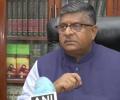
Twitter on Friday temporarily blocked IT Minister Ravi Shankar Prasad's account for alleged violation of the US Copyright Act, a move that the minister slammed as being arbitrary and gross violation of IT rules.

The ministry of electronics and information technology has directed WhatsApp to withdraw its new privacy policy, according to sources. The IT ministry believes that the changes to WhatsApp privacy policy and the manner of introducing the said changes undermines the sacrosanct values of informational privacy, data security and user choice and harms the rights and interests of Indian citizens, government sources said. The government has given seven days to WhatsApp to respond to the notice and if no satisfactory response is received, necessary steps in consonance with law will be taken, sources informed. In a communication to WhatsApp on May 18, the ministry has once again told the messaging platform to withdraw its privacy policy 2021, they said.

'Children as young as 10 are posting videos and there is no one to moderate them.'

The spectator size too has been reduced to 25,000, officials said.

In an interview to PTI, WhatsApp head Will Cathcart said the Facebook-owned company remains committed to privacy and security of users across India and will continue to explain to users that their messages are end-to-end encrypted.

The policy change was originally scheduled to come into effect on February 8, the Facebook-owned company said.

Over 160 rights groups call on IOC chief to revoke 2022 Beijing Winter Games

The government on Thursday announced new rules to curb misuse of social media platforms, as it mandated firms to appoint grievance officer, disclose the first originator of the mischievous information and remove, within 24 hours, content depicting nudity or morphed pictures of women.

As India holds its breath for the Covid vaccination to be begin, Sudhir Bisht provides a quick checklist of what you must know about the vaccines that will be administered to citizens.

Union Minister Ravi Shankar Prasad on Tuesday urged state IT ministers to move swiftly and promote electronics manufacturing through pro-investment initiatives, in a bid to tap a "great opportunity" that now beckons India. Prasad, who interacted with state IT ministers through video-conference against the backdrop of the coronavirus pandemic, told reporters later that eased connectivity norms to facilitate work-from-home, which were to end on April 30, have now been extended till July 31.

Top officials in key ministries, including finance and IT, are of the opinion that a sensitive payments system such as UPI should not be on a platform whose security is possibly compromised.

Agriculture, social services, education, defence and so on will be brought into the digital fold and every gram panchayat will be connected to the internet.

In its response to the IT Ministry's missive, WhatsApp has said false news, misinformation and spread of hoaxes are issues that need to be dealt with collectively, by government, civil society and technology companies working together.

Ministry of home affairs and the IT ministry are planning to have a series of discussions with representatives from Facebook, WhatsApp, Twitter, and Google on issues around national security and the problem of fake news. Asking for decryption keys from WhatsApp to track conversations on the chat app is also part of the agenda.

Experts warned that amendments, which would allow traceability of "unlawful content", invade personal privacy and free speech.

The notice came after reports that political parties had used the data analytics firm during elections.

The fears arise from Facebook's handling of user data and potential privacy violations, more specifically the Cambridge Analytica scandal.
Rumours on WhatsApp have sparked off a spate of incidents involving mob violence

Post elections, the company has been making frequent visits to various ministries, including the IT ministry, commerce ministry, as well as different agencies to get the hang of things in the administration.

The comments assume significance in the backdrop of recent disclosures by messaging giant WhatsApp that said Indian journalists and human rights activists were among those globally spied upon by unnamed entities using an Israeli spyware Pegasus.
According to official sources, various states are contemplating bans on TikTok, Kwai, LIKE and other such apps over the next few months, on the worry that these platforms encourage child pornography, nudity and the spread of fake news, report Karan Choudhury and Neha Alawadhi.
'The idea is to have a separate and independent consultation on non-personal data, and decide the contours of how it should be regulated, whether as guidelines, rules, or a separate policy,' said a senior official at MeitY.

Tiktok and Helo in a joint statement said they have plans to invest $1 billion over the period of next three years to develop technology infrastructure and owns responsibility of local community.

'Before the elections, fake news can create law and order hassles and that is the reason they want social media firms to follow the amended IT Act.'

Home ministry sources say there are fears that international lobbies might have been involved in spying, to create a narrative around Indian governance as well as the economy.

The government is in no mood to buy the privacy and security argument pitched by WhatsApp, whereas the American firm says traceability will undermine end-to-end encryption and the private nature of the app, creating potential for serious abuse.

The panel decided to call Twitter officials against the backdrop of growing concerns about safeguarding citizens' data privacy and possibility that social media could be used to interfere in elections.
These users span across four continents and included diplomats, political dissidents, journalists and senior government officials.
The Indian government is concerned only because Indian names are involved, the source said.
 © 2026 Rediff.com - Investor Information - Advertise with us - Disclaimer - Privacy Policy - Sitemap - Feedback - About us - Terms of use - Grievances