
The combined market capitalisation of the country's top five IT firms that are part of the BSE Sensex is down 24 per cent since January and their valuation has slipped to lowest levels in the past five years.

The time is up for the over three-decades-old business model with the advent of artificial intelligence, HCL Technologies' chief executive C Vijayakumar said on Monday. Speaking at industry lobby grouping Nasscom's annual NTLF event in Mumbai, Vijayakumar said companies need to be "paranoid", given the wide-ranging impact of AI and stressed that this attitude will help them to be relevant and grow. "I strongly believe that the business model is ripe for disruption.

Nasscom on Monday said the US clarification that the H-1B visa fee hike will not affect current visa holders and will apply as a one-time fee only to fresh petitions has helped address the immediate ambiguity surrounding eligibility and timelines.

'You are a guest in the US. It's not your home, you're a guest. If they don't feel comfortable, you have to step out.'

'...are young Indians with aspiration to go to the US.' 'The dream has to be more about working in India...'

'We do not need short-term measures but long-term ones. Companies seem to have given up on the infrastructure part. Long delays are fuelling more traffic crisis.'

From Vallam Kali to Puli Kali, Onam in Kerala is nothing short of a grand cultural extravaganza.

Global funds' assets under custody (AUC) in India have been flat this year, with a Rs 2 trillion drop in information technology (IT) holdings offset by gains in financial stocks. AUC is the total market value of equities held by FPIs.

People with no knowledge of coding or computer languages can use vibe coding using plain English command with AI-assisted software development.
While FY25 attrition rates remained below pre-Covid levels, most companies experienced a 1 to 3 percentage point increase compared to FY24.

Investors in India's information technology (IT) companies are likely in for more pain ahead as muted earnings for the first quarter of 2025-26 (Q1FY26) play spoilsport at the bourses in the worst-performing sector this year amid macro uncertainties. Investors, analysts suggest, can look for better opportunities in the markets as things stand.

With demand for information-technology (IT) services in North America still sluggish, Europe has become a source of optimism for Indian companies because it is delivering steady gains over the past two years and continuing to outperform in the latest quarter. Yet analysts caution a full-scale revival will require a rebound in the United States (US), particularly in manufacturing, retail, and BFSI (banking, financial services, and insurance), because Europe contributes only about a third of the revenues.

Life Insurance Corporation (LIC) , the country's largest domestic institutional investor (DII), has seen a Rs 46,000 crore erosion in the value of its equity holdings amid market downturns in July. The benchmark indices, Nifty 50 and BSE Sensex, have slipped 2.6 per cent from their June 2025-end level to 24,837 and 81,463.09 respectively.

The answer is to be found in the rise of the global south and in particular, the rise of China, explains Aakar Patel.
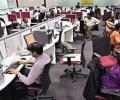
The information technology (IT) services industry may be headed for another year of sluggish growth. Based on the results of the top five IT services companies for the first quarter of 2025-26 (Q1FY26), analysts say the possibility of hitting high single-digit revenue growth in FY26 looks unlikely.

India's top IT services firms delivered single-digit revenue growth in April-June, capping off a mixed, somewhat-sobering quarter as macroeconomic instability and geopolitical tensions weighed on global tech demand and delayed client decisionmaking. Management commentary painted a mixed picture, caution prevailed, yet industry CEOs also emphasised cost optimisation, vendor consolidation, and opportunities in AI makeovers.

'That way you're not hostage just to US sort of exports to India.'

While TCS cited evolving business needs and future readiness as reasons, industry experts say the action is a cost-cutting measure aimed at improving operating margins that have remained below the firm's aspirational range despite multiple efforts.
Indian information technology (IT) service providers are expected to deliver low single-digit sequential growth in the first quarter (April-June) of 2025-26 (FY26), even as macroeconomic uncertainties continue to persist due to the volatile geopolitical environment.

In previews of Q2FY25 and beyond, industry analysts are expecting a turnaround for IT services. High teens earnings per share or EPS growth is expected for the next two-three financial years. The hopes are backed by deal wins of above $100 billion as at Q1FY25, up 16.6 per cent year-on-year ( Y-o-Y).

The Director General of GST Intelligence has closed pre-show cause notice proceedings against Infosys for financial years 2018-19 to 2021-22, involving a GST amount of Rs 32,403 crore, the company said in a statutory filing.

The second-quarter performance of the top five information-technology services firms gives the hint that slow growth has bottomed out on the back of discretionary spending kicking in for the sector's largest vertical - the banking and financial services. However, concern about the macro-environment continues to be a challenge. Among the top four - Tata Consultancy Services (TCS), Infosys, HCLTech, and Wipro - it is Bengaluru-based Infosys that has performed the best and that was evident in its full-year revenue guidance.

The June quarter is usually considered as a seasonally strong period for the IT sector.

In a filing to Turkiye's stock exchange on Friday, Celebi Hava Servisi AS said four concession and licence agreements executed between its company's subsidiaries and the relevant Indian airport authorities have been unilaterally terminated.

The Nifty IT index rose by 5.14 per cent on Friday (January 12), marking its best performance in a day since July 2020, followed by another 1.9 per cent rally on Monday. With this, the index, which tracks the share prices of India's 10 biggest information technology (IT) services companies, has increased 7.1 per cent in the past two sessions. However, the substantial rally in the index occurred at a time when India's four largest IT companies reported their worst quarterly performance in over five years.

India's largest IT services company TCS believes that generative artificial intelligence (AI) is not just another tech cycle but a "civilisational shift" which will positively benefit every industry.
Mid-tier information-technology (IT) companies last financial year reported better growth numbers than their larger counterparts, highlighting their ability to navigate the uncertain macroeconomic environment. Most of these companies - such as Persistent Systems, Coforge, KPIT, and Mphasis - focus on niche businesses and industries that allow them to go deeper in terms of client mining and expanding wallet share from existing customers.
The first quarter results (Q1FY25) of Indian IT services hint towards better fiscal growth than the preceding year, but as the management commentary said, "there is still some time for the industry to be firing on all cylinders." Among the majors-Tata Consultancy Services (TCS), Infosys, HCLTech, and Wipro-it is the Bengaluru-based Infosys that has performed better, which was also evident in its full-year revenue guidance.

Only experienced investors with a high risk appetite, a grasp of market cycles, and comfort with volatility and timing risk should invest.

'While investors believe in India's long-term growth story and resilience amid global uncertainty, they see near-term risks around the direction of a global trade war.'

'IT companies do not have a large presence there either in terms of market and team. So, the impact of the war will be minimal. But West Asia is an emerging economy.'

India's second largest IT company Infosys' board has approved the grant of stock incentives or Employee Stock Option Plans (ESOPs) worth over Rs 51 crore to CEO and MD Salil Parekh. These stock incentives are under various heads including ESG and equity, and add up to over Rs 51 crore.

Trading sentiment in the equity market will largely be driven by domestic corporate quarterly earnings, any update related to US tariffs and foreign fund movements this week, analysts said. Investors would also focus on world market trends, movement of global oil benchmark Brent crude and the rupee-dollar trend for further cues, experts noted.

A retired school headmaster from Jhalda, West Bengal, mourned the loss of his 33-year-old son, an Intelligence Bureau officer, who was killed in a terrorist attack in Pahalgam, Kashmir. The incident sparked outrage and calls for justice as families and political leaders expressed grief and condemned the attack. The victims' families recounted the horrifying details of the attack and praised the courage of a local taxi driver who rescued survivors and provided support.
Tata Consultancy Services (TCS), the country's largest player in information-technology (IT) export, has seen a sharp decline in its contribution to the Tata group's market capitalisation in recent years though it remains the most valuable company in the conglomerate. Its 44.8 per cent share in the combined market capitalisation of the listed Tata group companies is the lowest since March 2009 and is down sharply from the all-time high contribution of 74.4 per cent at the end of March 2020.

The accused, a post-graduate in commerce, who had also worked as a driver at Dubai airport, learnt the theft techniques from information available on social media platforms like YouTube and WhatsApp.

India's second-largest IT company Infosys on Thursday reported an 11.7 per cent decline in consolidated net profit to Rs 7,033 crore for the March quarter. It had posted a profit (attributable to owners of the company) of Rs 7,969 crore in the year-ago period.

'Companies are coming to the campuses, and we have companies booking their slots for the placement season, but the overall number of companies signing is low, and the hiring numbers are also lower.'

An Indian defence firm has refuted a report in The New York Times that linked the company to a Russian arms agency, calling it "factually incorrect" and "misleading". The report suggested that military hardware supplied by a British firm to the Indian company may have found its way to Rosoboronexport, the Russian state arms agency. The Indian firm said it has scrupulously followed all its international obligations and that India's legal framework on strategic trade guides its companies' overseas ventures. The New York Times report cited documents claiming that a British aerospace manufacturer, H.R. Smith Group, sold sensitive technology to the Indian firm, which is a major trading partner of Rosoboronexport. The company, however, denied the allegations, stating that the equipment was destined for an Indian search-and-rescue network and is not designed for military use.

If Beijing succeeds in this multipronged effort to challenge the current dominant power, it will have not just economic but political and security consequences. There is no let-up in the South China Sea nor any de-escalation moves on the India-China border. This portends to ominous signalling from Beijing, observes China expert Srikanth Kondapalli.
 © 2026 Rediff.com - Investor Information - Advertise with us - Disclaimer - Privacy Policy - Sitemap - Feedback - About us - Terms of use - Grievances