
The Indian software and BPO segment will grow at a rate of more than 16 per cent to become a $ 132 billion industry by 2012, global infotech analyst International Data Corporation said. Together with IT and ITeS, and exports revenue of Rs 3,20,278 crore (Rs 3.2 trillion), the total IT and ITeS industry would grow to Rs 5,29,976 crore ($ 132 billion) by 2012, representing a growth of 16.5 per cent, said IDC. Exports continue to be the biggest segment at Rs 97,492 cr (Rs 974).

Total employment generated by nine select sectors stood at 3.10 crore in the July-September 2021 quarter, which is 2 lakh more than that of the April-June period, according to a quarterly employment survey by the labour ministry released on Monday. The quarterly employment survey (QES) report released by Union Labour Minister Bhupender Yadav said that total employment numbers in the nine select sectors were 3.08 crore in April-June 2021.

The way BPO was conceived has undergone a huge change. Clients are looking more for innovation than just cost arbitrage; they look for more value and want to outsource all functions not core to them.
Having touched export revenues of $59 billion last year, the industry is estimated to have grown by 19 per cent in this financial year, aggregating revenues worth $76 billion.

A candidate with good communication skills, critical thinking and problem solving abilities will have a higher chance of being hired.
ndia's IT and BPO exports are expected to grow by 33.47 per cent to $31.9 billion in 2006-07 from $23.9 billion

Lack of skilled labour, among other factors, led to 187,062 vacancies in nine sectors during the first quarter of the current fiscal year, showed the new revamped quarterly employment survey (QES). This accounted for a little over 0.6 per cent of the total jobs given by these establishments till April-June 2021-22. The nine sectors - manufacturing, construction, trade, transport, education, health, accommodation and restaurants, IT/BPOs and financial services - employed 30.8 million people.
The Mumbai terror attacks have once again put Indian IT and business process outsourcing firms on high alert. Over the next four to five weeks, many of these firms plan to meet or video-conference with their clients to update them of the country's security scenario.
For instance, India's largest IT firm Tata Consultancy Services -- which is headquartered in south Mumbai where terror struck -- asked its employees to operate out of any of the offices in north Mumbai until further advice. Similarly, Aegis BPO that has a corporate office in Mumbai has asked its employees in Mumbai to operate from home as they all have broadband connections and BlackBerry(s), said Aparup Sengupta, CEO, Aegis BPO.
Nasscom estimates that the KPO industry is poised for a 45 per cent per annum growth till 2010. The current hotspots in KPO are engineering and design, basic data search, integration and management and biotech & pharma.
With manpower supply improving, industry body NASSCOM said on Thursday wages of IT and BPO workers would see moderation beginning next year.
Nasscom to set a committee to look for successor of Som Mittal.
Following stringent cost-cutting measures by business process outsourcing units and IT firms across the country, the business of call centre cab owners has dwindled by anywhere between 5 and 40 per cent.
Wage hikes in both information technology and BPO sector is not likely to see any moderation from next year but would continue to grow at the current rate of 12-15 per cent annually, a senior Infosys Technologies official said.
Due to the rupee's rise and its impact on IT firms earnings, employees in IT, BPO sector will not only have to work longer but will find their salary increments being pruned.
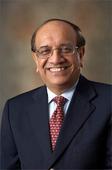
The IT sector's highest industry body also named the nation's top BPO companies and the top IT services firms in India.

While the widespread feeling is that employment growth has been sluggish, some argue that, since sabka vikas slogan will most probably not deliver, Mr Modi and the BJP are going in for an unambiguous strategy of Hindu consolidation, says Subir Roy.

To cement India's position as a preferred global outsourcing destination, the government on Wednesday liberalised guidelines for voice-based BPOs removing the distinction between domestic and international units as well as permitting interconnectivity between all types of OSP centres. Broadly, the rules would allow global companies, say an airline, with a voice-based centre in India to now serve global and domestic customers with common telecom resources, something that required dedicated, separate infrastructure previously. Moreover, the restrictions on data interconnectivity between any BPO (business process outsourcing) centre of the same company, a group company or any unrelated company has been done away with, allowing for massive flexibility in resource management for BPO operations.

Indian companies can help Pakistan strengthen its IT-BPO industry by sharing expertise and best practices with their Pakistani counterparts, Infosys Chief Mentor NR Narayana Murthy said.
The National Association of Software and Services Companies, the apex body of the IT-BPO industry in India, on Wednesday expressed shock at the disclosures made by Satyam Computer Services chairman B Ramalinga Raju.

The new rules are aimed at providing a strong impetus to the industry and positioning India as one of the most competitive IT jurisdictions in the world.
The voice operations (call centres) of IT-BPO firms -- which comprise around 20-30 per cent of most firms in India -- will be the most affected since the International Private Leased Circuits are down.
Indian IT-BPO firms are looking at Philipines as a viable option to build outsourcing centres.

With economic activities gathering pace post easing of lockdowns across the country, hiring activities in most sectors have shown significant recovery in October over the previous month, says a report. On yearly basis, however, the overall hiring was down by 17 per cent in October, according to the Naukri JobSpeak Index for October' 2020.

Naukri.com's Hiring Outlook Survey for 2020 reveals the jobs and sectors that saw a surge in demand during the pandemic.

The software body, which represents the $100 billion Indian IT-BPO industry, has also appointed MindTree CEO Krishnakumar Natarajan as the vice chairman of the executive council.

Digitisation and automation key challenges to business model
The hiring plan, which includes 13,000 jobs for its BPO operations, will be adhered to despite an uncertain global economic growth environment and the wage-hike freeze.
To tap the domestic market, the country's second-largest information technology company set up a separate unit within its BPO arm in 2009.

For the financial year 2013, the industry will hire around 200,000 of which 100,000 students have already received offer letters. The industry would end FY12 by hiring 230,000.

"We are going to add 35,000 more people next year, which includes 13,000 people for the BPO operations," Infosys Member of the Board and Chief Financial Officer V Balakrishnan said.

According to two independent sources in the know, the group is exploring the possibility of tapping private equity investors for a significant minority stake in the company or may even exit the business, provided it gets a significant exit premium.

Company aims to cross $1 billion in revenue for its BPO business.
Indian information technology companies are making a huge splash all across the world.
Average tenure of CEOs and MDs has come down to 1-3 years.

IBM India won the award in 'Best IT Services and Products Company' category and IBM Daksh in 'Best BPO Company'.

Nasscom, the information technology and BPO industry body, on Monday favoured a flexible work atmosphere for women engaged in raising their family to curb dropout rates and boost their numbers in mid-level and senior management positions in companies.
The Union budget marks a watershed in the life of the Indian information technology services industry, akin to a family's coming of age rites of passage!
 © 2026 Rediff.com - Advertise with us - Disclaimer - Privacy Policy - Sitemap - Feedback - About us - Terms of use - Grievances