
Younger investors with long investment horizons may continue their SIPs.

Markets regulator Sebi's new guidelines on research analysts (RAs) are forcing several equity research firms publicly announcing plans to shut down their shops due to heightened compliance and operational requirements. The Securities and Exchange Board of India (Sebi), on January 8, came out with guidelines for Research Analysts in a bid to curb fraudulent stock recommendations and illegal practices in the securities market.

Investors should match their investment horizon with the fund's portfolio duration.

The Sebi board on Wednesday approved a series of measures, including stricter regulatory norms for SME IPOs, a comprehensive overhaul of investment banking regulations, and an expanded definition of Unpublished Price Sensitive Information (UPSI). Also, the board approved reforms to boost ease of doing business for Debenture Trustees, ESG rating providers, InvITs, REITs, and SM REITs.

Novice investors must understand that volatility is an inherent part of equity markets and learn to navigate through such phases.

Goldman Sachs expects gold to reach $3,150 per ounce in the international market by December 2025, up around 19.1 per cent from its current level of $2,645, according to a recent report in Business Standard. Domestically, gold is trading at Rs 76,018 per 10 grams after delivering a remarkable 21.9 per cent return in the past year.

F&O trading is a zero-sum game where one person's loss is another's gain. Only one per cent of traders gained the money lost by 93 per cent, warns Harsh Roongta.

Kamlesh Chandra Varshney, a whole-time member of the Securities and Exchange Board of India (Sebi), said on Friday that the market regulator in the last three months had removed around 15,000 content sites linked to unregistered finfluencers or providing unauthorised investment advice. Speaking at the Global Fintech Fest, he said there was successful engagement with the technology providers who are complying with the regulator's request.

The primary market is expected to remain vibrant, with at least 10 companies, including supermart major Vishal Mega Mart and Blackstone-owned diamond grading firm International Gemmological Institute (India) Ltd expected to raise a combined Rs 20,000 crore in the next month, merchant bankers said. Education-focused NBFC Avanse Financial Services, TPG Capital-backed Sai Life Sciences, hospital chain operator Paras Healthcare, and investment bank DAM Capital Advisors are also among the companies planning to launch their IPOs in December, they added. The companies aim to raise a total of Rs 20,000 crore through their public offerings.

The life insurance industry does not have a good track record when it comes to passing on tax benefits to policyholders, points out Harsh Roongta.

'Investors may have made money in mid and smallcaps due to market momentum, but now they need to focus on fundamentals.'

Private equity (PE) activity in India between January and November 2024 recorded a total value of $30.89 billion across 1,022 deals, a 22.7 per cent increase in value and an 18.4 per cent rise in deal count compared to $25.17 billion across 863 deals during the same period in 2023. Notable large deals during the period include Walton Street India Investment Advisors at $1.5 billion, and KiranaKart Technologies at $1.35 billion.

One reason the fee can't be lower than 3 per cent is that it is difficult for an RIA to do a good job and remain viable even at 3 per cent.

'They take care of the problem: How can I ensure my child's education and other goals are not compromised, even if I am not around?'

'Arbitrage funds make the most sense for those in the 30 per cent tax bracket, are viable for those in the 20 per cent bracket, but less so for those in the 10 per cent bracket.'

If you already hold significant amounts of equity in your portfolio, avoid MAAFs with over 60 per cent equity. But if you lack equity exposure, an aggressive MAAF may be appropriate.

'Investors with foreign currency-denominated goals, such as foreign education or foreign travel, should go for US equity funds.'

'A dynamic bond fund acts like a gilt fund in a rate cut scenario and like a conservative short-term bond fund when rates rise.'

Only investors with knowledge of cryptocurrencies, long-term conviction, and a long horizon should invest in this asset class.

The best solution would be the one followed in 2018 -- allow cost indexation until March 31, 2024 -- but exit at any time. The second-best alternative would be to allow time until March 31, 2025 for investors to exit their investments under the old indexation regime, points out Harsh Roongta.

'Allocate up to 20 per cent of your core equity portfolio to quality funds.'

Keeping surplus money in a bank account has become perilous, alerts Harsh Roongta.

There are a number of steps taken that will leave more money in the hands of the taxpayers.
These include the reduction in tax rates under the new tax regime, increase in standard deduction, allowing tax collected at source to be adjusted against tax deducted at source from salaries, notes Harsh Roongta.

Billionaire Gautam Adani-led group's power transmission unit has raised $1 billion through a share sale, the first public equity raise by the conglomerate since a damning Hindenburg report, which wiped away billions in shareholder value. Adani Energy Solutions Ltd raised the funds through a qualified institutional placement (QIP) issue, sources with direct knowledge of the matter said. The QIP, which opened on Tuesday, was oversubscribed three times with demand of about Rs 26,000 crore - making it the largest transaction in India's energy space.
Sebi's mandate restraining mutual funds, stock brokers, and other intermediaries from associating with finfluencers who do not come under the Sebi ambit will impact the earnings of finfluencers through sponsorships, tie-ups, or referral links, as these may dry up due to the restrictions.

'An equity-based index fund should be held for more than five years to average out market volatility and achieve financial goals.'

'Credit card debt comes with high interest cost and stringent penalties.' 'If you do not repay on time, the costs balloon.'

'Choose an equity allocation that will allow you to remain invested even if the market falls by 50 to 60 per cent.'

'Splitting must result in tangible benefits for the customer, otherwise it will only mean more work for them in maintaining the policy and for their nominees.'

Do not keep a large portion of your long-term portfolio in FDs.

Many senior citizens 'underestimate the impact of inflation, taxation, health-related expenses, and the heavy premium they will have to pay on health insurance.'

'In phases when smaller stocks do well, an equal-weight index performs better than its market cap-weighted peer.'

Adopting overly aggressive strategies without considering risk could lead to significant losses during the next downturn.

All investors should ideally have a 10 to 15 per cent allocation to gold. Whether they invest in gold ETFs or SGBs should depend on their investment horizon.

'The move to remove indexation benefits on LTCGs presently available for property, gold, and other unlisted assets may have a negative impact as it directly impacts real estate investors.'

'Despite rising inflows, many NRIs lack awareness about NRO and NRE accounts and mistakenly use family accounts or invest in a relative's name.' 'Many are unaware of tax implications.'

Feature for feature, bank FDs are indeed better than debt funds today, mainly thanks to Ms Sitharaman, notes Debashis Basu.

'PPF carries minimal risk.' 'Its fixed-income nature allows investors to diversify their portfolios.'

'If the borrower can't repay the loan due to lack of income or losses from speculative activities, they risk defaulting on it.' 'This could lead to the bank seizing the property.'
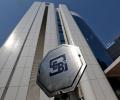
Before framing regulations to curb 'misleading' messages and stock recommendations by finfluencers (a portmanteau of the phrase 'financial influencers'), the market regulator plans to put in place some 'building blocks' to ensure smooth enforcement. Madhabi Puri Buch, chairperson of Securities and Exchange Board of India (Sebi), is of the view that the 'traditional approach may not work' to rein in finfluencers. "There are many interlinked pieces in our regulations - investment advisor regulations, research analyst regulations, the fact that we don't have algorithmic (algo)-related regulations, what brokers are permitted to do, and what is incidental advice.
 © 2026 Rediff.com - Investor Information - Advertise with us - Disclaimer - Privacy Policy - Sitemap - Feedback - About us - Terms of use - Grievances