
In the face of tax blow, brokerages remain sanguine about the prospects of asset management companies (AMCs). A sharp correction in the shares of AMCs over the past three months factors in most of the negatives and turned valuations attractive, observe analysts. In its latest report, Kotak Institutional Equities (KIE) has upgraded HDFC AMC to 'add' (from 'reduce') and reprised 'add' and 'buy' ratings on the rest of the listed AMCs - Nippon, UTI, and Aditya Birla Sun Life.
Analysts have turned cautious on Cipla, as the recently issued form 483 by the US FDA with eight observations to its Pithampur (Indore) plant is expected to delay the launch of the company's key generic - Advair - in the US. The Indore plant contributes around 5 per cent of Cipla's revenues, as per analysts' estimates. While the respiratory product, which is used to treat asthma, had cleared the pre-approval inspection of the regulator at the Indore unit; the final approval could be unlikely until the company clears the recent US FDA observations, analysts say.
HDFC Bank Q4 review: HDFC Bank's January-March quarter (Q4) results, for financial year 2022-23 (FY23), brought no cheer to investors as elevated costs, and merger-related uncertainties continue to dent the sentiment. Moreover, analysts fear that merger-related costs may put pressure on margins and cost to income ratio in the near-term, while the return on equity could moderate owing to low leverage of the parent. Analysts, therefore, opine that the stock's re-rating may be some time away. "While the risk of a de-rating on a standalone basis appears to be quite low given that the business performance is holding up well, we believe a re-rating in the stock would happen as and when more clarity emerges on the smooth transition (merger)," said a report by Sharekhan.

The duty hike on cigarettes by 16 per cent announced in the Union Budget 2023-24 would have a nominal impact of around 7-12 paise per stick across cigarette categories, according to experts. This upward revision in National Calamity Contingent Duty (NCCD) would have negligible impact on smokers and the companies could easily absorb the shock as it may not also have any resultant impact on margins, they said. Finance Minister Nirmala Sitharama in the Union Budget for 2023-24 on Wednesday proposed to revise and increase the duty on cigarettes to about 16 per cent.

However, in the last few sessions, the stock of Mukesh Ambani-controlled Reliance Industries Limited (RIL), hit its 52-week low level of Rs 2269.75, and has been one of the worst performers among the Sensex pack thus far in calendar year 2023 (CY23). Thus far in CY23, RIL has tanked nearly 11 per cent as compared to a fall of around 5 per cent in the S&P BSE Sensex. The fall in the stock, according to Gaurang Shah, senior vice-president at Geojit Financial Services is mostly due to the overall dip in the market sentiment, which in turn has impacted large-caps, including RIL.

Despite gold prices hitting record highs, analysts aren't gung-ho about the outlook for gold financiers Muthoot Finance and Manappuram Finance. This, they said, was due to intense competition from banks, coupled with stagnating loan books and likely pressure on margins.
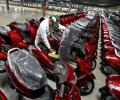
What has hit sentiment further is a draft proposal by the government to increase vehicle insurance premiums for financial year 2022-23 (FY23). Third-party motor insurance premiums have not been increased over the last two years and if this is approved, insurance costs for specific segments could rise by a fifth. The worst impacted is the 350cc and above two-wheeler segment, where premiums are up 21 per cent. Royal Enfield (Eicher Motor) is the market leader in the segment. The premiums in the 150-350cc two-wheeler category are also being inc

Banks are gaining market share at the expense of non-bank lenders such as housing finance companies, retail lenders, and those giving gold loans. There has been a steady decline in the market share of non-banking financial companies (NBFCs) in the credit market as banks have stepped up lending. NBFCs' share declined to a five-year low of 19.8 per cent in the first half of FY23, down from 20.3 per cent in H1FY22, and an all-time high of 23.1 per cent in H1FY19.

The Indian financial services space seems to be in a sweet spot as foreign investors have made a net investment of Rs 14,205 crore ($2.1 billion) in the sector in November amid strong credit growth and manageable non-performing loan portfolio. The investment comes following a net withdrawal of Rs 4,686 crore from financial services stocks in October on account of profit booking. Overall, foreign portfolio investors (FPIs) have made a net investment of Rs 36,238 crore in the country's equity markets in November.

Stock market investors are expecting a balanced Budget with a focus on job creation, increased spending on infrastructure, reigning in the deficit, and bringing the economy back on track, experts said on Wednesday. Stock markets have been subdued in the run-up to the Union Budget with BSE's benchmark Sensex is almost flat so far this month. Even the corporate earning season failed to excite the markets, while some indices like IT and bankex have seen some positive movements.

A slowdown in hiring by India's top IT companies has resulted in a sharp increase in the industry's profit per employee in Q3FY23. The top four IT companies earned a net profit of 1.7 lakh per employee during October-December 2022, up 8.6 per cent from Rs 1.57 lakh in Q2FY23 and 16.3 per cent from a record low of Rs 1.47 lakh in Q1FY23. Earnings per employee in the third quarter were, however, still down 0.9 per cent on a year-on-year (YoY) basis.

Slowing growth and execution challenges for Cognizant (CTSH) may well allow Infosys to overtake the former after a decade. Cognizant had marched ahead of Infosys in terms of revenue in the first quarter of financial year 2012-13. The Nasdaq-listed IT services firm's performance in Q3 and the guidance for Q4 and full-year 2022 suggest that it could take time for Cognizant to see the expected improvement in performance from its decision to restructure.
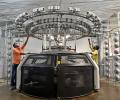
Manufacturing companies have been outperformers on the bourses in the current year, leading to a rise in their weighting in the benchmark index. Companies in sectors such as FMCG, automobile, pharmaceuticals, metals, cement, and agrochemicals now account for 25.43 per cent of the Nifty 50 index, up 88 basis points from 24.55 per cent at the end of December last year and a record low of 23.1 per cent at the end of CY20. The manufacturing sector is now dominated by FMCG majors such as Hindustan Unilever, ITC, Asian Paints, Nestle, and Britannia, accounting for 45 per cent of the combined market cap of all manufacturing companies in the index.
A hotel in 1975, entry into paperboards in 1979, India's dominant cigarette maker, ITC, read the tea - or tobacco - leaves early, leveraged its enterprise strengths and stepped up the diversification agenda to create multiple drivers of growth. Some failed, some faltered, some were transformational, adding steadily to the top line. Now those efforts are making a difference: margins from non-cigarettes - FMCG, hotels, agri, paperboards, paper and packaging - are expanding and profits are kicking in more significantly than ever before.

Petrol and diesel prices were hiked by 80 paise a litre each on Saturday, the fourth increase in five days as oil firms passed on to consumers the spike in cost of raw material. Petrol in Delhi will now cost Rs 98.61 per litre as against Rs 97.81 previously while diesel rates have gone up from Rs 89.07 per litre to Rs 89.87, according to a price notification of state fuel retailers. All the four increases since the ending of a four-and-half-month long hiatus in rate revision on March 22, have been of 80 paise a litre.

The rupee breached the 80-mark against the dollar on Tuesday. The steady depreciation in the value of the rupee against the US dollar is likely to prove expensive for corporate India. The listed companies' revenue expenses in foreign currency or imports exceed their export revenues or revenue earnings in forex. In their latest financial year, BSE500 companies, excluding banks and non-banking finance companies and insurance (BFSI), reported combined forex expenses of Rs 12.31 trillion against forex earnings of around Rs 10 trillion.

Riding on an improved show across parameters, TVS Motor (TVS) outperformed larger two-wheeler peers Hero MotoCorp (Hero) and Bajaj Auto (Bajaj) during the September (Q2 of FY23) quarter. The Chennai-based firm, which has the most-diversified portfolio among two-wheeler majors, posted a 28 per cent jump in revenues. This compares to 18 per cent growth for Bajaj Auto and single-digit uptick for Hero MotoCorp.

'Large-caps are better placed to withstand the impact of higher input cost inflation, rising rates and withdrawal of excess global liquidity.'

From the peak of $3.67 trillion in January, India's market cap has eroded by $676 billion amid rising bond yields and a record-breaking sell-off by overseas investors.

After a sharp correction over the last few months, analysts seem to be turning cautiously optimistic on the information technology (IT) sector and suggest there could be trading opportunities in select counters despite revenue and growth concerns that still plague the sector. "IT stocks valuations have corrected 17 per cent-49 per cent and stock prices have corrected 9 - 42 per cent since mid-December 2021. Nifty IT index valuation has corrected by 27 per cent and price by 21 per cent. "About two quarters ago, we made a case that valuation drivers have peaked.

Petrol price on Monday was hiked by 30 paise a litre and diesel by 35 paise, taking the total increase in rates in the last one week to Rs 4-4.10 per litre. Petrol in Delhi will now cost Rs 99.41 per litre as against Rs 99.11 previously while diesel rates have gone up from Rs 90.42 per litre to Rs 90.77, according to a price notification of state fuel retailers. Rates have been increased across the country and vary from state to state depending upon the incidence of local taxation.

After new-age tech companies reported better-than-expected June quarter (Q1FY23) results, analysts said it will be a long road to recovery for their respective businesses and the stock prices. Moreover, brokerages differ on whether it is the right time to own these stocks. The common thread, however, that runs across most brokerages is Zomato, where they suggest buying the stock with the one-year target price ranging between Rs 60 - 115, translating into an upside of around 9 - 109 per cent from the current levels. The company's gross order value (GOV) of food delivery jumped 10 per cent quarter-on-quarter (QoQ) and 42 per cent year-on-year (YoY) in Q1, aided largely by growth in volume, and mild growth in average order value (AOV) at 1-2 per cent. The company also broke even on an adjusted Ebitda basis during the quarter.
Petrol price on Sunday was hiked by 50 paise a litre and diesel by 55 paise, taking the total increase in rates since resumption of daily price revision less than a week back to Rs 3.70-3.75 per litre. Petrol in Delhi will now cost Rs 99.11 per litre as against Rs 98.61 previously while diesel rates have gone up from Rs 89.87 per litre to Rs 90.42, according to a price notification of state fuel retailers. Rates have been increased across the country and vary from state to state depending upon the incidence of local taxation.
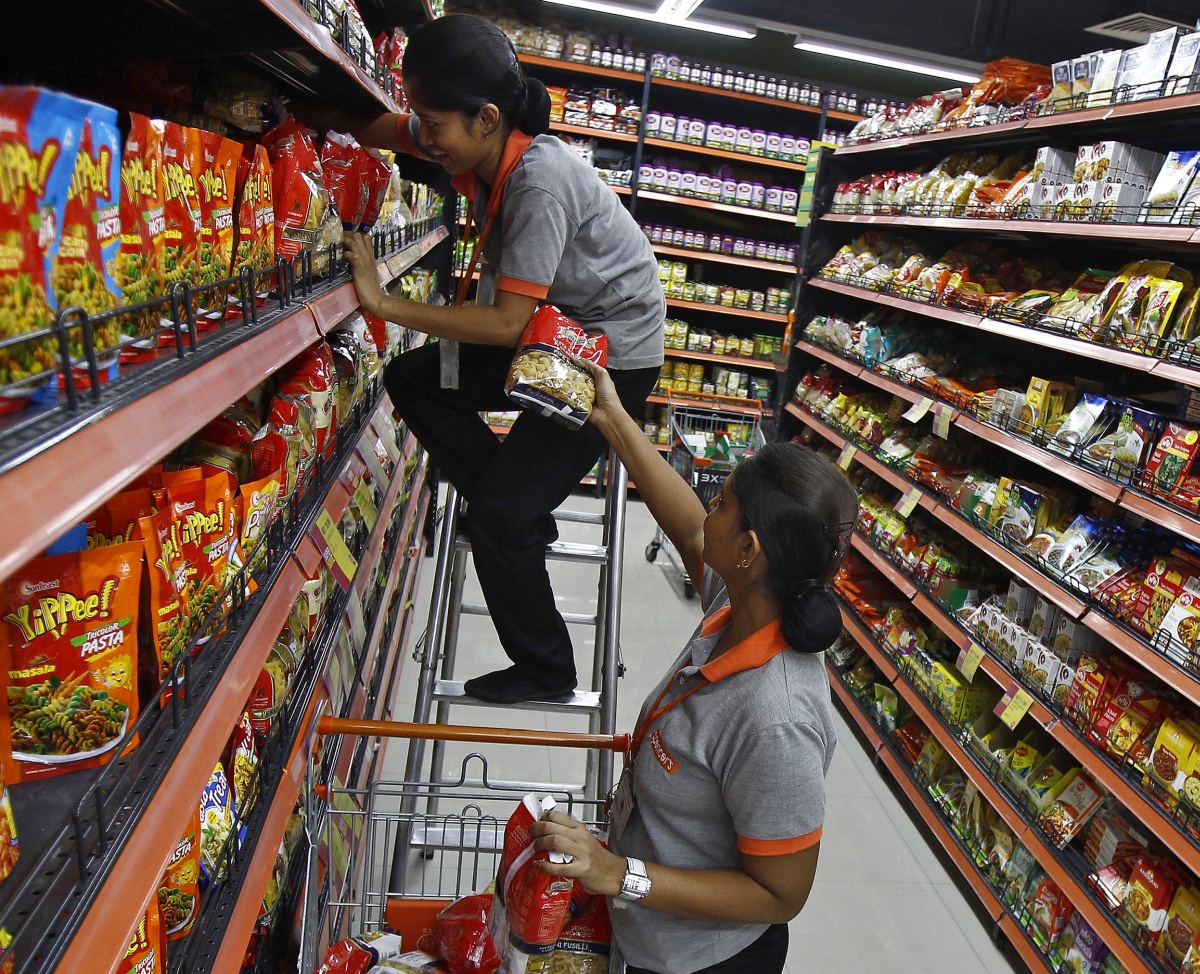
However, rural demand continued to remain a concern for FMCG companies during the quarter.
The IPO-bound national insurer LIC is not only the largest holder of government debt -- owning 19 per cent of the G-secs -- but also the single largest owner of equities, the largest fund manger as well as holder of household savings, dwarfing even SBI deposits, as per a report. Holding 17 per cent of the over Rs 80.7 lakh crore dated government securities, maturing by 2061, the Reserve Bank is the second largest holder of government debt, while led by public sector banks, commercial banks collectively own around 40 percent. Other insurers cumulatively own only 5 per cent.

The ruble has recouped most of its losses and become the top-performing currency globally. It continues to gain and is up 60 per cent against the US dollar from its lows in the first week of March. The ruble appreciated to 83 to the dollar intraday on Tuesday against a record low of 139 on March 7.
Given that there has been no negative news flow around Zomato, analysts believe it's time to lap up the shares at lower levels.

Bhavish Aggarwal, the founder of ride-hailing firm Ola who disrupted the electric scooters market in the country, is planning to launch an electric sports car in 2024. The plan will put it in competition with Indian players, such as the Tata group and Mahindra & Mahindra, and global giants like Tesla and Hyundai. Aggarwal, recently, took a group of reporters to the firm's design studio at the Ola campus in Bengaluru where his teams are working on several EVs, including scooters, motorcycles, sedans, and SUVs - and even robotaxis.
At a time when banks are engaged in a fierce battle to gain market share in the credit card segment, Citibank India has been losing its share, both in terms of outstanding cards and spends in the last few years. Still, average spends on Citi cards are higher than any other Indian bank. Last year, the global banking behemoth announced exit from its consumer banking franchises in 13 markets across Europe, Middle East and Asia, including India, citing lack of scale.

Assets under management of India-dedicated funds have slid 20 per cent in the year to November to $35.2 billion.
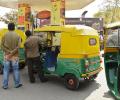
After hike in rates of petrol, diesel and LPG, the prices of CNG and cooking gas piped to household kitchens (PNG) in the national capital were hiked on Thursday by Re 1. CNG price in NCT of Delhi has been increased to Rs 59.01 per kg from Rs 58.01, according to the information posted on the website of Indraprastha Gas Ltd - the firm which retails CNG and piped cooking gas in the national capital. This is the third increase in CNG rates this month, which follows a spike in input (natural gas) prices across the globe.

'Valuations are very attractive, and most companies are cash-rich with strong dividend yields.'

Rising prices of international coal - both coking and thermal - used in the making of ferrous and non-ferrous metals, respectively, are expected to have an impact on margins of metals companies in July-September quarter (Q2) as steel companies may see margins getting eroded, while the base firms could stand to benefit, said brokerages.
Petrol and diesel prices were hiked by 80 paise a litre each on Wednesday, taking the total increase in rates in 16 days to Rs 10 per litre.

The early bird results for the January-March 2022 quarter (Q4FY22) hint at a slowdown in corporate sector growth in the upcoming quarters. The combined net sales of the 81 early bird companies in the Business Standard sample were up 15.1 per cent year-on-year in Q4FY22; this was less than the 15.9 per cent YoY jump reported in Q3FY22. The slowdown could be much stronger for the domestic market-focused companies, including those in the banking, finance, and insurance (BFSI) space.

India's top fuel retailers IOC, BPCL and HPCL together lost around $2.25 billion (Rs 19,000 crore) in revenue for keeping petrol and diesel prices on hold during elections in five states, including Uttar Pradesh, Moody's Investors Services said on Thursday. State fuel retailers did not revise petrol and diesel rates for a record 137 days despite prices of crude oil (raw material for producing fuel) rising to $120 per barrel compared to around $82 in early November when the hiatus began. "Based on current market prices, the oil marketing companies are currently incurring a revenue loss of around $25 (over Rs 1,900) per barrel and $24 per barrel on sale of petrol and diesel, respectively," Moody's said in a report.
Commercial banks in the country continued with their improving asset quality trend in the October-December 2021 quarter with slippages remaining under control coupled with healthy recoveries and upgradation of asset classification. The 28-listed banks reported improvement in bottom line with net profits rising 64.1 per cent year-on-year (YoY) and 21.5 per cent sequentially. This is mostly on account of a fall in provisions and contingencies.

A sharp sell-off in the Indian equities markets after a spike in crude oil prices should not be surprising. Historically there is a negative correlation between stock valuations in India and the price of Brent crude oil, which is the benchmark for the Indian crude oil basket. Between 2011 and 2014, crude oil traded above $100 a barrel for an extended period, the Sensex-trailing price/earnings (P/E) was 18X, on average, during the period, nearly 22 per cent lower than the current index P/E of 23X.
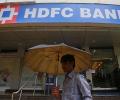
While HDFC Bank has vowed to recoup its lost market share in the credit card segment in three to four quarters by aggressively sourcing new cards, brokerages believe it is a little hard to come by, given how competitive the landscape has become, with other players in the market becoming equally aggressive to gain market share. Kotak Institutional Equities in its report on Monday said, "We would like to believe that the recovery in market share is likely to be gradual, if any. "All the key players, including Axis Bank, are now willing to expand their credit card portfolios as they have tested quite well against Covid-19."

The biggest headwind to the consumption story in FY23 is a sharp decline in government subsidies on food, fertiliser and fuel, and overall decline in revenue expenditure net of interest payments. This, analysts say, will adversely impact purchasing power of households at the lower end of the income pyramid, translating into lower spending on consumer goods and services.
 © 2026 Rediff.com - Advertise with us - Disclaimer - Privacy Policy - Sitemap - Feedback - About us - Terms of use - Grievances