
The Indian lenders are worried over the fast depleting asset base of the Future group companies which would make their recovery of dues difficult. The asset base of Future group has eroded in the last two years due to lockdown and takeover of 947 stores by rival Reliance Retail after Future group's lease on the properties expired. Bankers said they have approached bankruptcy court so as to avoid any duplication of legal action and reduce time at the legal forums.

Future group promoter Kishore Biyani's stake fell consistently across group companies since December 2019 after American retail major Amazon infused funds in a Future group promoter entity and the group companies started showing signs of financial distress due to closure of stores due to Covid-19 pandemic. As lenders take Future group companies to the bankruptcy courts to recover their dues under the Insolvency and Bankruptcy Code, the shareholders of Future group companies are staring at complete wipeout of their investments as secured lenders get top priority in any potential recovery, say lawyers. "The fate of all Future group shareholders is now sealed with them looking at a complete loss.
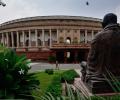
Opposition is expected to raise these issues in the session beginning July 19. It will be the first session of parliament after the outbreak of the devastating second wave of Covid.

Goyal was questioned by the Serious Fraud Investigation Office on Thursday in Mumbai in connection with allegations of some financial irregularities.

The remarks by the CJI came against the backdrop of the recent remarks by Vice President Jagdeep Dhankhar who questioned the landmark 1973 Kesavananda Bharati case verdict that gave the basic structure doctrine.

Chinese banks -- China Development Bank, China Exim Bank and Industrial and Commercial Bank of China (ICBC) -- will get a lion share of 30 per cent or Rs 7,000 crore in RCOM/RTL/RITL resolution plan, with the DoT getting nothing if the proposed plan goes ahead.
The much-anticipated cryptocurrency bill, however, is missing from the list, reports Shrimi Choudhary.

The opposition was demanding a discussion on the issue on Wednesday itself. The House witnessed three brief adjournments as the government and opposition parties were trying to reach an agreement on holding the discussion on the Delhi violence as well as the debate on two ordinances which are set to lapse.

The National Company Law Appellate Tribunal (NCLAT) on Wednesday closed insolvency proceedings against Oyo and one of its subsidiaries, and also disallowed the intervention of external parties including Federation of Hotel & Restaurant Associations of India (FHRAI). Industry body FHRAI said in May it has been allowed by the NCLAT to intervene on behalf of hotels in the Oyo unit insolvency case before the tribunal. The association had filed the application on behalf of its member hotels in India, who it said at the time are operational creditors suffering hugely on account of non-payments of debt by Oyo.

Mallya remains on bail pending his UK High Court appeal, now scheduled for February 2020.

Among manufacturing companies that went to the National Company Law Tribunal (NCLT), chemicals and metal firms witnessed more resolutions while companies in the labour intensive (employment friendly) leather and textile sectors mostly get liquidated, reports Abhishek Waghmare.

The FM he said non-performing assets of PSBs have come down by Rs 1 lakh crore.

A bankruptcy appeals court has scrapped billionaire Anil Agarwal-led Twin Star Technologies' winning bid to take over Videocon Industries Ltd on a plea by some creditors that the money offered imposed a steep Rs 62,000 crore haircut upon banks. The National Company Law Appellate Tribunal (NCLAT) asked creditors to initiate the fresh sale of Videocon, a consumer durables company manufacturing products ranging from air-conditioners to washing machines, for recovery of their unpaid Rs 64,637.6 crore. While a majority of lenders had previously accepted Twin Star Technologies' Rs 2,962.02 crore offer, Bank of Maharashtra (BoM) and IFCI Ltd dissented, saying the amount offered was close to the liquidation value of the bankrupt firm and that they cannot be paid less than the liquidation value.
The steelmaker's India basket grew after Tata Steel completed its acquisition of Bhushan Steel under the Insolvency and Bankruptcy Code process and its subsidiary, Tata Sponge, acquired Usha Martin.
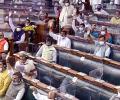
Discussion on the two bills could not take place as Opposition members continued to stage protests demanding a discussion on the Pegasus snooping allegations and the farmers' demand of repealing the three new agri laws.

This pertains to certain irregularities in loan disbursements towards the development of two Slum Rehabilitation Authority projects undertaken by the company in the past.

'The government in the past has also increased (the limit) from Rs 2.5 lakh to Rs 5 lakh. In future, whenever the time arises, we will look into the matter.'

'The Insolvency and Bankruptcy Code cleans up non-performing assets and puts companies in capable and credible hands.'

Government may also consider giving relief to some of the worst-affected sectors.

The Opposition intensified its noisy protests in Lok Sabha on Wednesday over Pegasus snooping, farm laws and other issues with some unruly members even hurling papers and torn placards in the House, but the government went ahead with its legislative agenda and three bills were passed amid the din.
Default on repayments from March 25, the day when the nationwide lockdown began to curb coronavirus infections, would not be considered for initiating insolvency proceedings for at least six months.

Reserve Bank Governor Shaktikanta Das on Wednesday said underlying economic activity in India continues to be strong, but external factors will cause some "dent" to the economy. Speaking at the BFSI Insight Summit 2022 organised by Business Standard, Das said the RBI tracks 70 fast moving indicators and most of them are in the "green box". It is the external sector, mired by a fear of recession or clear visibility about slowing growth in a large part of the world, where the challenges lie, he said, adding that the impact of external demand will "dent" the economy.
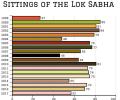
All you need to know about the Winter session of Parliament.
The bills, including some key finance legislations, were passed during the course of a few hours in the post-lunch period.

Government officials were struggling to understand why the lenders denied emergency funds even after giving verbal assurances on providing Rs 1,200 crore.

The finance ministry has asked public sector banks to monitor cases where insolvency proceedings could be initiated against individuals who are guarantors of corporate debtors that have defaulted on loans.

Debt-ridden mortgage firm DHFL's shares would be delisted from stock exchanges post acquisition by Piramal Capital and Housing Finance, which has emerged as the successful bidder for the company. As part of resolution process under the Insolvency and Bankruptcy Code (IBC), lenders led by Union Bank of India in January this year favoured the bid by Piramal Capital and Housing Finance to take over the beleaguered housing finance firm. According to sources, shares of DHFL would be delisted post acquisition as per the IBC guidelines and Sebi delisting norms.

According to the Centre's legislative business list for the upcoming session, three bills have also been listed to replace three ordinances.

Public sector lender Bank of India has moved to the National Company Law Tribunal (NCLT) seeking initiation of insolvency proceedings against Future Retail Ltd and a moratorium over the assets of the Kishore Biyani-led debt-ridden firm. Besides, Bank of India (BOI), the lead banker of a consortium of banks that lent money to Future Retail Ltd (FRL), also suggested the insolvency tribunal appoint Vijay Kumar V Iyer as the interim professional of the company. Meanwhile FRL, in a regulatory filing, said it has been served and received a copy of the petition and is in the "process of taking legal advice".

Easier dilution norms for mega initial public offerings (IPOs) have come into effect. Companies with post-listing market capitalisation (m-cap) of more than Rs 1 trillion will not be required to dilute a minimum of 10 per cent. The move to relax dilution norms is seen as a precursor to Life Insurance Corporation's IPO. The central government has said companies with an m-cap exceeding Rs 1 trillion will have to dilute Rs 5,000 crore and at least 5 per cent of their m-cap. Experts said the earlier framework discouraged large companies from listing since they were forced to offload a large volume of shares during the time of their IPO.

For his first Budget in July 2014, Jaitley inherited a fiscal deficit target of 4.1 per cent of GDP. From 4.1 per cent, the fiscal deficit came down to 3.4 per cent by 2018-19, with two slippages from the budgeted targets, in 2017-18 and 2018-19, the former due to introduction of the GST, says Arup Roychoudhury.

Finance ministry advises banks to invoke personal guarantees of all promoters whose companies have gone to NCLT for debt resolution.

Once the bankruptcy provisions are notified, these proprietary firms will benefit, as Insolvency and Bankruptcy Board plans to consider them as individuals

Markets watchdog Sebi on Tuesday decided to tighten norms for utilisation of IPO proceeds by companies, introduce special situation funds to invest only in stressed assets and amend various regulations, including those on mutual funds and settlement proceedings. The board of Sebi, which met on Tuesday, also gave its nod for amending Foreign Portfolio Investor (FPI) regulations and introducing a provision for appointment or re-appointment of any person, including as a managing director or a whole time director or a manager, who was earlier rejected by the shareholders at a general meeting. Once the amended norms are in place, such appointments or re-appointments can only be done with the prior approval of the shareholders.

In a move to plug gaps in the Insolvency and Bankruptcy Code (IBC), the ministry of corporate affairs (MCA) has proposed robust norms against avoidance transactions, wrongful trading, and inordinate delays via changes to look-back period and fixed timelines for the tribunals to reject or approve plans, among other measures. The MCA has proposed that the IBC should provide the adjudicating authority with 30 days for approving or rejecting a resolution plan under Section 31. If a decision is not made on the resolution plan within that period, the adjudicating authority will record reasons in writing for the same, the ministry has proposed.

Maximum promoter holding to be eligible for reclassification to be raised from 10% to 15%; waiting time to be brought down to one month from three.

Chief Economic Adviser K V Subramanian on Monday said India is likely to post current account surplus in the current financial year as there is moderation in import due to under heating of the economy triggered by the COVID-19 crisis. This crisis is different from what the world witnessed during the taper tantrum, he said while addressing a virtual conference organised by industry body CII. Taper tantrum phenomenon refers to the 2013 collective reactionary response that triggered a spike in US treasury yields, after investors learned that the US Fed was slowly putting brakes on its quantitative easing (QE) program.

First, the Insolvency and Bankruptcy Code, much-lauded as a game changer, needs serious reform. Second, some vital policy choices would need to be made as far as competition law is concerned., says Somasekhar Sundaresan.

The total quantum of non-performing assets in the Indian banking system increased to Rs 7.33 trillion as of June 2017, from Rs 2.75 trillion in March 2015.

'The concern that the bad bank may create a moral hazard for the system is extremely valid.'
 © 2026 Rediff.com - Investor Information - Advertise with us - Disclaimer - Privacy Policy - Sitemap - Feedback - About us - Terms of use - Grievances