
India is set to take its first steps towards its own human space flight when the uncrewed Gaganyaan mission soars to the skies later this year. Private players in the space sector are also gearing up for launching satellites on home-built rockets.

From a surge in startups to crewed mission preparations, 2025 marks a transformative year as India eyes $44 billion space economy by 2033.
The $1.2 billion in-space manufacturing market is expected to grow and be worth more than $20 billion by 2033.
Indian Space Association (ISpA) chairman Jayant Patil has said that the executive council will debate whether it can include more telecom companies as founding members. The response came after some leading telcos said that they had been asked to be core members but preferred to be inducted as founding members. The key founders of the ISpA include the Bharti group through two companies (OneWeb and Airtel), L&T, Nelco, Walchandnagar, Alpha Designs and MapmyIndia.

If Rakesh Sharma represented the dreams of a nascent India looking outward, Shubhanshu Shukla embodies a confident India reaching for the controls.

Chief of Defence Staff (CDS) General Anil Chauhan has highlighted the emergence of space as a new domain of warfare and emphasized the need for developing a "space culture" to prepare for future conflicts. He called for dedicated space warfare schools and research institutions to generate ideas, develop doctrines and strategies, and create new capabilities for space warfare. Chauhan believes that space will be crucial for future warfare, impacting all traditional domains of land, sea, and air. The CDS's remarks were made at the Indian DefSpace Symposium, where he also highlighted the importance of space research and its role in shaping the future of warfare.

'The launch of Nila, our very first satellite was very emotional as well as nerve wracking. We tried to calm ourselves by cracking some poor jokes!'
'The scrapping of import duty would help Indian companies compete in international markets, thus paving the way for India becoming a space manufacturing hub for the world.'

'Our vision for the future includes the creation of an active ecosystem, human space flight, a human space station.'

'With India's growing capabilities in the space sector, this creates promising opportunities for enhanced collaboration and market access.'

The three-day India Mobile Congress (IMC) will showcase the widening convergence of telecom with new domains, such as semiconductors and deep tech, P Ramakrishna, the forum's chief executive officer, said on Tuesday. With more than 250 global and domestic exhibitors, the seventh edition is expected to draw more than 100,000 visitors this year, he said. There will also be over 5,000 CXO-level delegates and more than 350 speakers.
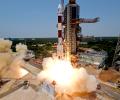
The successful launch of Aditya-L1 - the country's maiden mission to study the Sun - is expected to garner increased investor interest in the Indian space sector and trigger more funding for private players. Several private sector players, including Larsen & Toubro (L&T), MTAR Technologies, and Ananth Technologies, have played a pivotal role in the Indian Space Research Organisation's (Isro's) solar observatory mission. Aditya-L1 on Saturday set off on a 125-day journey on a PSLV-C57 rocket, in its attempt to study various elements relating to the nearest star from the halo orbit around Lagrange point 1 (L1) of the Sun-Earth system, which is about 1.5 million km from Earth.

NavIC consists of a constellation of seven satellites and a network of ground stations and is touted to be more accurate than GPS.

The Indian Space Research Organisation (Isro) on Thursday came out with the Indian Space Policy 2023 to promote greater private sector participation in the entire value chain of the space economy. According to the policy, Isro will encourage new-generation entities to participate in space exploration and human presence in outer space, including collaboration with domestic and international stakeholders. The policy also sets a road map for Isro to transition from manufacturing operational space systems to focus energies on research and development in advanced technologies.

While the market for satellite broadband currently is small, the potential is large as an estimated 30 per cent of the country does not have reliable terrestrial broadband services.

'This may open up doors for private players in India to collaborate with global players in commercial missions.'
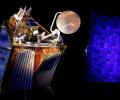
Bharti group-backed OneWeb and New Space India Limited, the commercial arm of the Indian Space Research Organisation, have entered into an agreement that will help ensure OneWeb completes its satellite launch programme. The first launch with New Space India is expected in 2022 from the Satish Dhawan Space Centre (SDSC) SHAR, Sriharikota. The launches will add to Low Earth Orbit (LEO) satellite communications firm OneWeb's total in-orbit constellation of 428 satellites -- 66 per cent of the planned total fleet -- to build a global network that will deliver high-speed, low-latency connectivity.

AzaadiSAT had around 75 small payloads developed by schoolgirls of 75 rural schools.

The race for space has got real, and it is attracting funding like never before. In 2022 so far, funding to private players in the space sector has jumped a whopping 61.5 per cent - soaring to $108.52 million compared to $67.2 million in 2021. Propelling it is the government's decision to open up the space sector to private players and the work done by companies like Skyroot Aerospace, the Hyderabad-based start-up behind the launch of India's first privately developed rocket on November 18.
Bharti Group-backed OneWeb on Monday said it has entered an arrangement with the commercial arm of ISRO, NewSpace India Limited (NSIL), to launch its satellite in India from 2022.

Government think-tank body Niti Ayog CEO Amitabh Kant supported the industry demand and called for setting up of a single window clearance system for expeditious approval of projects. Start-ups and small medium enterprises requested the prime minister to provide support in low-cost capital at the virtual launch of space and satellite industry body Indian Space Association (ISpA).

A rare bonhomie among three private telecom companies in raising tariffs coming on the back of a bailout package by the government may have helped the telecom sector avert a crisis but the challenges haven't ceased to exist as the industry faces a cash-guzzling task of rolling out 5G networks in the coming months. The sector that provides direct and indirect employment to millions is projected to see Rs 1.3 lakh crore to Rs 2.3 lakh crore of investments in the coming years in creating robust infrastructure and building telecom and network products that have been incentivised by the government through PLI and other initiatives. After years of cut-throat competition and the apex court ruling on payment of past statutory dues left some players in the lurch, billionaire Sunil Mittal's Bharti Airtel and struggling Vodafone Idea almost in tandem raised tariffs, taking the plunge they had long been talking about.

Govt to play enabler not handler, India never had more decisive government: PM Modi Prime Minister Narendra Modi on Monday cited his dispensation's push for wide-ranging reforms, including the privatisation of Air India, to assert that the country never had a more "decisive government". Launching the Indian Space Association (ISpA), an industry body aspiring to be the voice of the country's space sector, Modi noted that fields like mining, coal, defence and space have been opened to private players, and said his government's clear policy about public sector enterprises is to open those to private industry where its presence is not required. While opening a host of sectors, the government has built a regulatory environment in which priority has been given to national interest as well as the interests of different stakeholders, he said.

 © 2026 Rediff.com - Investor Information - Advertise with us - Disclaimer - Privacy Policy - Sitemap - Feedback - About us - Terms of use - Grievances