
India's pharmaceutical industry is experiencing increased bulk drug prices, particularly for APIs from China, following the escalation of the West Asia crisis in March. While current inventories provide a temporary buffer, concerns are mounting over the availability of key solvents and feedstocks, potentially leading to manufacturing disruptions and shortages in specific drug categories.

The government has been stringent with pricing changes. Prices of 651 essential medicines came down from April 1, 2023 by 6.73 per cent with the government capping ceiling prices of these drugs.

The top 300 pharmaceutical brands in the country will now bear a quick response (QR) code on their packaging to rein in spurious drugs and ensure better traceability.
With an eye on improving quality assurance in the wake of increased global scrutiny on Indian pharma products, the Centre on Tuesday said that Schedule M of the Drugs and Cosmetics Act, 1940 will be made compulsory for small and medium scale manufacturers in a phased manner. Union Health Minister Mansukh Mandaviya has asked micro-small and medium enterprises in pharma manufacturing to move towards good manufacturing practices (GMP) through self regulation. "This will help in quality assurance and also reduce compliance burden," Mandaviya.

Codeine-based formulations are under the scanner for misuse as a narcotic product.

The state govt has raised drug procurement budget.

With intermittent disruptions in the supply chain of raw materials from China, the Indian pharma industry has braced itself with bigger inventory. Even smaller drug makers are now carrying a month of buffer stock of key raw materials, said industry insiders. The lockdown in various Chinese provinces, including Shanghai, is likely to delay shipments by two weeks to a month, said domestic players. Shipments are critical for the Indian drug industry, which imports 70 per cent of its raw material from China.
Proposes to increase Exemption Limit for Small Service Providers from Rs 10 lakh to Rs 25 lakh.
China's API exports to India touched $3.3 billion last year, while Indian drugs struggled to post $500 million worth of exports to China.
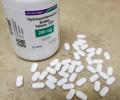
Indian Council of Medical Research had also recommended the use of hydroxychloroquine for treating healthcare workers handling suspected or confirmed coronavirus cases and also the asymptomatic household contacts of the lab-confirmed cases.
The pre-Budget memoranda of the Indian Drug Manufacturers Association and the Federation of Indian Chambers of Commerce and Industry have said more incentives are needed to spur drug research.

Days after medical representatives said their employers were flouting the government's drug-pricing norms, the pharmaceutical industry has decided to clip their wings. These companies want them to be no longer recognised as "workmen," a classification that gives them the right to form trade unions.

While extending the National List of Essential Medicines will help patients, care has to be taken to ensure this does not lead to a slowdown of production as has happened in case of DPCO drugs.
Over 50 pharmaceutical companies have scaled down operations in Maharashtra and Gujarat and are moving out to states like Uttaranchal and Himachal Pradesh following steep hike in excise duty in the Union Budget.
Indian Drug Manufacturers Association on Friday demanded reduction in excise duty on drugs and pharmaceutical products to 8 per cent from the current 16 per cent.
The API of Paracetamol, a fever and pain medication, has grown 25 per cent from Rs 450-480 per kg in December 2020 to Rs 580-600 per kg in April. When compared to the pre-Covid prices of December 2019, the surge is much steeper -- around 140 per cent, reports Sohini Das.
India will export anti-malarial drug hydroxychloroquine, high in demand globally, only to foreign governments and not to private companies, as the product is under prohibited or banned category of exports, sources said. Although exports of this medicine is completely banned, India has decided to export this anti-malarial drug in sync with its global commitment to deal with the coronavirus pandemic.

The products worth Rs 5,000 crore have been banned for manufacture, distribution and sale with immediate effect causing hardship to manufacturers and patients.
In May, price growth for drugs was in negative territory at (-)1 per cent
.jpg)
The Drug (Prices Control) Order implemented in May last year brought into its purview 652 packs of 348 formulations.

'The world over, everybody is asking for the same medicines, same APIs, same KSMs.' 'However, there is just one supplier -- China -- for the entire world.'
Overall slowdown in the economy and growing volumes of unbranded generic medicines in the domestic market are behind poor sales.

As many as 11 industry bodies related to food and pharma sectors on Thursday alleged that the food regulator FSSAI has become "den of corruption" and demanded a CBI inquiry into the functioning of the authority, which shot to limelight over the Maggi issue.
.jpg)
The move is expected to delay the introduction of low-priced medicines in the market.

With the government asking the companies to operate with only 50 per cent staff strength, and exports dipping to almost zero, the truck and bus drivers idling at the petrol pump say they hardly have any work now. At a petrol pump on the deserted Bavla-Changodar highway near Ahmedabad in Gujarat, several trucks and buses are neatly parked in a row.

Pharma body wants all excisable goods used for R&D purposes should be exempted from central excise duty.

Besides opposing the suspension of three medicines, the sector has also questioned the process adopted by the government.
The bone of contention is product approvals, which pharma and neutraceuticals companies say cannot be re-introduced through the regulation route
The industry feels that prices of active pharmaceutical ingredients (APIs) can go up in the range of 5-15 per cent.

Gujarat has around 3,000 licensees for allopathic drug manufacturing, apart from around seven homeopathic licensees, 500 ayuvedic and 600-700 cosmetics licensees
 © 2026 Rediff.com - Advertise with us - Disclaimer - Privacy Policy - Sitemap - Feedback - About us - Terms of use - Grievances