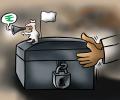
This is the second highest divestment proceeds in a financial year.

No casualties were reported.

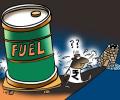
The price of petrol has risen by 83 paise per litre in the past nine days and diesel by 73 paise

Investor sentiment got a big push after Brent crude, the international benchmark, dropped below the USD 73-mark to quote at a seven-month low of USD 72.65 by falling 3.48 per cent, traders said.

Ajit Mishra, vice president, Research, Religare Broking, answers your queries.

This is the second hike in diesel price this month.
Be careful while investing at the current levels and stay away from stocks of leveraged companies.
The state-owned Hindustan Petroleum Corporation Ltd has posted a 95 per cent increase in the net profit at Rs 1537.36 crore (Rs 15.37 billion) for the financial year ended March 31, 2003 as against Rs 787.98 crore (Rs 7.88 billion) in 2001-02.
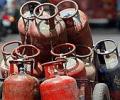
To help them make up for the revenue lost on selling auto and cooking fuel below cost.
If the reforms are implemented, multi-brand retail majors such as Future Group and Reliance Retail might enter the fuel retail space.
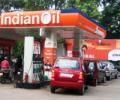
The government on Thursday sanctioned Rs 17,772 crore (Rs 177.72 billion) cash subsidy to fuel retailers like IOC to cover for half of the revenues they lost on selling diesel and cooking fuels below cost in the September quarter.

If you use customised cards that suit your lifestyle needs, you could also end up availing of a variety of deals, rewards, and discounts.
State governments in Punjab, Gujarat, Maharashtra and Jammu & Kashmir are on high alert and have come up with contingency plans to ensure the security of residents in case of a war.
According to data compiled by BS Research Bureau for BSE 100 companies, seven public sector companies -- Indian Oil Corporation (IOCL), Bank of India, Union Bank, Bharat Petroleum (BPCL), Oil and Natural Gas Corporation (ONGC), Hindustan Petroleum (HPCL) and GAIL -- have reduced their employee costs ranging from one per cent to 21 per cent.

Oil prices jumped nearly $3 a barrel and gold and safe-haven bonds rallied on Friday after the killing of top Iranian commander Qassem Soleimani in an airstrike by the US in Baghdad.
Losses on sale of diesel at government-controlled rates have hit a record Rs 19.26 a litre, sending state-owned oil companies scrambling for ways to cover the mounting losses.

In 16 days, petrol price has been hiked by Rs 8.3 per litre and diesel by Rs 9.46 - a record increase in rates of the fuel in any fortnight since pricing was deregulated in April 2002.
"Air India is unable to pay even after a 90-day credit period. They owe us about Rs 300 crore without interest. There is also no bank guarantee from Air India to any of the oil marketing companies. We do not know when will the company honour its dues," said a BPCL official on condition of anonymity.
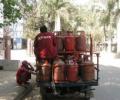
With the government preparing to restrict the number of subsidised cooking cylinders, oil marketing companies have launched a 'transparency' portal that allows customers to keep an eye on the number of cylinders sold in their account by the dealer.
The last week of March saw a series of new refining capacity going on stream. HPCL-Mittal Energy, Essar Oil and Mangalore Refinery & Petrochemicals (MRPL) were able to announce completion of capacity additions a couple of days before the seven-year tax holiday in this regard came to an end, on March 31.

The countdown for BG's stake sale in Gujarat Gas Company (GGCL) begins tomorrow. Three months after BG made its intention of divesting its stake clear, over half a dozen potential bidders are likely to submit non-binding bids for BG's 65.12 per cent stake in the country's largest natural gas distributor by sales.

Ajit Mishra, vice president, Research, Religare Broking, answers your queries.
Top losers in the Sensex pack included M&M, SBI, Yes Bank, Asian Paints, HDFC, Tata Steel and L&T, shedding up to 2.55 per cent. The broader NSE Nifty settled 79.80 points, or 0.72 per cent, down at 10,996.10.

Among top losers that dragged down key indices were Infosys, TCS, Reliance, SBI, Tata Steel and ITC, falling up to 2.15 per cent.
Attractive pricing coupled with improving prospects make the offer lucrative

bp had last year bought 49 per cent stake in the 1,400-odd petrol pumps and 31 aviation turbine fuel stations owned by RIL for $1 billion.
State-owned fuel retailers, which last week raised petrol price by Rs 1.80 per litre, reported a net loss of over Rs 8,000 crore (Rs 80 billion) in July-September quarter and are borrowing heavily to even buy crude oil.

Getting compensated for at least 90 per cent of losses without government subsidy appears difficult.
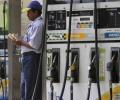
India's fuel consumption slumped by over 66 per cent in the first week of April as a nationwide lockdown halted economic activity and travel, which eviscerated demand. Petrol and diesel demand is down 66 per cent in April, while aviation turbine fuel (ATF) consumption has collapsed by 90 per cent as most airlines have stopped flying, industry officials said.

BSE Smallcap index outperformed the frontline indices to rise 0.6%, while the BSE Midcap was flat
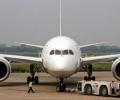
Jet fuel (ATF) price was on Monday hiked by a steep 56.5 per cent and that of non-subsidised cooking gas LPG by Rs 11.5 per cylinder on the back of firming up of international oil rates, but petrol and diesel prices continued to remain on freeze for a record 78th day. Aviation turbine fuel (ATF) price was hiked by Rs 12,126.75 per kilolitre (kl), or 56.5 per cent, to Rs 33,575.37 per kl in the national capital, according to a price notification by State-owned oil marketing companies.

Oil companies choose to skip the revision this time.
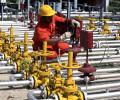
The government has ordered Oil and Natural Gas Corp (ONGC) to pay a near-record Rs 13,764 crore as fuel subsidy for the December quarter, a move that will dent the firm's profitability.
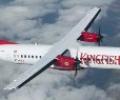
Private carriers Jet Airways and Kingfisher owed over Rs 1,050 crore (Rs 10.50 billion) to the public sector oil marketing companies (OMCs) like Indian Oil, HPCL and BPCL towards the payment of jet-fuel bills as on November 15.
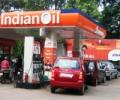
State-owned Indian Oil Corp (IOC) on Tuesday said it is losing about Rs 3 on the sale of every litre of petrol, but will decide on raising prices at an "appropriate" time.

HPCL holds 50 per cent in Prize Petroleum while ICICI Bank has 35 per cent, ICICI Ventures 10 per cent and HDFC Bank 5 per cent.

Ajit Mishra, vice president, Research, Religare Broking, answers your queries.
Bharat Petroleum Corporation (BPCL) on Tuesday hiked petrol prices by about Rs 2.96 a litre effective midnight tonight, and other state-owned oil companies IOC and HPCL will follow suit on Wednesday.
