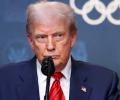
US President Donald Trump signed a proclamation restricting entry of certain non-immigrant workers and imposing a USD 100,000 fee on H-1B visas, citing abuse of the program and national security concerns.

Internal security is related to an attack on a strand of Indian culture, Minister of State for Home Ajay Maken told the Conference on Homeland Security in New Delhi on September 6, 2010

The US Chamber of Commerce has filed a lawsuit against the Trump administration's decision to impose a USD 100,000 fee on new H-1B visa petitions, arguing it harms American innovation and competitiveness.
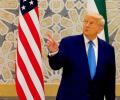
The Trump administration is considering requiring all foreign students applying to study in the United States to undergo social media vetting, according to a report in Politico. In preparation for such required vetting, the administration is ordering US embassies and consular sections to pause scheduling new interviews for such student visa applicants. The report noted that if the administration goes ahead with the plan, it could severely slow down the processing of student visas and hurt many universities who rely heavily on foreign students to boost their financial coffers. This move comes days after the Trump administration ordered the Department of Homeland Security to terminate Harvard University's Student and Exchange Visitor Programme (SEVP) certification, a move that meant Harvard could no longer enroll foreign students.
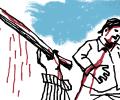
A fundraiser launched to support Nagamallaiah's wife, Nisha, and 18-year-old son, Gaurav - who witnessed the attack - has raised nearly $200,000, at last reckoning, to help cover funeral expenses and Gaurav's college education.

The US Citizenship and Immigration Services (USCIS) in a 'H-1B FAQ' document, released on Sunday, said that the September 19 proclamation took an "important, initial, and incremental step" to reform the H-1B visa programme to curb abuses and protect American workers.
The exit, widely rumoured for some time, became official when Tom Ridge formally submitted his papers to Bush Tuesday.

Among Sensex shares, Sun Pharmaceutical, Tata Steel, Trent, Bajaj Finance, Mahindra & Mahindra, Bajaj Finserv, Reliance Industries, Axis Bank, Tech Mahindra, Adani Ports, Titan, BEL, and Larsen & Toubro were the major laggards. However, Hindustan Unilever, Maruti Suzuki India, ITC, Tata Consultancy Services and UltraTech Cement were the gainers.

An Indian national, who had arrived in the United States illegally, has been arrested for causing a multi-vehicle crash while driving a truck in California last year that critically injured a five-year old child and left her with life-altering injuries.

From 12:01 am eastern daylight time on August 27, 2025, higher tariffs will apply to all products of India that are either entered for consumption in the United States or withdrawn from warehouses for consumption.
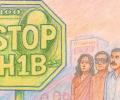
A deep dive into Trump's new policy and what it means for Indian professionals and companies.
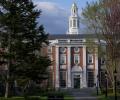
Harvard University has filed a lawsuit against the Trump administration over its decision to revoke the university's certification to enroll foreign students. The lawsuit claims that the government's action is unlawful and unwarranted and that Harvard is not Harvard without its international students. The university argues that the government's decision will have a devastating effect on Harvard and its thousands of international students. The lawsuit comes a day after the Trump administration ordered the Department of Homeland Security to terminate Harvard University's Student and Exchange Visitor Program (SEVP) certification.
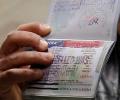
The Trump administration is proposing to limit the duration of visas for foreign students and media personnel in the US, potentially impacting their ability to stay in the country.

Tom Bossert's resignation came a day after John Bolton took over the role of National Security Adviser.
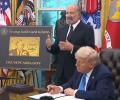
The Trump administration has launched a premium immigration programme targeting wealthy individuals worldwide, offering permanent residency in the United States through expensive 'Gold Cards' that could generate billions in revenue for the American Treasury.
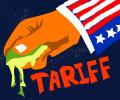
'If the near-term economic pain is absorbed more by those who have the ability and the financial strength to do so, then small and medium enterprises in downstream industries will emerge stronger from the trade imbroglio.'
Kerik was named by US President George W Bush to head the department.
Uttar Pradesh's leading export hubs are reeling under the impact of a steep 50 per cent tariff imposed by the US on Indian imports, with exporters warning of job losses, stalled orders and shrinking market access. Industry leaders from Noida, Kanpur and Varanasi said the tariff has put years of painstaking market-building at risk, even as protests and demonstrations erupted in several districts last week.
Now White House would carry out its review of the proposed regulation, take inputs from various agencies, before taking a final call. The entire process could take from a few weeks to several months.

The additional 25 per cent tariff imposed by US President Donald Trump on India is set to deliver a major blow to West Bengal's export-driven economy, with the state's labour-intensive leather, engineering and marine sectors expecting losses ahead of the festive season, stakeholders said. The increased levies on Indian products for the country's purchases of Russian oil came into effect on Wednesday, bringing the total amount of tariff imposed on New Delhi to 50 per cent.
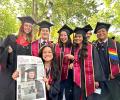
The Trump administration has revoked Harvard University's eligibility to enrol foreign students, raising concerns over the legal status of thousands of students, including nearly 800 from India, currently enrolled at the varsity.
The US Homeland Security has apologised to Civil Aviation Minister Praful Patel who was questioned by the immigration authorities in Chicago as his name and date of birth happened to match with that of a person on America's watch-list.
Sikhs in the US will be allowed to serve in uniform with their beards and turbans under a legal settlement reached with the US Department of Homeland Security, a Sikh advocacy group claimed on Wednesday.

Ranjani Srinivasan, a citizen and national of India, entered the United States on a F-1 student visa as a doctoral student in Urban Planning at Columbia University, the Department of Homeland Security said in a statement on Friday. It added that Srinivasan was "involved in activities supporting" Hamas, a terrorist organisation.
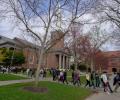
The United States Department of Homeland Security has threatened to revoke Harvard University's ability to enrol foreign students if it failed to provide by April 30 records on its international student visa holders' 'illegal and violent' activities.
The Trump administration is implementing a pilot program requiring visitors from countries with high visa overstay rates to pay a bond of up to USD 15,000.
The Ministry of External Affairs (MEA) has asked Indian students in the US to comply with American laws following the detention of a postdoctoral fellow at Georgetown University and the self-deportation of another student to Canada. The MEA spokesperson said that the two Indians did not reach out to Indian missions in the US for assistance. Badar Khan Suri, the postdoctoral fellow, was detained on charges of "actively spreading Hamas propaganda." Ranjani Srinivasan, a student at Columbia University, self-deported to Canada after her visa was revoked for allegedly "advocating for violence and terrorism" and involvement in activities supporting Hamas. The MEA spokesperson also said that India is keen to bolster educational ties with the US.

The Trump administration has announced a massive increase in H-1B visa fees, imposing a $100,000 annual charge that will fundamentally alter how American companies hire skilled foreign workers, particularly impacting Indian IT professionals who comprise the largest group of beneficiaries.
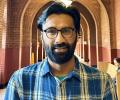
In his petition, Suri's lawyer said that he is being punished as his wife, who is a US citizen, is of Palestinian heritage and because the government suspects that he and his wife are against the US foreign policy towards Israel.
Ranjani Srinivasan, an Indian student at Columbia University, has left the United States after her student visa was revoked over allegations of supporting Hamas. Srinivasan, a PhD student in Urban Planning, claims her visa was revoked for engaging in protected political speech. The Trump administration has been accused of targeting pro-Palestinian demonstrators through the use of federal immigration powers, and this case has drawn attention to the potential for free speech suppression in the United States.
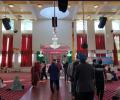
Law enforcement officials from the US Department of Homeland Security have started visiting gurdwaras in New York and New Jersey to check for the presence of illegal immigrants, drawing a sharp reaction from some Sikh organisations which see such actions as a threat to the sanctity of their faith. The Trump administration has rescinded the Biden administration's guidelines that protected places of worship from immigration enforcement actions, leading to concerns that gurdwaras are being targeted. Sikh organisations argue that gurdwaras are not just places of worship but also vital community centres and that surveillance and raids by armed law enforcement would burden religious exercise and limit the ability of Sikhs to gather and associate with one another.

Badar Khan Suri, an Indian postdoctoral fellow at Georgetown University, is facing deportation after US authorities accused him of "spreading Hamas propaganda" and having "close connections to a suspected terrorist." The Department of Homeland Security claims Suri has been actively promoting antisemitism on social media and is connected to a senior Hamas advisor. Suri's lawyer, Hassan Ahmad, argues that his client is being targeted due to his wife's Palestinian heritage and their opposition to US foreign policy towards Israel. The incident follows the self-deportation of another Indian student from Columbia University who was also accused of supporting Hamas.
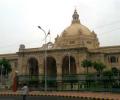
Drawing lessons from security protocols of Parliament, the state is working closely with agencies like the Defence Research and Development Organisation and the Electronics Corporation of India Ltd to design a multi-layered safety mechanism.
The United States hired a chartered flight to deport Indian nationals who were staying in the country illegally, the Department of Homeland Security has said, noting that this has been done in cooperation with the Indian government.
Daniel Wager, who helped investigate HSBC for the federal agency, joined the HSBC's anti-money laundering team last November as a senior vice-president.
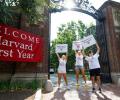
Uncertainty clouds US fall intake as Trump's visa ban on Harvard raises fears of wider policy shifts, pushing Indian students to explore alternative destinations.
In a virtual briefing, Royce Murray, assistant secretary for Border and Immigration Policy, US DHS, in response to a query related to the October 22 charter flight that deported a batch of Indian nationals, said, "no minor" among them on that removal flight, adding these were all male and female adults.
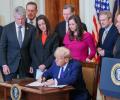
The Guantanamo Bay facility, which has so far been used to hold terrorists, will now also house illegal immigrants with criminal records.
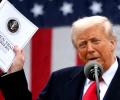
United States President Donald Trump has imposed a 10% tariff on most US imports, with even higher rates for China (34%), India (26%), Japan (24%) and the EU (20%), escalating a global trade war.
Four students, including an Indian, at Michigan public universities have filed a lawsuit against the US Department of Homeland Security (DHS) and immigration officials, alleging their student immigration status was unlawfully terminated. The lawsuit claims the students' status in the Student and Exchange Visitor Information System (SEVIS) was illegally terminated without proper notice or explanation. The American Civil Liberties Union (ACLU) of Michigan, representing the students, says they were targeted by the Trump administration without a valid reason. The lawsuit seeks to reinstate the students' status to allow them to complete their studies and avoid the risk of detention and deportation. The case is part of a growing trend of lawsuits against the Trump administration's immigration crackdown on higher education. Experts warn that these actions could deter future international scholars from choosing the US as their academic destination, undermining the reputation of US universities.
