
The Reserve Bank on Friday projected retail inflation to be in 5-5.2 per cent range during the first half of the next fiscal year, expecting further softening of vegetables prices in near term. Also, it has lowered the retail inflation forecast for the current January-March quarter of 2020-21 fiscal at 5.2 per cent. The Reserve Bank (RBI) has kept the key policy rate unchanged at 4 per cent, with an accommodative stance, so as to ensure that inflation remains well within the target, Governor Shaktikanta Das said while announcing the last monetary policy of 2020-21.

'Investing in the stocks of holdcos can be a very efficient and inexpensive way of gaining exposure to the stocks of India's reputable growing business houses.'

Banks are gaining market share at the expense of non-bank lenders such as housing finance companies, retail lenders, and those giving gold loans. There has been a steady decline in the market share of non-banking financial companies (NBFCs) in the credit market as banks have stepped up lending. NBFCs' share declined to a five-year low of 19.8 per cent in the first half of FY23, down from 20.3 per cent in H1FY22, and an all-time high of 23.1 per cent in H1FY19.

The central government is on track to meet its fiscal deficit target of 6.4 per cent of the GDP for 2022-23 on the back of strong growth in revenue collections, the World Bank said in its India Development Update on Tuesday. High nominal GDP growth in the first quarter supported strong growth in revenue collection, especially Goods and Services Tax (GST), despite tax cuts on fuel. Notwithstanding an increase in spending due to expanded fertilizer subsidies and food subsidies for vulnerable households in response to the commodity price shock, the government is on track to meet its FY22/23 fiscal deficit target of 6.4 per cent of GDP and the general government deficit is projected to decline to 9.6 per cent from 10.3 per cent in FY21/22 and 13.3 per cent in FY20/21.

The excise duty cuts on diesel and petrol will cost Rs 45,000 crore and lead to a 0.3 percentage point widening on the Centre's fiscal deficit, a foreign brokerage said on Thursday. Going by the overall consumption, the costs of the surprise move - which came after months of concerns over high payouts at filling stations - for the entire fiscal will come at Rs 1 lakh crore or 0.45 per cent of GDP, economists at Japanese brokerage Nomura said in a report. For the remaining months of the ongoing FY22, the cost will come at Rs 45,000 crore, which leads to an upward review of the fiscal deficit target.

The states will forego around Rs 44,000 crore of tax revenue after they reduced VAT on petrol and diesel in the reminder of the fiscal but higher central tax devolution of Rs 60,000 crore will offset the losses, according to a report. After months of calls for lowering the taxes on the fuels, the Centre on November 4 cut excise duty on diesel by Rs 10 a litre and by Rs 5 on petrol. Following this, as many as 25 states and Union territories have lowered value-added tax (VAT) on these fuels.

The asset quality of non-banking financial companies (NBFCs) deteriorated in April-September 2021 (H1FY22) owing to the second wave of the pandemic. Their gross non-performing assets (NPAs) rose to 6.8 per cent in September 2021 from 6 per cent in March 2021. The Reserve Bank of India's (RBI's) annual Trend and Progress report (FY21) said the sector might have to grapple with higher delinquencies as and when policy measures unwound. The pandemic posed significant challenges to NBFCs during the first wave (2020) also.
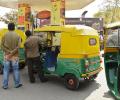
CNG and piped cooking gas prices in cities such as Delhi and Mumbai may be hiked by 10-11 per cent next month as the government-dictated gas price is set to rise by about 76 per cent, ICICI Securities said in a report. The government, using rates prevalent in gas-surplus nations, fixes the price of natural gas produced by firms such as state-owned Oil and Natural Gas Corp (ONGC) from fields given to them on nomination basis, every six months. The next review is due on October 1.

The country's gross domestic product (GDP) is likely to grow more than 9.5 per cent in fiscal 2021-22, an SBI research report-Ecowrap said. The economy grew at 8.4 per cent in the second quarter of the current fiscal, according to data released by the National Statistical Office (NSO) on Tuesday. The growth in the April-June quarter of this fiscal stood at 20.1 per cent. In October's monetary policy review, the Reserve Bank of India had retained its projection for real GDP growth at 9.5 per cent in 2021-22, consisting of 7.9 per cent in Q2; 6.8 per cent in Q3; and 6.1 per cent in Q4 of 2021-22.

When the world was upended by the Covid-19 pandemic, metals got its shine back. In the last two years, infrastructure spending by major economies spurred demand, energy transition and intermittent supply disruptions fuelled a scorching rally in metals after a downturn during the first Covid wave. Now, Russia's war on Ukraine is ensuring that elevated prices stay the course.

The hospitality sector has been hit very hard by the pandemic. In the past 18 months, it has lost business, first because of the harsh lockdowns and after that because of lack of demand due to the ensuing economic slowdown. Most hospitality businesses have sustained low revenues and losses since April 2020. Is this the classic case of a beaten-down cyclical sector that may be close to bottoming out?

When Life Insurance Corporation (LIC) of India gets listed on the bourses next month, it will be among the biggest listed life insurers globally in terms of market capitalisation (m-cap), assets, and revenue, but will also be among the least profitable and capitalised among its peer group. A big gap between LIC's m-cap, profits, and networth (shareholder capital) will make it one of the priciest insurers globally, in terms of price-to-earnings (P/E) multiple and price-to-book value (P/B) ratio. LIC also lags behind its Indian listed peers in terms of profit and networth.

Under the new model, the surplus distribution in the participating policyholders' fund has been modified to 90:10 in a phased manner, wherein 90 per cent will go to policyholders and 10 per cent to shareholders. Further, 100 per cent of the surplus generated out of the non-participating business will be available for distribution to all shareholders.
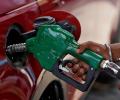
'Pump prices of petrol and diesel have reached historical highs. An unwinding of taxes on petroleum products by both the Centre and the states could ease the cost-push pressures,' the Monetary Policy Committee (MPC) has said.
 © 2026 Rediff.com - Investor Information - Advertise with us - Disclaimer - Privacy Policy - Sitemap - Feedback - About us - Terms of use - Grievances