
Meena Devi is charged in the case of the unfortunate death of 23 children after they consumed the mid-day meal at Dharmasati Gandaman Primary School in Saran district of Bihar on July 16 2013.
You know how, given the right lighting and the right positioning, you can project huge dramatic shadows onto a screen with nothing more than a couple of wiggling fingers? The India show we take around the world, and around India at election time, is a bit like that.

Monday is the last day of campaigning in Gandaman where 23 children died after eating a school meal, but no leader has found time to campaign among the villagers. Archana Masih/Rediff.com returns to the lonely village in Bihar.
Five months after 23 children died from eating poison-laced school lunch, the tragedy has resulted in a new school, creche, health centre, roads and electricity. The long forgotten village is finally being turned into a model village, but the grief of its loss is far from over. Archana Masih reports from Dharmasati Gandaman, Bihar.
A month after the midday meal tragedy, parents are not ready to send children to school. 'How can we forget their deaths? It may be easy for others, but not for us.'

Facing the ire of people over the midday meal tragedy, the Bihar government plans to provide printed instructions to school principals about food quality and safety besides painting the norms on the schools walls.
"Police are conducting searches and have also spoken to relatives of the absconding principal, Meena Devi, and her grocer husband Arjun Rai but they are yet to be arrested," Saran SP Sujit Kumar said.
A court in Bihar's Saran district on Monday sent Arjun Rai, husband of the principal of a school where 23 children died after eating contaminated food in July, to 14 days judicial custody after he surrendered.
The absconding principal of the school in Bihar's Saran district, where 23 children died after eating poisoned food, was on Wednesday taken into custody by police.

A Special Investigating Team on Tuesday visited the village in Bihar's Saran district where 23 children died of food poisoning after consuming a mid-day meal in their school.
The mid-day meal tragedy has sparked a blame game with the Bihar government on Friday refuting Centre's contention of having sent alerts to 12 districts including Saran, where 23 children died after consuming food, over shortcomings in the implementation of the scheme.

Three months after 23 children died after eating contaminated meals, a chargesheet has been filed against the suspended principal and her husband in the midday meal tragedy in a primary school at Dharmasati Gandaman village of Saran district.
Mid-day meals for students in Bihar could not be served in over 20 per cent schools on Thursday as primary school teachers boycotted the duties, with the state government calling the decision as irresponsible and said it would inform the Supreme Court.

The Forensic Science Laboratory report found Monocrotophos, an organophosphorous compound in the samples of oil from the container, food remains on the platter and mixture of rice with vegetables on Aluminium tasla (utensil), Additional Director General of Police (HQ) Ravinder Kumar told reporters making the report public.

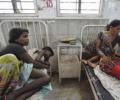
Sujit Kumar, Upendra Kumar Prasad, Nisha Kumari and Kajal Kumari are some of the many children who fell sick after consuming a meal laced with insecticide in their school at Gandaman village in Bihar's Saran district on July 17.
On Monday, August 29, a court in Saran, Bihar, sentenced the headmistress of the school where 23 children died after eating a mid-day meal to 17 years in prison. Three years after that tragedy, discovers Satyavrat Mishra, the state government has failed to learn its lessons.
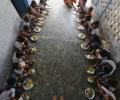
Two years after a midday meal took the lives of 23 children in Gandaman, Archana Masih sits down to have lunch at the same government school and discovers that much has changed and much remains the same.
.jpg)
The buck for the Gandamal tragedy should not stop with the school-in-charge Meena Kumari. She is just the face of a deeper malaise in Bihar, says Apoorvanand.
 © 2026 Rediff.com - Investor Information - Advertise with us - Disclaimer - Privacy Policy - Sitemap - Feedback - About us - Terms of use - Grievances