
The Financial Sector Legislative Reforms Commission, chaired by Justice B N Srikrishna, has suggested a non-sectoral, principle-based approach to revamp the existing framework.
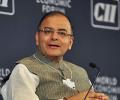
Pitching for greater transparency in rule-making and other functions of regulators, Finance Minister Arun Jaitley has asked Sebi to work towards attracting more retail investors to the capital markets.

India needs a place where all regulators could gather and function as in a war room.
The Financial Sector Legislative Reforms Commission had in a report last year proposed a unified regulator for the entire financial sector -- markets, insurance, commodities and pension. It had, however, proposed to keep banking out of its purview for now.

The three main regulators have different approaches to grievance redressal and different standards to stop harmful from coming pitched at the consumer.

Mergers and acquisitions would continue to create big corporate conglomerates but there is a need to draw a red line to avoid dominance and curbing of open competition in market by them, he said while addressing a conference on competition issues in New Delhi.

The system envisaged under the FRDI Bill, if implemented properly, would help improve the efficiency of capital allocation without harming consumers, and without risking the stability of financial firms, says Ajay Shah.

In September 2013, FMC was brought under the Finance Ministry.
.jpg)
Stating that there are strong inter-linkages between banks, NBFCs and other deposit-taking entities, he said for monetary policy to be effective and financial markets to remain stable, they should be regulated by the central bank.

'The hour is very late, and the choice between triumph and tragedy knocks at our door,' says Ajay Shah.

Principal economic advisor, Ila Patnaik, is coordinating the work on Economic Survey 2013-14.

DEA officials to push for this at a meeting with FM Jaitley.

'It's still very early. I have just been handed over the matter and therefore I haven't formed any views on it as yet,' Justice B N Srikrishna tells Pavan Lall.

Before considering reducing the freedom of private investors in the derivatives market, we need to check if the maladies in markets elsewhere exist in India, says Susan Thomas.

Report points out corporate vulnerability indicators remain elevated.

Move to shift powers from RBI without discussions baffles many

The proposed IFC disrupts existing regulatory structures.

His finest years came when he served as deputy governor under C Rangarajan.

Finance firms in these SEZs likely to get tax breaks.

This gains importance in the backdrop of speculation on a second term for Raghuram Rajan.

'The quick fixes have failed; there is now no alternative to deeper reforms,' says Ajay Shah.

A long crisis with a lack of sound short-term, long-term actions can result in sluggish growth in India, similar to that in Japan.

RBI's out-of-turn rate cut has surprise few economists.

'Will 'Make in India' be able to harness the demographic dividend so it does not become a disaster?' 'Will 'Digital India' live up to the lofty promises the government and private sector made as part of its recent launch?'
 © 2026 Rediff.com - Investor Information - Advertise with us - Disclaimer - Privacy Policy - Sitemap - Feedback - About us - Terms of use - Grievances