
The Paytm application (app) could potentially face a permanent loss of its integrated mobile wallet feature, currently owned by Paytm Payments Bank (Paytm PB). With the recent crackdown on Paytm PB, sources say getting a fresh wallet licence may get tough for the group. "The Paytm app (One97 Communications) has to apply afresh to the RBI for a licence to operate a prepaid payment instrument (PPI) like a mobile wallet within the Paytm app, as PPI is a regulated entity.

Senior bankers point out that while they will eventually attract qualified professionals, onboarding them takes time.

The RBI's decision to tighten norms for unsecured personal loans is credit positive because lenders will need to allocate higher capital for such loans, thus improving their loss-absorbing buffers, Moody's Investors Service said on Monday. The Reserve Bank last week raised risk weights on unsecured retail loans, credit cards and lending to non-banking finance companies (NBFCs) by 25 percentage points. Moody's said unsecured loans have been growing rapidly in the past few years, exposing financial institutions to a potential spike in credit costs in case of sudden economic or interest rate shocks.

Reliance Industries Ltd was the biggest wealth creator during the five-year period from 2018 to 2023 while Adani Enterprises Ltd was the top all-round wealth creator, according to a study by Motilal Oswal Financial Services. The study, based on stock market performance of companies, said for the fifth time in succession, Reliance emerged as the largest wealth creator, adding Rs 9,63,800 crore wealth over 2018-23. It was followed by Tata Consultancy Services (Rs 6,77,400 crore wealth addition), ICICI Bank (Rs 4,15,500 crore), Infosys (Rs 3,61,800 crore) and Bharti Airtel (Rs 2,80,800 crore).

Meaningful market share would go to those who have the distribution strength to push their products, such as banks.

The third quarter (Q3) of 2023-24 (FY24) has proven to be pivotal, witnessing some startups turning profitable and others enhancing their performance as their businesses finally begin to deliver. Startups like Delhivery, Zomato, PolicyBazaar, Mamaearth, and Nykaa have either become profitable or improved their profit margins in Q3FY24. A renewed focus on profitability, supported by operational efficiencies, expense rein-in, and robust demand during the festival season, has empowered companies to strengthen their performance.

The message is clear: The 60-year-old wise uncles need to handhold the 40-year-old entrepreneurs when, obsessed with ambition and greed for growth, they become a victim of hubris, points out Tamal Bandyopadhyay.

A number of exhibitions at the Bharat Mandapam, the convention centre which will host key G20 summit meetings, will showcase India's technological prowess and innovation, and offer a multitude of unique experiences to the visitors.

India's mutual fund (MF) industry had barely any retail footprint when it completed 50 years in 2013. MFs had Rs 7 trillion in assets under management (AUM) in March 2013, of which around Rs 5 trillion was in institution-focused debt funds. By comparison, bank deposits in the country stood at Rs 67.5 trillion around the same time.

The share of non-resident Indians (NRIs) and overseas investors in Indian mutual funds has been declining over time, despite adding half-a-trillion rupees to holdings over the last five years. Mutual fund holdings for the segment went up from Rs 0.95 trillion as of December 2018 to Rs 1.54 trillion as of December 2022, shows Business Standard analysis of data from the industry body Association of Mutual Funds in India (Amfi). Their share in overall mutual fund assets has fallen from 4.2 per cent to 3.9 per cent during the same period.
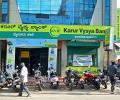
'We will test the waters, ferret out information through our business correspondents, and only then open a branch'

Walmart-owned digital payments firm PhonePe has decided to halt its proposed acquisition of Goldman Sachs- and Xiaomi-backed ZestMoney, a Bengaluru-based buy now, pay later (BNPL) platform. The deal, which was poised to fetch anywhere between $150-200 million and $300 million, has hit a snag over lapses in due diligence, disagreements over valuation, sustainability of the business, and shareholding structure of ZestMoney, according to people familiar with the matter. The collapse of the deal is also being attributed to a slowdown in the financial technology (fintech) sector in the midst of a funding winter, difficult regulatory environment, and macroeconomic uncertainty, informed other sources.

Until now, these platforms were either working through an investment advisory (IA) or stockbroking licence.

But the industry's chief executives remain confident of the long-term growth potential of NBFCs in India, given their specialised lending on the asset side, last-mile reach, and a well-capitalised balance sheet. "Over the years, NBFCs have faced many crises.

In the document, the global body expressed concerns over the increasing use of Internet and other information and communications technologies, including social media platforms, for terrorist purposes.

Both prime ministers believed in crafting schemes to help the common man. Modi used quite effectively the instruments Dr Singh introduced. In assessing Modi's success with many schemes, Dr Singh's fundamental work should not be ignored, points out A K Bhattacharya.

Paytm founder and chief executive officer (CEO) Vijay Shekhar Sharma will receive his stock grants only after the company's market capitalisation (m-cap) stabilises at its initial public offering (IPO) level, the financial technology (fintech) major said on Wednesday. Paytm's stock price has been in free fall since its IPO at Rs 2,150 apiece, with m-cap at around Rs 1.4 trillion - plunging 76 per cent to a lifetime low of Rs 520 on March 23, when m-cap dropped below Rs 34,000 crore. Since then, the company's share price on the BSE has recovered some value and closed at Rs 637 on Wednesday.

A long and bitter funding winter in the start-up world is beginning to take its toll on start-up advertising across properties. Earlier this week, Mastercard replaced Paytm as the title sponsor for all international and domestic cricket matches organised by the Board of Control for Cricket in India (BCCI). But this is just one part of the story. The other side is that organisers of high-impact shows and events on Hindi general entertainment channels, too, are feeling the winter chill.

The number of draft red herring prospectuses (DRHPs) filed with the markets regulator - Securities and Exchange Board of India (Sebi) - jumped nearly fivefold to 145 in 2021-22 (FY22), compared with just 30 in the preceding financial year (2020-21, or FY21). This was on account of companies rushing to take advantage of a favourable market sentiment towards initial public offerings (IPOs), triggered by an influx of new investors, surge in the secondary market, and encouraging performance of newly listed stocks. In fact, DRHPs filed in FY22 was 4x the previous 10-year average and the highest since 2007-08, according to primary market tracker PRIME Database.

Of the 2,562 customer complaints received between January 2020 and March 2021, a majority relate to illegal apps. At least two dozen suicide cases have been reported, perpetrated by the harassment by loan app operators, points out Tamal Bandyopadhyay.
With around 33 deals valued at USD 647.5 million, India has the highest investment in the fintech segment compared to China's USD 284.9 million during the quarter ended June 30, 2020, the report released by RBSA Advisors said.

When it comes to losing a job permanently, the youngest and the oldest segments in the workforce have reported an increase in setbacks in the second wave of the pandemic, a survey of by a Fortune500 company has said. The survey, conducted in April this year, covered 2,000 persons in India. Six per cent of those over 55 years of age reported having permanently lost their job, as against 4 per cent last year. In those aged under 24, the proportion reporting a permanent job loss has increased to 11 per cent from 10 per cent in the year-ago period, the survey done by financial technology company FIS said.

Following the money and freezing anything unaccounted is the only way to set an example for others, suggests Debashis Basu.

"Yeh sab doglapan hai." With these words, Ashneer Grover not only called out an entrepreneur being hypocritical, but also shot to fame as a reality television star. It happened in the first few days of January, when the funded part of the start-up world needed some warm-up to get back to work, and inevitably Grover's antics on the show became a talking point. The Twitterati also debated whether it was unbecoming of a founder to diss a peer's business model with such abrasion. And hundreds of memes, with the dialogue set in various circumstances, flooded social media.

These unicorns, or startups valued at over USD 1 billion, are across industries, beyond technology and tech-enabled sectors as well, like pharmaceuticals, and consumer goods, Credit Suisse India equity strategist Neelkanth Mishra told reporters in Mumbai.

In the excitement over the allocation of bank licences for the private sector, a new category of licence offered by the Reserve Bank of India (RBI) last year went almost unnoticed. That was when the RBI consolidated the rules for prepaid payment instruments (PPI), popularly understood as e-wallets or gift cards. In the process, the regulator has fast-forwarded a bottom-up card usage industry in India that is completely different from the world of bank-linked credit and debit cards.

The NSEL scam, involving Rs 5,600 crore, came to light after the now defunct exchange, promoted by Financial Technologies, failed to pay its investors.

'The truth in your words and the relentless drive to make a difference.' 'So go on all you beautiful souls, the world is your oyster.'

Indian-American engineer-entrepreneur Shrina Kurani challenges a 30-year Republican veteran in a US Congressional race in a district that is predominantly white.

In an indication of easing financial stress among borrowers, the number of unsuccessful auto-debit requests through the National Automated Clearing House (NACH) platform declined in July, reversing a three-month trend that started with the second wave of the Covid-19 pandemic. According to the NACH data, of the 86.4-million transactions initiated in July, 33.23 per cent, or 28.7 million transactions, failed, while 57.7 million were successful. Compared to June, this is a significant improvement in bounce rates.

Shah came under scanner last year, when his group company NSEL faced a payment crisis and nearly 18,000 investors allegedly lost millions in late July.

National Spot Exchange Limited, promoted by Jignesh Shah-led Financial Technologies, is facing payment crisis of Rs 5,600 crore (Rs 56 billion).

Sebi proposes to relax ownership rules to allow more entrants in the exchange space, which is seeing a disruption globally with the emergence of new technologies such as block chain.
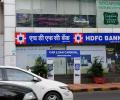
HDFC Bank on Thursday said network outages that led to a regulatory ban on new credit card sales were not due to transaction volumes, and affirmed that it continues to stay in touch with the RBI for restarting the services but giving a timeline for it will be difficult. The bank said it is on its way to creating a new technology architecture for the future as part of the "digital factory" and "enterprise factory" initiative. But, it conceded that outages will continue under the older system though it will be working to minimise the time taken to bring the service back. In December 2020, the RBI took the unprecedented step of stopping the largest private sector lender from selling any new credit cards and also launching new digital services, because of a series of network outages.

Auto-debit payment bounces have gone up for the second consecutive month in May, emphasising the stress building up due to a halt in economic activities as authorities lock down various parts of the country to stop the spread of the virus in the second wave. According to the National Automated Clearing House (NACH) data, in May, of the 85.7 million transactions initiated, 35.91 per cent, or 30.8 million transactions, failed.
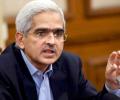
The rising COVID-19 infections across the country are a matter of concern, but it may not impact the ongoing economic revival as one does not foresee lockdowns, Reserve Bank Governor Shaktikanta Das said on Thursday. The economic revival will continue "unabated", Das said, asserting that there is no need for a downward revision of RBI's 10.5 per cent GDP growth forecast for FY22. Speaking at Times Network's India Economic Conclave, Das said, "We have 'insurance' to protect economic revival like a fast-paced vaccination drive, greater ability among people to follow COVID protocols", and one does not see lockdowns as well.

Jignesh Shah, the promoter of Financial Technologies India Ltd, on Wednesday resigned from the board of MCX Stock Exchange, amid continuing Rs 5,600 crore (Rs 56 billion) payment crisis at group company NSEL.

To provide a 'data lake' solution, the markets regulator had issued a notice in May, inviting expression of interest (EoI) from interested parties. The selected company will be responsible for designing, implementing and supporting a big data solution with analytical capabilities.

The exchange may now look to its real estate business for cash flows
The sessions court on Thursday extended the police custody of the Financial Technologies and Multi Commodities Exchange (MCX) promoter Jignesh Shah and former managing director and chief executive of the commodity exchange Shreekant Javalgekar till May 19.
