
'The critics are getting carried away.' 'The challenge for the RBI is not any erosion of autonomy caused by demonetisation.' 'It's the whole attempt to reduce the RBI's stature and role that has been under way,' says T T Ram Mohan.

A long crisis with a lack of sound short-term, long-term actions can result in sluggish growth in India, similar to that in Japan.

What is required from government is intellectual framework.

Watal panel had suggested an independent payments regulator be set up.

Before considering reducing the freedom of private investors in the derivatives market, we need to check if the maladies in markets elsewhere exist in India, says Susan Thomas.

The year 2014-15 could well go as one of long-pending financial sector reforms, expected to have a lasting impact.
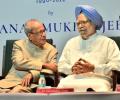
What Shekhar Gupta would have really liked to know from Pranabda: Why did Sonia prefer Dr Singh to him as PM? Why did he deny finance first, why did he accept it 5 years later, and why did he make such a mess of it? How did he force Sonia to nominate him for President and not Hamid Ansari? And how does he justify that most toxic legacy -- the Vodafone tax amendment?

RBI's out-of-turn rate cut has surprise few economists.

Raghuram Rajan speaks on the unscheduled rate cut.

The abolition of wealth tax is again a welcome step.

The three main regulators have different approaches to grievance redressal and different standards to stop harmful from coming pitched at the consumer.
The finance ministry has put out a revised draft in public domain.

Sahil Kapoor of Edelweiss Retail Capital Market Research says that setting up a monetary policy committee should have been the first step. And the central bank could have moved towards a formal inflation targeting mechanism after the processes and data sets are in place.

This is the joint statement issued by the ministry of external affairs on the visit of US President Barack Obama to India.
 © 2026 Rediff.com - Advertise with us - Disclaimer - Privacy Policy - Sitemap - Feedback - About us - Terms of use - Grievances