
Following price hike of Rs 500 per tonne by Steel Authority of India Ltd, other private producers on Monday announced hike in prices of hot rolled coils by the same amount.
Indian steel companies on Friday exuded confidence that lifting of tariff on steel imports by US would create new markets but said there would not be any significant impact on the steel prices.
The Sensex opened with a positive gap of 21 points at 10,862

Those involved in the discussions say the guidelines for selection of bidders in insolvency cases need to be transparent, otherwise anyone who loses out could take legal recourse, leading to wastage of time and derailing the whole process.

Finance Minister Nirmala Sitharaman's Rs 30,600 crore government guarantee for the bad bank has changed the body language of bankers for the better, observes Tamal Bandyopadhyay.
Steel scrips have found reason to celebrate what with freight rates for steel being reduced in the Railway Budget announced on Wednesday.
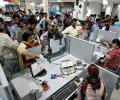
Insolvency professionals feel the bankruptcy code will deter defaulters, but NPAs will not cease unless banks are sensitised on credit appraisal and experts are hired by banks to inspect what is happening with their loans.

One smells a rat when cases are settled for too small a price offered either by the highest bidder or the promoter -- within and outside the legal ambit of insolvency process, observes Tamal Bandyopadhyay.

Yoga guru Baba Ramdev's Patanjali Ayurved on Wednesday made its first big acquisition when it paid Rs 4,350 crore to take over soya food brand Nutrela-maker Ruchi Soya through an insolvency process. The acquisition will help Patanjali acquire edible oil plants as also soyabean oil brands such as Mahakosh and Ruchi Gold.

India Ratings expects long products demand growth to be sharp, supported by a demand push from the government-led infrastructure investments in affordable housing, railways, rural electrification and road networks.

Analysts said even though the Indian economy is expected to slow down to 7.2 per cent in fiscal 2020, it is still the best bet for investment for foreign investors.

With average capacity utilisation now touching 76 per cent, Indian companies are going back to the drawing board to add capacity but the plans to build new factories and plants are still some months away.
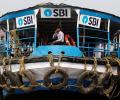
The country's largest lender SBI on Thursday reported a 4.20 per cent decline in consolidated December quarter net at Rs 6,257.55 crore, largely because of a higher base in the year-ago period where it had benefitted from a Rs 4,500 crore one-off income. On a standalone basis, the city-headquartered lender's net profit came in at Rs 5,196.22 crore as against Rs 5,583.36 crore in the year-ago period and Rs 4,574.16 crore in the preceding September quarter. SBI chairman Dinesh Kumar Khara told reporters that the year-ago period had seen the resolution of the Essar Steel loans, resulting in an over Rs 4,000 crore interest income and Rs 500 crore other income benefit.

With $120 billion worth of deals, 2018 was the best year on record. Many also blame frequent policy flip-flops and increasing tax scrutiny as big dampners for business.

At $12-bn valuation, this will be India's largest FDI; deal to be announced on Saturday, says Dev Chatterjee.

Last June, the group had delisted Essar Energy from the London Stock Exchange as well.
A total of 4,452 cases have been disposed at pre-admission stage and 66 have been resolved after adjudication. 260 cases have been ordered for liquidation.

The UN Conference on Trade and Development (UNCTAD) said in a report on Monday that a lower but positive economic growth in India in the post-Covid-19 pandemic period and India's large market will continue to attract market-seeking investments to the country. The World Investment Report 2020 by UNCTAD said that India was the 9th largest recipient of FDI in 2019, with 51 billion dollars of inflows during the year, an increase from the 42 billion dollars of FDI received in 2018, when India ranked 12 among the top 20 host economies in the world.

Bad loans continue to originate mainly from state-owned banks, where the top management's responsibility is not linked to career prospects nor has legal consequences, says Debashis Basu.

The domestic deal-making activities were hit by weak corporate governance and a huge liquidity crunch in 2019, while the global deals were also hard to come by due to various factors including uncertainties caused by the US-China trade war, which left many investors in a wait-and-watch mode.

Among India's capital-starved local banks, Essar is viewed as too big to fail.
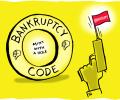
This is being done keeping in mind the urgency of these transactions, and it would help the ongoing insolvency cases, including the 12 accounts referred by RBI to banks.
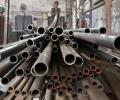
The recent amendments to the IBC practically barred promoters from re-acquiring their own assets, leaving only a small window to convert their non- performing assets into standard assets by paying the overdues.
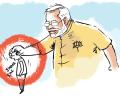
'By not only decriminalising routine business failures, but by ensuring that institutional lending and corporate rescue frameworks are strengthened via the IBC, the prime minister has ensured there is no room anymore for the proverbial 'reckless, prodigal debtor',' notes Sanju Verma.
The total admitted claim of financial creditors of these 88 companies stood at Rs 1.3 trillion, of which they recovered Rs 65,635 crore.
As NCLAT chair, lack of basic infrastructure remains Justice Mukhopadhaya's biggest challenge. The lack of permanent staff to take down orders in shorthand and later type them out for him to correct is just one among many. In cases where there are a number of intervening parties and applicants, the courtroom is often so jam-packed that even the senior advocates have failed to find place inside.

The bank board had decided to launch an enquiry to be headed by an "independent and credible person", to examine and enquire into an anonymous whistle blower complaint alleging that the bank MD & CEO had not adhered to code of conduct

There are allegations of involvement of Kochhar and her family members in a loan provided to Videocon group on a quid pro quo basis.
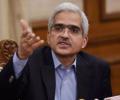
RBI Governor Shaktikanta Das said the central bank saw economic growth slowdown in February, prompting it to cut rates ahead of the curve and wondered why markets were surprised with the decision to pause rate reduction. Noting that there is a need for an "informed and objective discussion" on the country's economy, Das said the RBI would do "whatever is necessary" to address growth slowdown, spikes in inflation as well to ensure good health of banks and non-bank lenders. The apex bank went for five consecutive rate cuts starting in February this year, making it a cumulative reduction of 1.35 per cent.
 © 2026 Rediff.com - Investor Information - Advertise with us - Disclaimer - Privacy Policy - Sitemap - Feedback - About us - Terms of use - Grievances