
Indian market has been plagued by negative sentiment and triggers

Combined net profit estimated to grow 14.6% year-on-year, against a 5.7% decline in the Dec 2015 quarter

12 out of 21 public sector banks reported declines in their loan books in the last financial year against seven such banks in 2015-16 and none in 2013-14.
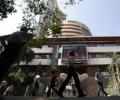
Analysts say traders have been building long positions on expectations the BJP would sail through in the five Assembly elections

The number of infrastructure projects cleared by a monitoring group set up in the Cabinet Secretariat had increased consistently in the past year.

Experts expect the trend to continue in the near term.

According to Rahul Rege, business head (retail) at Emkay Global Financial Services, it is difficult to track more than 10 stocks.

Though Indian banks don't have large exposure to subprime mortgages, analysts are worried at the rise in their restructured loan portfolios and deterioration in credit quality.

An analysis of year-wise movements of average global crude oil prices versus India's GDP reveals no inverse correlation, contrary to wide belief.

Rising oil prices and diminishing cash pile to limit capacity in 2018-19

The Sensex and the Nifty witnessed biggest one day loss in percentage terms since June 24

Promoters' holding in private sector BSE 500 companies declined to 43.4% in Sept

In the past 12 months, such earnings have grown in double digits in Europe, the US, Japan and South Korea.

A financial turnaround in Tata Steel and Tata Motors has come as a shot in the arm for Chandra.

The index is more expensive than it was at 2014-end or when it hit a life-time high in January.
After years of losing money on two of the group's biggest bets - global steel business and domestic passenger cars - there are strong signs of a revival in both businesses.
The BSE Mid-Cap index was currently up 0.83%. The BSE Small-Cap index was currently up 0.8%.

The gap between Nifty's price-earnings multiple and economic growth is at a 12-year high

These firms reported a combined operating profit of Rs 26,077 crore (Rs 260.77 billion).

Many giving double-digit returns, with India up less than one per cent; even so, it has done much better than other emerging markets.

This analysis is based on the quarterly earnings for 724 companies.

While Raghuram Rajan has said in the past that other factors, including domestic fundamentals, outweigh the US Fed policy meet, this time it would be different

Analysts say there is still no visibility of earnings improvement.

Previous peak in 2010 crossed in first five-and-a-half months this year.

Operational income not covering even their interest expenses, finds study; analysts say if economy turns around, new equity issuances an option

In five years, per-employee revenue for IT companies grew at 9 per cent each year.

Earnings spread for foreign investors down to 10-year low of 1.1 per cent, from 2 per cent at the beginning of the year and record high of nearly 5 per cent in 2013

Corporate indebtedness is now twice what it was before the global financial crisis; banks' bad loans ratio is 3.5 times higher.

Mid- and small-cap companies seem to have done better than top-tier companies

There, however, has been an improvement in operating margins.

Finance Minister Arun Jaitley said Sebi would develop new products in the commodity derivatives space apart from taking steps to deepen the corporate bond market.

More than half the Sensex companies have declared their results for the third quarter and there are more positive surprises than disappointments.

Through the past 12 months, the Bank Nifty has risen 55%

67 companies with total debt of Rs 5.65 lakh cr were either loss-making or didn't generate enough profit to cover interest cost in FY15

According to estimates, if the companies are not allowed to raise petrol rates at least Rs 5 a litre by the first fortnight of September, they might begin to suffer underrecoveries on this decontrolled auto fuel, too -- for the first time this financial year.

With mutual funds, promoters turning net-buyers, foreign investors may have to bid up prices to raise holdings.

Crisis of growth is worsened by the challenging global environment and policy missteps. Returning to 9 per cent growth trajectory will be a tall order.

With cash -- the primary medium of exchange -- all but disappearing, it is now unlikely that the expected fillip to demand on account of a good monsoon and proceeds from the Seventh Pay Commission payout will materialise.

If financials and oil sectors were removed, India Inc has done quite well.

The growth premium India enjoyed has largely been lost.
 © 2026 Rediff.com - Advertise with us - Disclaimer - Privacy Policy - Sitemap - Feedback - About us - Terms of use - Grievances