
In a year that saw inflation touching a 13-year high of 12.82 per cent in August, the 150 million cases beer market grew by 15 per cent, according to All India Breweries Association figures. The wine segment, which has a total market size of around 1.5 million cases, posted even a higher growth rate of 30 per cent, as per International Wines and Spirits Record, while other alcoholic beverages, with a market size of 190 million cases, grew at 15 per cent.

A likely easing in inflationary pressures in the forthcoming months will reopen the window for the RBI to once again prioritise growth and ease its interest rates.
It is striking how quickly the over-hyped optimism over the evolving India economic story has given way to a reality check in general and pessimism over the economic outlook in particular. Capital inflows into India were attracted by the increasing domestic and global acknowledgement of the favourable structural economic shifts.
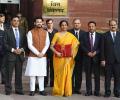
'There is a time for lowering one's expectations of the economy -- and therefore not trying to do too much in the Budget,' notes T N Ninan.
India's economic growth is likely to shrink by 1.25 per cent to 7.9 per cent this fiscal, mainly on account of tight monetary conditions and continued pressure on inflation, the International Monetary Fund said on Friday. The IMF report also warned that investment would be more affected than consumption on account of the tight monetary conditions and fall in global economy following US sub-prime crisis. Compared to China, India has little fiscal space to keep up the growth.

The Indian rupee is down nearly 2 per cent against the US dollar since the beginning of January 2019. Experts attribute the Indian rupee's relatively poor performance to a sharper-than-expected fall in economic growth in India.
In 2007-08, the farm sector growth stood at 4.5 per cent, while it was 3.8 per cent and 5.9 per cent in 2006-07 and 2005-06, respectively. The report, which was released on Wednesday by outgoing council Chairman C Rangarajan, said the lower growth projection is in part due to the base effect of very high growth in 2007-08 and the weak South-West monsoon over peninsular, central and western India in July.

IMF Chief Economist Gita Gopinath also said the pickup in global growth for 2020 remains highly uncertain as it relies on improved growth outcomes for stressed economies like Argentina, Iran, and Turkey and for under-performing emerging and developing economies such as Brazil, India, and Mexico.

'In 2016, we had De-Mon and in 2017, we had GST.' 'The combined impact of these two started showing up in 2019 and 2020.' 'COVID-19 only added insult to injury.'
The elections held in April-May 2019 will be an important determinant of future growth and investment.

The simultaneous decline of several trade-related indicators should put policy makers on guard for a sharper slowdown.
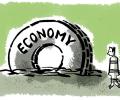
Moody's Investors Service on Friday projected India's growth at zero per cent for the current fiscal and said the negative outlook on sovereign rating reflects increasing risks that GDP growth will remain significantly lower than in the past. The outlook also partly shows weaker policy effectiveness to address economic and institutional issues, it noted in the update to its November 2019 rating forecast.
Weaker demand for Indian exports and higher financing costs will lead to a deceleration in India's gross domestic product (GDP) growth rate to 7.9 per cent in 2008, the International Monetary Fund has said.The IMF's growth projections for India are in line with other estimates, including that of the Asian Development Bank, which pegged the 2008-09 growth at 8 per cent.
The cut is being seen as an emergency measure to boost the US economy.
The panel, headed by former RBI governor C Rangarajan, in its economic outlook for 2007-08 also projected inflation to remain within 4 per cent.
The IMF said global growth is projected to reach 3.9 per cent in 2018 and 2019, in line with the forecast of the April 2018 WEO, but the expansion is becoming less even, and risks to the outlook are mounting.
The International Monetary Fund (IMF) has lowered its real export growth forecast for India for 2008 to 13.2 per cent from its April forecast of 16.3 per cent.

Asian Development Bank on Wednesday lowered India's economic growth forecast for FY2019 to 5.1 per cent on slowing job prospects, rural distress exacerbated by poor harvest and credit crunch. Growth in FY2020 is likely to recover thanks to this support, low oil prices, and a weakening rupee, but risks to the projections remain tilted to the downside, it said on India.
The surge in investment in manufacturing seems to have prompted the International Monetary Fund to increase the gross domestic product growth forecast to 8.4 per cent for 2007.

India's GDP growth for the current fiscal is expected to slow down to 4.8 per cent, a UN report has said, warning that the Covid-19 pandemic is expected to result in significant adverse economic impacts globally. The UN 'Economic and Social Survey of Asia and the Pacific (ESCAP) 2020: Towards sustainable economies' said that Covid-19 is having far-reaching economic and social consequences for the region, with strong cross-border spillover effects through trade, tourism and financial linkages.
The International Monetary Fund on Thursday asked India to "very carefully" look at the much-touted Special Economic Zones, saying the giveaways and tax sops to the zones could divert industrial activity from the rest of the country.
Inflation at 6 per cent was a matter of concern in the evolving macro-economic outlook and the Reserve Bank of India fears that consumer prices could be even higher at 7 to 8 per cent.

Stating that an economic recession gripped global economy following the lockdowns due to COVID-19 pandemic, Fitch Ratings on Friday said the initial disruptions to regional manufacturing supply chains in China have now broadened to include local discretionary spending and exports.
It said the money supply recovered to its pre-demonetisation level in mid-2017 and is now increasing steadily, similar to the previous trend.

'The question is, how soon we can expect to re-attain the pre-lockdown levels of output and income.'
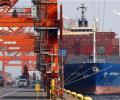
Imports of machinery and transport equipment grew about 40 per cent month-on-month

The indicator, designed to flag turning points in the economic cycle, suggested there was "stable growth momentum" in the bloc of mostly wealthy developed nations, the OECD said.

China, it said, is projected to grow at 6.6 per cent in the current year which will moderate to 6.4 per cent next year.
Fund raises growth forecast to 8.3% in 2006.

Yes, India needs desperate measures to kick-start growth. But selling off its lungs to the highest bidder to hack away cannot be the way out, says Sumit Bhattacharya.

The outlook is improving and that mostly reflects the fact that the new government has pledged to prioritise economic reforms.

The government's Rs 20.97 lakh crore COVID-19 package lacks in addressing the immediate concerns of the economy as the actual fiscal impact of the additional stimulus is only about 1 per cent of the GDP as opposed to the claim of 10 per cent, Fitch Solutions said on Tuesday. Prime Minister Narendra Modi on May 12 announced a stimulus package of Rs 20 lakh crore, or nearly 10 per cent of GDP, to deal with the economic fallout of COVID-19. The contents of the package were broad-based and announced in five tranches.
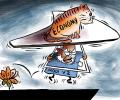
The country's new economic roadmap highlights the importance of creating a virtuous cycle of investment, savings and exports in order to sustain rapid economic growth over the next five years.
 © 2026 Rediff.com - Investor Information - Advertise with us - Disclaimer - Privacy Policy - Sitemap - Feedback - About us - Terms of use - Grievances