
As India witnessed the highest number of Covid cases in over four months, former All India Institute of Medical Sciences (AIIMS) director Dr Randeep Guleria on Wednesday said the new XBB.1.16 variant could be driving the recent rise but emphasised there was no need for panic as long it does not cause severe illness and deaths.
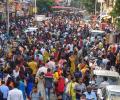
The second wave of Coronavirus pandemic is not yet over and the third wave depends on the Covid-19 appropriate behaviour by the people, said Randeep Guleria, the Director of Delhi AIIMS, on Friday.
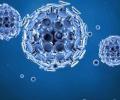
The presence of spike protein facilitates a virus' entry into the host cell and is responsible for making it transmissible and causing infection.

The renowned pulmonologist, who was part of the national COVID task force, highlighted the need for research on developing vaccines which will cover not only the current circulating strains but also from the emerging variants.
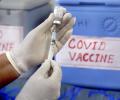
The COVID-19 vaccines can be "tweaked" to provide protection against new variants of the virus, All India Institute of Medical Sciences (AIIMS), Delhi, Director Dr Randeep Guleria said.

AIIMS-Delhi is among the 12 sites selected by the Indian Council for Medical Research (ICMR) for conducting Phase I and II randomised, double-blind and placebo-controlled clinical trials of Covaxin.

The current Covid situation in India is under control and there are no reasons to panic, said Dr N K Arora, the chairperson of National Technical Advisory Group on Immunization (NTAGI).

Dr Guleria was appointed as the director for a term of five years on March 28, 2017.
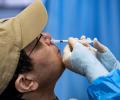
'Viral infections rise in winter and better care needs to be taken in the next few months.'

In a video issued by the Health Ministry, Dr Randeep Guleria, Director of the All India Institute of Medical Sciences (AIIMS) answered commonly asked questions regarding the dosage of the vaccine saying that two doses of the vaccine will have to be taken 28 days apart and protective levels of antibodies generally would develop two weeks after the second dose.

If people are careful and India is able to vaccinate a large number of population, then the third wave of COVID-19 pandemic may not even come, said All India Institute of Medical Sciences Director Dr Randeep Guleria on Thursday.
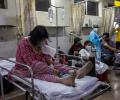
But the numbers have continued to rise in 23 states including Bihar, Goa, Andhra Pradesh, Tamil Nadu and Kerala.
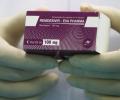
'It was of no use if given early in mild and asymptomatic patients and also if administered too late'
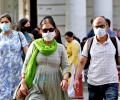
According to some experts, there is not much difference in the number of seasonal flu cases and that of COVID-19, even though they stressed that surveillance for newer variants should continue in the off chance of a new lineage of coronavirus catching the country off guard.

As India grappled with a raging second wave of the coronavirus pandemic, the government on Monday stressed on observing COVID-19 appropriate behaviours.
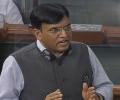
Union Health Minister Mansukh Mandaviya on Tuesday told Bharatiya Janata Party MPs that Covid vaccination for children is likely to start soon, sources said.

About 50 countries, including Canada, Mexico, Nigeria and Panama, have shown interest in having a Co-WIN like system to run their vaccination drive, a senior official said on Monday, adding India is ready to share the open source software free of cost.

The Indian Olympic Association secretary general Rajeev Mehta on Monday requested the Union Health Minister Harsh Vardhan to expedite the process for the vaccination of the country's Tokyo Olympic-bound athletes and officials against COVID-19.

They stressed that classification of cases into mild, moderate and severe categories based just on respiratory symptoms should be relooked to include other organ involvement.

India Today ranks the best colleges in the country.

'There is no data to show this virus is more deadlier.'

Delhi recorded 954 cases on Monday, according to a health department bulletin. The bulletin said the number of tests conducted too was the lowest in July.
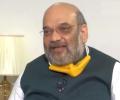
Shah also struck a placatory tone in his interview and said that there was coordination between the Centre and the state in tackling Covid in Delhi.

The first COVID-19 vaccine shots in India were given on Saturday to nearly two lakh frontline healthcare and sanitary workers as Prime Minister Narendra Modi rolled out the world's largest inoculation drive against the pandemic that has caused 1,52,093 deaths and upended millions of lives in the country.

Similar traffic restrictions in other cities did not see a significant improvement in air quality only because car owners begin making more trips during their unrestricted periods. The other apprehension, as seen in other cities, is that residents have bought secondhand cars, using the other number plate so that they can continue to drive to their work place, thereby defeating the very purpose of this scheme.
 © 2026 Rediff.com - Investor Information - Advertise with us - Disclaimer - Privacy Policy - Sitemap - Feedback - About us - Terms of use - Grievances