
Sustaining the current 19.5 per cent growth rate in income and corporate tax collections may be difficult in next fiscal year given headwinds from a slowing world and high base effect, a government source said. Net direct taxes, which are made up of personal income tax and the tax levied on corporate earnings, have seen a record growth in current fiscal year, topping up the numbers projected in the Budget. The expected lower nominal GDP growth in 2023-24 on the back of threats of global recession could impact income tax collection, the government source told reporters ahead of the presentation of Union Budget 2023-24 on February 1.

The time limit is proposed to be extended from the current two years to four years.

It had declined by slightly over 4 per cent in December. The city contributes 37 per cent to the total direct tax revenues. If the trend continues, it could affect the Budget estimates of Rs 13 trillion for the current fiscal year.
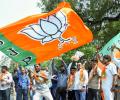
The BJP received the highest amount in large donations among national parties in the financial year 2023-24, with over Rs 2,243 crore declared from 8,358 donations, according to a report by poll rights body the Association for Democratic Reforms (ADR). The report, based on data submitted to the Election Commission, highlighted trends in political donations above Rs 20,000. The total declared donations to national parties stood at Rs 2,544.28 crore from 12,547 contributions - a sharp 199 per cent increase compared to the previous year.

'The increase in the limit for TDS on interest to Rs 1 lakh will ensure greater cash flow in the hands of senior citizens.'

In September last year, India received financial information from over 108 countries regarding foreign accounts and income in the form of interest and dividend earned outside India.

For every rupee in the government coffer, the biggest pie of 66 paise will come from direct and indirect taxes, according to the Union Budget 2025-26 documents. Around 24 paise will come from borrowings and other liabilities, 9 paise from non-tax revenue like divestment, and 1 paise from non-debt capital receipts, the Budget documents said.

Budget 2025-26 delivers a carefully calibrated strategy-stimulating demand and investment while keeping fiscal discipline intact. In an environment marked by global trade disruptions, and a softening in urban consumption, Finance Minister Nirmala Sitharaman has taken a measured approach.

These are the highlights of the Union Budget 2025-26 presented by Finance Minister Nirmala Sitharaman in Parliament on Saturday.
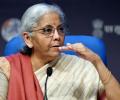
Paraphrasing Abraham Lincoln, Finance Minister Nirmala Sitharaman on Sunday described the Union Budget as "by the people, for the people, of the people", and said Prime Minister Narendra Modi was fully behind the idea to cut taxes for the middle class but it took time to convince the bureaucrats. "We have heard the voice of the middle class" who had been complaining about their aspirations not being met despite being honest taxpayers, she told PTI in an interview.

India's collection from tax on personal and corporate income jumped over 48 per cent in the current fiscal after a 41 per cent surge in advance tax payments, mirroring sustained economic recovery in a year that witnessed two waves of coronavirus infections. Net collections of direct taxes until March 16, 2022, in the fiscal year that started on April 1, 2021, stood at Rs 13.63 lakh crore compared to Rs 9.18 lakh crore in the same period a year back, an official statement said. The net collections in direct taxes, which is made up of income tax on individual income, corporation tax on profits of companies, property tax, inheritance tax and gift tax, in the current fiscal is 35 per cent higher than the collection of Rs 9.56 lakh crore in the pre-pandemic year of 2019-20 (April 2019 to March 2020).

The tax department conducts about 100-150 "full blown" searches and surveys in a financial year, and this enforcement action is not aimed towards the common taxpaying individual or entity.

Gyanesh Kumar, a 1988-batch Kerala Cadre IAS officer, has been appointed as the next Chief Election Commissioner (CEC) of India. Kumar, who was previously an Election Commissioner, will serve until January 26, 2029. His appointment comes amidst controversy as the Congress party demanded the government defer its decision until the Supreme Court concludes its hearing on a petition challenging the composition of the selection panel. Kumar's tenure will see him oversee several state assembly elections, including Bihar, Kerala, Puducherry, Tamil Nadu, and West Bengal.

The government has notified October 1 as the starting date for direct tax dispute resolution scheme Vivad Se Vishwas 2.0. Vivad Se Vishwas scheme 2.0 was originally announced in Budget 2024-25 presented in July for resolution of certain income tax disputes pending appeal.
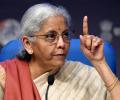
'Going forward, the encouragement would be to move to the new tax regime.'

The Budget announcement of zero tax for earnings upto Rs 12 lakh per annum and the rejig of tax slabs across the board should prompt more than 90 per cent of individual taxpayers to embrace the new tax regime as compared to the about 75 per cent as of now, CBDT Chairman Ravi Agrawal said. Agrawal also highlighted the government's focus on "non-intrusive" tax administration through enhanced use of Artificial Intelligence (AI) and simplified tax processes for common taxpayers. He emphasized the benefits of the new tax regime (NTR), which offers simple calculations and allows taxpayers to file their ITR without professional help. The CBDT chief stated that the Budget provisions related to income tax payment benefit all income earners, not just those earning Rs 12 lakh per annum, creating a positive sentiment in the economy and propelling growth. The department is also harnessing technology, including AI and data analytics, to widen and deepen the tax base, resulting in increased compliance and tax revenue. Agrawal further highlighted the positive impact of data availability and simplified tax processes on compliance rates, citing examples of taxpayers filing revised returns and paying taxes after being prompted by the department's data analysis.

'If our Budget allows, we may implement both measures -- making income up to Rs 10 lakh tax-free and introducing a 25 per cent slab for income between Rs 15 lakh and Rs 20 lakh.'
Providing comfort to the government on the revenue front amid fiscal stress, direct tax collection is moving closer to the revised Budget target for 2021-21 and may get a further thrust from the last instalment of the advance tax payment, the deadline for which ended on Monday. The contraction in net direct tax collection narrowed to 5 per cent year-on-year as on March 15 compared to a 9 per cent decline seen in January. In absolute terms, net collection stood at Rs 8.2 trillion against Rs 8.67 trillion in the same period last year, according to the provisional numbers shared by a government official.

While the capital spending is being maintained at 3.1 per cent of the GDP, a little more would have boosted economic growth even further, suggests Rajiv Memani.

Finance Minister Nirmala Sitharaman will present her 8th straight Budget and all eyes will be on the much-expected tax relief for the middle class. Sitharaman had in her first Budget in 2019 replaced the leather briefcase -- which had been in use for decades for carrying Budget documents -- with a traditional 'bahi-khata' wrapped in red cloth.

The proposed move to withdraw the DDT would help encourage investments by addressing multiple taxation of income and bringing down the effective tax rate on companies, which is among the highest in the world.

The old tax regime remains unchanged. 'Taxpayers opting for it will continue to follow the existing slab rates and deductions.'
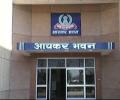
Personal income tax saw contraction shrink to 13 per cent by November from 22 per cent seen up to September, on the back of lower issuance of refunds and improvement in economic conditions.
An Income-Tax Department internal committee reviewing the old direct tax law to pave the way for a new one has "largely" received suggestions for "simplifying" the language, better "structuring" the provisions and enlarging the ambit of schemes like presumptive taxation, CBDT chairman Ravi Agrawal said Sunday. Speaking to PTI during a post-Budget interview at his North Block office, Agrawal said the panel also "studied" the deliberations and processes of countries like the UK, Australia and some others where a similar tax law simplification exercise was undertaken.

The net direct tax collection for the fiscal ended March 31 stood at Rs 9.45 lakh crore, an increase of 5 per cent over the revised estimates in the Union Budget. Central Board of Direct Taxes (CBDT) Chairman P C Mody on Friday said the income tax department has exceeded the revised estimates despite issuing substantial refunds in the 2020-21 fiscal. During the fiscal, the net corporate tax collection stood at Rs 4.57 lakh crore, while net personal income tax was Rs 4.71 lakh crore. Another Rs 16,927 crore came from securities transaction tax (STT).

Anticipating US action on tariffs, India seems to have made the first move by revamping its tariff structure by reducing the slabs to eight rates, points out Mukesh Butani.

The income tax department on Saturday said it has launched a campaign to send messages to taxpayers who have not disclosed high-value foreign income or assets in their ITRs for AY 2024-25. The Central Board of Direct Taxes (CBDT) has launched a Compliance-Cum-Awareness Campaign for Assessment Year (AY) 2024-25 to assist taxpayers in accurately completing Schedule Foreign Assets (Schedule FA) and reporting income from foreign sources (Schedule FSI) in their income tax returns (ITR).
Net direct tax collection in the April-June quarter of the current fiscal rose by 41 per cent to Rs 3,54,569.74 crore, Minister of State for Finance Pankaj Chaudhary informed the Lok Sabha. During the April-June period of 2021-22, the government had collected a net direct tax of Rs 2,50,881.08 crore. At the same time, net indirect tax collection including Goods and Services Tax (GST) and custom duty increased by 9.4 per cent to Rs 3,44,056 crore as against Rs 3,14,476 crore in the first quarter of the previous fiscal, he said in a written reply.

'We are not incentivising the old tax scheme. These taxpayers will also shift to the new regime after comparison.'

'The bull market cycle ran for five years. It's the end of that cycle.' 'The next cycle is a down cycle, and in that down cycle, you will see the Sensex falling from their highs of around 68,000 to maybe 40,000-50,000 at the bottom of the cycle.'

Direct tax collection crossed Rs 91,000 crore (Rs 910 billion) registering a growth of 38.3 per cent year-on-year as against the budget target of 27.73 per cent.

The government has set a direct tax collection target of Rs 13.35 trillion, which includes Rs 7.66 trillion from corporation tax and Rs 5.69 trillion from personal income tax.
Direct tax collections grew by a meagre 6.6 per cent during April-July of the current financial year against the Budget target of 14.4 per cent for 2018-19. Corporation taxes, in particular, grew at just 0.57 per cent, the lowest in the first four months in at least seven years.

A total of Rs 396 crore has been mopped up, as on August 20 against Rs 407 crore collected in the same period last year. This was despite the expansion of the levy to online e-commerce players from this financial year.
Net direct tax collections (after refunds but before transfer of states' share) stood at Rs 1,47,197 crore in July-September this year as compared with Rs 1,11,055 crore in the same period of 2007-08. This amounts to a year-on-year growth of 32.5 per cent (see chart).
Net direct tax collections (after refunds but before transfer of states' share) stood at Rs 1,47,197 crore in July-September this year as compared with Rs 1,11,055 crore in the same period of 2007-08. This amounts to a year-on-year growth of 32.5 per cent (see chart).
Direct tax collection saw a 40% growth till Feb 15 this fiscal. The collection is likely to reach Rs 3 trillion mark by the end of this fiscal.

The Direct Taxes Code 2009 is now on the back burner. The Union finance ministry has veered round to the view that its bold move to reform direct taxes should be subjected to further scrutiny. Contrary to earlier expectations, therefore, the Direct Taxes Code 2009 will not be presented to Parliament as a Bill along with the Union Budget for 20010-11on February 26.

The income tax department on Saturday extended the deadline for filing income tax returns by corporates by 15 days till November 15 for assessment year 2024-25. In a circular, the Central Board of Direct Taxes (CBDT) said the deadline will be extended from the earlier target date of October 31. The new deadline for Assessment Year 2024-25 (for furnishing tax returns for fiscal 2023-24) is November 15.

The Income-Tax Department on Sunday cautioned taxpayers that failure to disclose assets held abroad or income earned in foreign shores in the ITR can attract a penalty of Rs 10 lakh under the anti-black money law. The department issued a public advisory as part a compliance-cum-awareness campaign launched recently by it on Saturday to ensure that such information is reported by the assessee in their Income Tax Return (ITR) for assessment year (AY) 2024-25.
 © 2026 Rediff.com - Investor Information - Advertise with us - Disclaimer - Privacy Policy - Sitemap - Feedback - About us - Terms of use - Grievances